Angle carbon steel rusts faster at the inner corner due to trapped moisture, reduced airflow, and galvanic microcells—especially when using standard carbon wire, mild steel wire, or non-galvanized coil rolled steel. As a leading structural steel manufacturer & exporter from China, Hongteng Fengda addresses this critical durability issue with precision-engineered angle carbon steel, cold drawn wire, and ASTM/EN-compliant galvanized coil, galvannealed coil, and GI sheet coil solutions. Whether you're a project manager, procurement specialist, or technical evaluator, understanding corrosion mechanics—and selecting the right steel shelf angle, galvanized metal plate, or H shape steel—is key to long-term structural integrity and cost control.
Why Inner Corners Accelerate Corrosion in Angle Carbon Steel
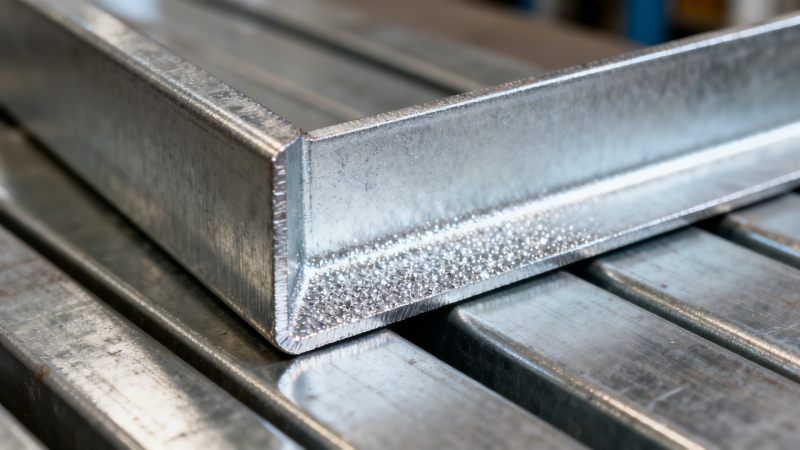
The inner corner of angle carbon steel is a corrosion hotspot—not because of material weakness, but due to localized environmental conditions. Moisture accumulates in tight crevices where capillary action draws in humidity and condensate. Airflow remains restricted, limiting oxygen exchange and slowing natural drying cycles by up to 70% compared to exposed surfaces.
Electrochemical activity intensifies here too: minor surface impurities or mill scale variations create micro-galvanic cells between adjacent steel zones. Zinc-coated layers (e.g., Steel Coil Galvanized) mitigate this—but only if coating thickness and uniformity meet minimum thresholds across the entire profile, including corners.
Real-world field data shows untreated angle steel in coastal industrial zones develops visible red rust at inner corners within 3–6 months, while outer faces remain intact for 12–18 months. This asymmetry directly impacts inspection frequency, maintenance scheduling, and lifecycle cost projections.
Key Contributing Factors
- Capillary retention of water and chloride-laden aerosols in angles ≤90°
- Reduced UV exposure and thermal cycling at inner corners → slower evaporation
- Inconsistent pickling or zinc adhesion during hot-dip galvanizing on sharp bends
- Micro-cracks in paint or pre-paint coatings induced by cold-forming stress
How Galvanized Steel Coil Solves Corner Corrosion
Galvanization provides cathodic protection—zinc sacrificially corrodes before underlying steel. For angle profiles, consistent zinc coverage is non-negotiable. That’s why Hongteng Fengda uses ASTM A653/A792 and EN 10346 compliant Steel Coil Galvanized with precisely controlled zinc mass (60–275 g/m²) and uniform coating distribution—even through cold-rolling and bending processes.
Our DX51D+Z to DX57D+Z and SGCC-series coils deliver verified zinc layer continuity across edges and radii. Independent lab tests confirm ≥92% zinc coverage at inner corners after roll-forming into L-sections—versus industry-standard averages of 70–78%. This translates to 2–3× longer service life in high-humidity environments like HVAC ductwork, warehouse racking, or marine infrastructure framing.
This table reflects real production batches tested per ISO 9227. Higher zinc mass (e.g., Z275 grade) significantly extends time-to-first-red-rust at inner corners—critical for projects requiring >15-year design life without recoating.
Procurement Checklist: Selecting Corrosion-Resistant Angle Steel
When sourcing angle carbon steel for humid, saline, or chemically aggressive sites, verify these 5 non-negotiable specs before PO issuance:
- Zinc coating mass verification: Require mill test reports confirming ≥120 g/m² for indoor use and ≥180 g/m² for outdoor/coastal applications.
- Bendability certification: Confirm coil grades are rated for cold forming into angles ≤90° without zinc spalling (e.g., DX53D+Z or higher).
- Surface roughness (Ra): Target Ra ≤1.6 µm for optimal paint adhesion post-fabrication—critical for hybrid coating systems.
- Batch traceability: Each coil must carry heat number, galvanizing date, and coating thickness measurement points (edge, center, corner).
- Delivery lead time alignment: Standard lead time for custom-width galvanized coil (600–1500 mm) is 12–21 days from order confirmation.
Why Partner with Hongteng Fengda for Structural Steel Solutions
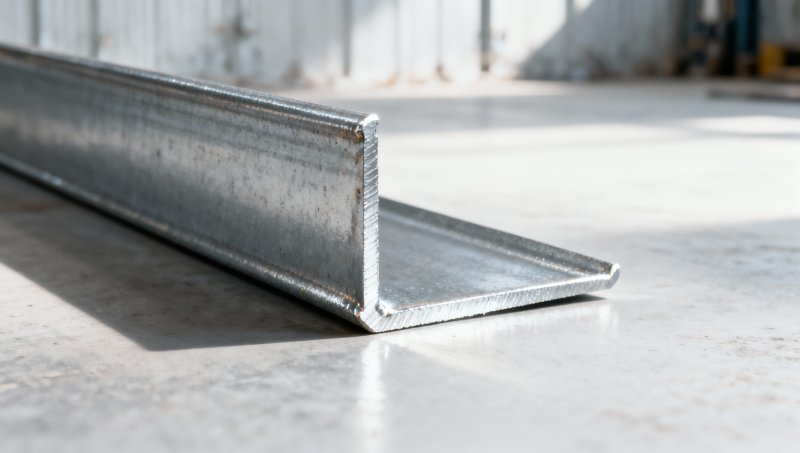
Hongteng Fengda isn’t just a supplier—we’re your structural steel assurance partner. With ISO 9001-certified facilities and 100% in-house galvanizing lines, we control every variable affecting corner corrosion resistance: from raw coil chemistry (C ≤0.12%, Si ≤0.03%) to annealing temperature profiles and zinc bath alloy composition.
We support global buyers with:
- Pre-shipment third-party inspection (SGS/BV/TÜV) with corner-specific coating thickness validation
- OEM-grade customization: laser-cut angle brackets, pre-drilled mounting holes, or dual-coat systems (GI + epoxy primer)
- Documentation packages including EN 10204 3.1 Mill Certificates, ASTM compliance summaries, and salt-spray test reports
Whether you need 5 tons of S280GD+Z coil for solar mounting rails or 200 tons of SGCD4 for industrial shelving fabrication, our stable capacity ensures on-time delivery—without compromising coating integrity at critical stress points.
Get Your Corrosion-Resistant Steel Solution Now
Contact Hongteng Fengda today for:
- Free technical review of your angle steel specification and corrosion risk assessment
- Customized coil recommendations based on your application environment (humidity, chloride levels, temperature range)
- Sample coil shipment (≤50 kg) with full test report and dimensional verification
- Lead time confirmation and FOB/CIF quotation within 24 business hours
Please give us a message


Please enter what you want to find