When designing a water distribution system, the choice of piping material directly impacts long-term reliability, maintenance frequency, and overall project costs. Among the various options available, a galvanized pipe remains a prominent choice for specific applications. By coating standard steel pipes with a layer of zinc, manufacturers create a material that combines the structural strength of steel with enhanced corrosion resistance. However, understanding whether this material is the right fit for a specific water distribution project requires looking beyond basic definitions and examining how it performs under real-world conditions, including its limitations and installation requirements.
The Core Mechanism: How Zinc Protects Steel
To understand why this material is widely specified, it is necessary to look at the zinc coating process. For water distribution pipes, hot-dip galvanizing is the most common method. The steel pipe is submerged in a bath of molten zinc, creating a metallurgical bond that forms a series of zinc-iron alloy layers, topped by a layer of pure zinc.
This coating acts in two distinct ways. First, it serves as a physical barrier, preventing moisture, oxygen, and corrosive elements from reaching the underlying steel substrate. Second, and more importantly, it provides sacrificial protection. Zinc is more electrochemically active than steel. This means that even if the coating is scratched, cut, or damaged during handling and installation, the surrounding zinc will corrode preferentially to protect the exposed steel. This electrochemical process significantly extends the lifespan of the pipe, making it highly effective in environments where the pipe is exposed to external moisture, such as underground installations, outdoor above-ground networks, or highly humid industrial facilities.
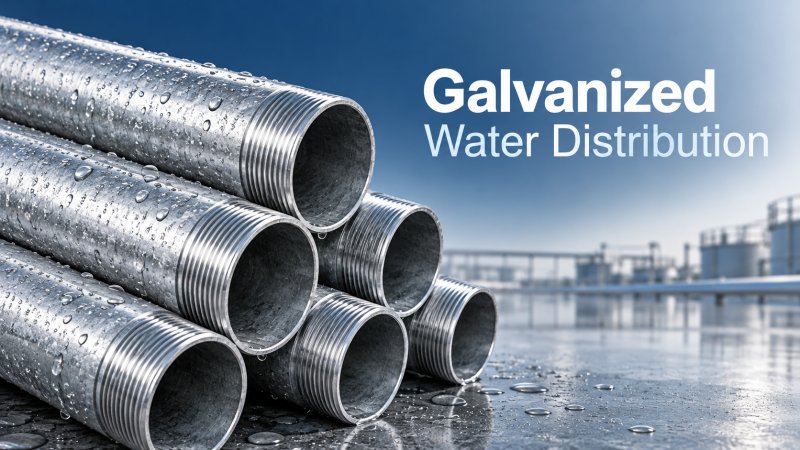
Practical Advantages in Water Distribution
The decision to use galvanized steel piping usually comes down to a few critical engineering, mechanical, and economic factors that differentiate it from non-metallic alternatives.
Structural Integrity and Pressure Resistance
Steel inherently offers high tensile strength and rigidity. For water distribution systems that require high pressure tolerance, such as municipal supply lines, industrial cooling water circuits, or fire protection sprinkler systems, the mechanical strength of galvanized pipes is a major advantage. They can withstand significant physical impacts, heavy external loads, and high internal pressures without deforming or bursting. This structural reliability is a limitation often found in plastic alternatives, which may require thicker walls or additional external protection to achieve similar pressure ratings.
Fire Resistance and Thermal Stability
In applications where fire safety is a primary concern, such as commercial building sprinkler systems, galvanized steel performs exceptionally well. Unlike plastic pipes that can melt or contribute to fire spread, steel pipes maintain their structural integrity at high temperatures. The zinc coating also provides a level of thermal stability, allowing the pipes to handle moderate temperature fluctuations without degrading rapidly, provided they are used within their intended cold or warm water parameters.
External Durability and Maintenance Reduction
In applications where pipes are buried directly in the soil or exposed to harsh weather conditions, the external zinc coating provides excellent protection against soil corrosion and atmospheric elements. The metallurgical bond formed during hot-dip galvanizing ensures that the coating adheres strongly to the steel, resisting damage during backfilling and soil shifting. This external durability significantly reduces the need for additional external wrapping, cathodic protection, or frequent repainting, thereby lowering long-term maintenance efforts and lifecycle costs for infrastructure projects.
Critical Limitations: When Galvanized Pipes Fall Short
While the external benefits and structural advantages are clear, the internal performance of galvanized pipes in water distribution presents specific challenges that engineers and project managers must carefully evaluate.
Internal Scaling and Flow Reduction
Over time, the zinc coating on the inside of the pipe can react with certain water chemistries. In areas with hard water, high mineral content, or specific pH levels, the interior surface can develop scale and rust buildup. This internal scaling gradually reduces the internal diameter of the pipe, leading to decreased water pressure, reduced flow rates, and increased pumping energy requirements. For systems requiring consistent, high-volume flow over several decades, this internal degradation is a significant operational drawback.
Water Quality and Temperature Constraints
Galvanized pipes are generally suitable for cold water distribution. However, they are not recommended for continuous hot water systems. Elevated temperatures accelerate the internal corrosion process and can cause the zinc coating to flake off more quickly, leading to white rust and eventual pitting of the steel. Additionally, in modern potable water systems, the historical use of galvanized pipes has raised concerns regarding water quality. Older galvanized pipes can leach metals into the water, and the internal rust buildup can harbor bacteria or trap particulates. For direct drinking water applications in residential settings, many modern plumbing codes have shifted toward alternative materials, restricting galvanized steel primarily to non-potable, industrial, agricultural, or external distribution uses.
Soil Corrosion Nuances
While the zinc coating protects against general atmospheric corrosion, it is not universally immune to all soil conditions. In highly acidic soils or environments with high chloride content, the external zinc can degrade faster than expected. For direct burial in such aggressive soils, engineers often need to specify additional polyethylene wrapping or alternative corrosion protection methods, which can offset some of the initial cost advantages of the material.
Installation and Joining Considerations
A material's practicality is also defined by how it is installed. Galvanized pipes are typically joined using threaded connections or mechanical couplings. The threads are cut into the pipe ends, and fittings are screwed on using sealants or thread tape to ensure a watertight seal.
It is crucial to note that welding galvanized pipes is generally avoided in water distribution systems. The intense heat of welding burns off the zinc coating in the heat-affected zone, destroying the corrosion protection and releasing toxic zinc oxide fumes. If welding is absolutely necessary for structural reasons, the joint must be meticulously cleaned and repaired with a cold galvanizing compound to restore the protective barrier. This installation constraint means that modifications or repairs in the field require specific tools and techniques, which can impact labor costs and project timelines.
Integrating Pipes with Structural Supports
A water distribution system is not just about the pipes themselves; it also requires a robust infrastructure to support the network, especially in industrial, commercial, and municipal facilities. The weight of the steel pipes, combined with the water inside them, creates significant static and dynamic loads that must be properly managed.
In large-scale installations, the piping network relies on heavy-duty structural supports to maintain alignment, prevent sagging, and avoid stress fractures at the joints. This is where structural components like a Metal Channel come into play. Used as heavy-duty pipe racks, brackets, or framing members, these channels ensure the galvanized pipes remain securely supported under heavy loads and vibrations. When designing the support framework, engineers must ensure that the structural steel used for these channels is also properly treated or selected to withstand the environmental conditions of the facility. A well-designed support system using quality structural profiles maintains the overall integrity of the distribution network and prevents mechanical failure over time.
Making the Right Selection for Your Project
Deciding whether to specify a galvanized pipe for a water distribution system ultimately depends on balancing structural requirements, environmental conditions, and fluid characteristics.
If the project involves high-pressure industrial water, fire suppression systems, agricultural irrigation, or external underground networks where mechanical strength and external corrosion resistance are paramount, galvanized steel is a highly reliable and cost-effective choice. The material will perform exceptionally well in handling cold water and resisting physical damage in harsh environments.
Conversely, if the system is designed for continuous hot water distribution, highly acidic or aggressive water chemistries, or direct residential potable water where internal scaling and long-term water quality are primary concerns, alternative materials should be considered.
Before finalizing the material selection, it is crucial to analyze the specific water chemistry, the required pressure ratings, the temperature ranges, and the expected physical environment. Evaluating the total lifecycle cost is also essential. While the initial material cost of galvanized steel is lower than copper or stainless steel, the potential for internal scaling over time might increase pumping costs or require eventual pipe replacement. Weighing the upfront capital expenditure against the long-term operational and maintenance expenses will provide a clearer picture of the most economical choice. Consulting with material suppliers and reviewing local plumbing codes will ensure that the chosen piping system meets both the operational demands and the regulatory standards of the project.
Please give us a message


Please enter what you want to find