When structural steel components fail fit-up on site, the result is often costly delays, rework, and safety concerns. From inaccurate tolerances to poor structural steel welding and mismatched structural steel connection details, many issues begin long before structural steel erection starts. Understanding these common causes helps engineers, buyers, and project managers improve quality control, reduce risk, and ensure every structural steel channel, beam, and custom assembly performs as expected.
Where fit-up problems usually start in structural steel projects
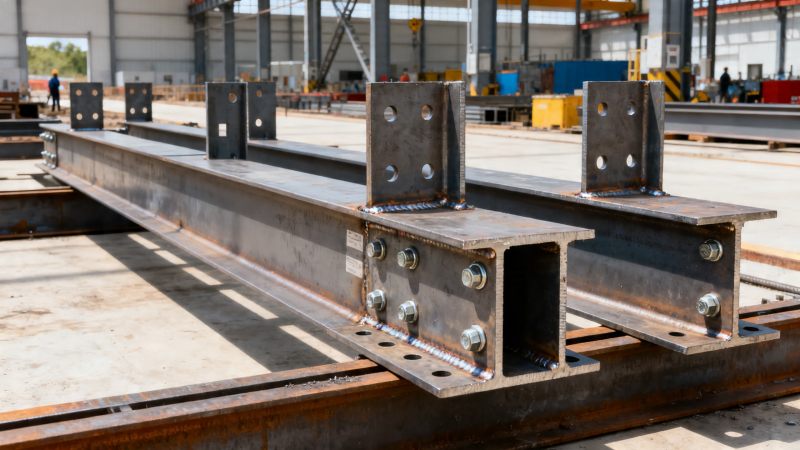
Site fit-up failure rarely begins at the jobsite. In most steel projects, the root cause appears 2–4 stages earlier: design interpretation, detailing, fabrication, surface treatment, packing, or erection planning. For information researchers and technical evaluators, this matters because visible installation trouble is often only the final symptom of an upstream control gap.
In structural steel manufacturing, even a small mismatch can create a chain reaction. A hole offset of a few millimeters, beam camber outside the specified range, or a connection plate welded in the wrong orientation can stop erection crews, delay crane schedules, and increase labor costs. For procurement teams and project managers, this means the lowest quoted unit price may not be the lowest total installed cost.
Fit-up problems are especially common in projects that combine standard sections with custom fabricated assemblies. Angle steel, channels, steel beams, cold formed profiles, and welded connection parts must all align with the same drawing logic. If drawings, shop tickets, and inspection checkpoints are not synchronized, dimensional drift accumulates quickly across a batch.
For global buyers sourcing from multiple suppliers, the risk increases when one party handles raw material supply, another does processing, and a third controls site erection. A professional structural steel manufacturer with integrated production and quality control can reduce these handoff errors and improve consistency across ASTM, EN, JIS, and GB-based projects.
The most common root causes behind poor fit-up
The following issues account for a large share of structural steel fit-up failures in industrial buildings, equipment platforms, warehouses, and infrastructure projects. Each one affects not only assembly speed, but also safety review, rectification cost, and final schedule control.
- Incorrect or incomplete shop drawings, especially when bolt hole patterns, splice details, and member orientation are not fully coordinated.
- Fabrication tolerances not controlled consistently across cutting, drilling, welding, straightening, and marking processes.
- Welding distortion that changes plate flatness, hole alignment, or member squareness after assembly.
- Galvanizing, coating, or transport deformation that alters final dimensions or damages connection edges.
- Site reference lines, anchor bolts, and supporting civil works deviating from the intended erection geometry.
For quality control staff, the key lesson is simple: fit-up is not one inspection item. It is the result of 5 linked controls—drawing review, material verification, fabrication accuracy, packing identification, and site installation readiness.
How tolerances, welding, and connection details create hidden installation risk
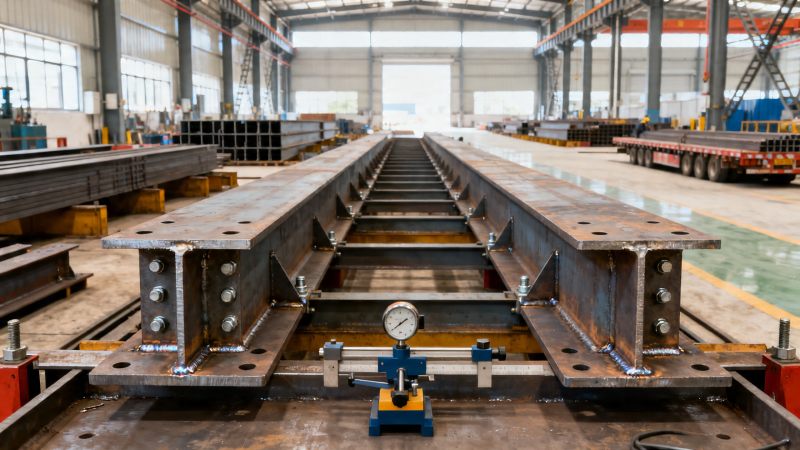
Dimensional tolerance is one of the most misunderstood topics in structural steel procurement. Many buyers focus on steel grade, coating, and delivery date, but overlook the tolerance standard applied to length, hole spacing, web alignment, flange straightness, and assembly geometry. In practice, fit-up success often depends more on controlled dimensional accuracy than on nominal section size alone.
Welding also affects fit-up in ways that are not always visible before shipment. Heat input, weld sequence, fixture control, and cooling pattern can all move a connection plate, twist a built-up member, or cause local shrinkage. If the fabrication shop does not check post-weld dimensions, a component may pass visual inspection but still fail during bolt-up on site.
Connection details are another frequent weak point. A structurally adequate detail is not always an erection-friendly detail. For example, bolt access, wrench clearance, temporary support points, and sequence of installation must be considered. A detail that looks correct in a model may become difficult to assemble within a 7–15 day erection window if tolerances stack up across multiple members.
This is where experienced manufacturers add real value. Hongteng Fengda supports global buyers with controlled fabrication for angle steel, channel steel, beams, cold formed profiles, and customized structural steel components. With modern facilities and strict quality control, the company helps customers reduce sourcing risk, especially for projects requiring standard sections plus OEM assemblies under international specifications.
Typical fit-up risk points by fabrication stage
To support engineering review and purchasing assessment, the table below summarizes where dimensional and assembly problems often emerge, what they affect, and what should be checked before shipment.
For technical reviewers, this table shows why fit-up control must extend beyond final appearance. A component can look acceptable in the yard and still trigger hours of rework if critical dimensions are not inspected at each process step.
Why related steel accessories and lifting media also matter
Mid-project delays are not caused only by main members. Lifting, handling, and installation accessories also influence whether components arrive and move safely without distortion. In many heavy handling environments, buyers also review products such as Galvanized Steel Wire Rope for cranes, loading, mining, marine work, drilling, and foundation equipment.
When selecting such rope products, engineers usually compare diameter ranges such as 1.0 mm–22 mm, tensile strength levels from 1470 MPa to 1960 MPa, and constructions including 6X7+FC, 6X19+IWR, or 8x19S+FC. They also consider plain, electro galvanized, or hot dipped galvanized finishes based on mild, medium, or severe corrosion exposure. This kind of disciplined specification thinking should also be applied to structural steel components to avoid preventable field mismatch.
What buyers, QC teams, and project managers should check before shipment
A strong pre-shipment review can save far more than it costs. For procurement personnel, the goal is not to inspect every detail personally, but to confirm that the supplier follows a repeatable control process. For site users and project leaders, the priority is to prevent the 3 biggest cost drivers: erection delay, crane idle time, and on-site re-fabrication.
In structural steel sourcing, buyers should review 5 key areas before dispatch: drawing version control, material traceability, dimensional inspection records, assembly marking logic, and packing sequence. If the project includes export shipping, moisture protection, bundle integrity, and loading method should also be checked because transport damage can affect final fit-up.
For business evaluators and financial approvers, this is also a budget issue. Rework on site is usually more expensive than factory correction because labor rates, equipment standby, and schedule penalties accumulate quickly. A supplier with stable production capacity and dependable lead times can help control these hidden costs across both standard and custom steel orders.
Hongteng Fengda serves buyers across North America, Europe, the Middle East, and Southeast Asia with structural steel products that align with major international standards. This matters when projects need consistent documents, practical communication, and manufacturing discipline rather than only a shipment of raw sections.
Pre-shipment checklist for reducing site fit-up failure
The checklist below is useful for purchasers, quality managers, and engineering teams who need a practical way to compare suppliers and control on-site installation risk before goods leave the factory.
A supplier that can provide these checks in a clear and timely way usually creates fewer downstream disputes. For distributors and project contractors, that translates into smoother receiving, faster erection, and easier coordination among engineering, purchasing, and site crews.
A practical 4-step control process
- Confirm approved drawings and standards before production begins.
- Inspect key dimensions during cutting, drilling, and welding, not only at the end.
- Match marking, packing, and loading sequence to the erection plan.
- Review shipment documents and critical dimensions again before dispatch.
This 4-step method is especially useful for orders with mixed items, phased delivery, or 2–3 installation zones where part sequence and identification directly affect erection efficiency.
How to compare suppliers when structural steel fit-up reliability matters
When buyers compare structural steel suppliers, unit price is only one part of the decision. The more important question is whether the supplier can repeatedly deliver components that install correctly under real project conditions. This is critical for distributors, EPC teams, OEM buyers, and owners managing multi-country supply chains.
A useful comparison approach is to evaluate 3 categories together: manufacturing capability, quality control depth, and communication reliability. Manufacturing capability covers equipment, processing range, and custom fabrication experience. Quality control depth covers material verification, dimensional inspection, and compliance with project standards. Communication reliability covers drawing clarification speed, change management, and document accuracy.
In many projects, a supplier that answers technical questions within 24–48 hours and provides clear inspection feedback can reduce risk more effectively than a supplier that only offers a lower ex-works price. Site errors are expensive because they consume labor, delay adjacent trades, and often require urgent management decisions.
For global customers seeking structural steel from China, the ideal partner is usually a manufacturer-exporter that can support both standard specifications and OEM requirements. This combination reduces the coordination gap between design intent and production output, especially for custom steel components and mixed-batch orders.
Supplier comparison points that affect total project outcome
The table below helps procurement teams, technical assessors, and decision-makers move beyond price-only comparisons when evaluating structural steel fabrication partners.
This comparison is valuable because site performance depends on process discipline. The supplier that manages details well often helps prevent the hidden costs that never appear in a simple material quote.
Common procurement mistakes to avoid
- Approving fabrication before final drawing coordination between civil, steel, and erection teams is complete.
- Comparing quotations without checking what tolerance control, inspection scope, and marking method are actually included.
- Ignoring packing sequence for projects delivered in multiple containers or multiple erection phases.
- Assuming that compliance with a material standard alone guarantees trouble-free fit-up on site.
For complex projects, a short technical alignment meeting before production can prevent weeks of downstream disruption. That is often one of the highest-return actions available to both buyers and suppliers.
FAQ and next steps for reducing fit-up failure risk
Many teams ask similar questions when structural steel fit-up becomes a recurring issue. The answers below are intended to help users, evaluators, and decision-makers turn a general concern into a practical sourcing and quality plan.
The most effective approach is usually early coordination combined with supplier-side process control. Waiting until erection begins is too late, because by then schedule pressure limits corrective options and raises the cost of every decision.
If your project involves standard sections, customized connections, export packing, or multi-region compliance, it is worth reviewing the fabrication process in detail before order release. That is particularly true when installation windows are tight, such as 1–2 weeks per zone or when crane access is limited.
Below are four frequently raised questions that often shape structural steel purchasing decisions and project control priorities.
How can I reduce structural steel fit-up problems before production starts?
Start with a coordinated review of drawings, connection details, and member marking logic. Confirm which standards apply, what tolerances are required, and where critical dimensions must be inspected. A 3-part review involving engineering, procurement, and fabrication is usually more effective than isolated approvals.
Which items should be prioritized during inspection?
Prioritize hole spacing, member length, diagonal checks, connection plate location, weld distortion, and identification marks. These 6 items affect bolt-up speed and assembly accuracy more directly than general appearance. If the project includes galvanizing or painting, also confirm that coating does not interfere with connection surfaces.
Does a lower steel price always reduce project cost?
No. A lower material price may increase total cost if it leads to rework, idle lifting equipment, slower erection, or replacement shipments. For finance teams, total installed cost should include fabrication accuracy, document quality, and delivery reliability, not only the base price per ton.
What can a reliable structural steel partner help me confirm?
A reliable partner can help confirm section selection, custom fabrication feasibility, tolerance expectations, applicable ASTM, EN, JIS, or GB references, packing sequence, and realistic lead times. This is especially useful for buyers balancing technical compliance, budget control, and installation deadlines.
Why choose us for structural steel supply and project support?
Hongteng Fengda combines manufacturing and export experience for angle steel, channel steel, steel beams, cold formed profiles, and customized structural steel components. That means customers can discuss standard specifications, OEM requirements, inspection priorities, and shipment planning with one professional team instead of splitting responsibility across multiple parties.
If you are evaluating a new supplier or troubleshooting fit-up issues in an active project, you can contact us to discuss drawing review points, dimensional control expectations, product selection, sample support, delivery cycle planning, certification alignment, and quotation details. This helps you compare options based on practical project outcome, not only purchase price.
For projects in North America, Europe, the Middle East, and Southeast Asia, we support buyers seeking stable production capacity, consistent quality, and dependable lead times. If you share your drawings, standards, quantities, and delivery schedule, we can help you assess fabrication risks early and build a more reliable structural steel supply plan.
Please give us a message


Please enter what you want to find