In coil processing, the edge condition of a stainless steel coil directly affects slitting accuracy, forming stability, and overall material utilization. Poor edge quality can cause burrs, camber, surface scratches, and unstable feeding. These issues often turn usable material into scrap, raise labor input, and weaken downstream consistency in steel-related production.
Edge Quality Basics in Stainless Steel Coil Processing
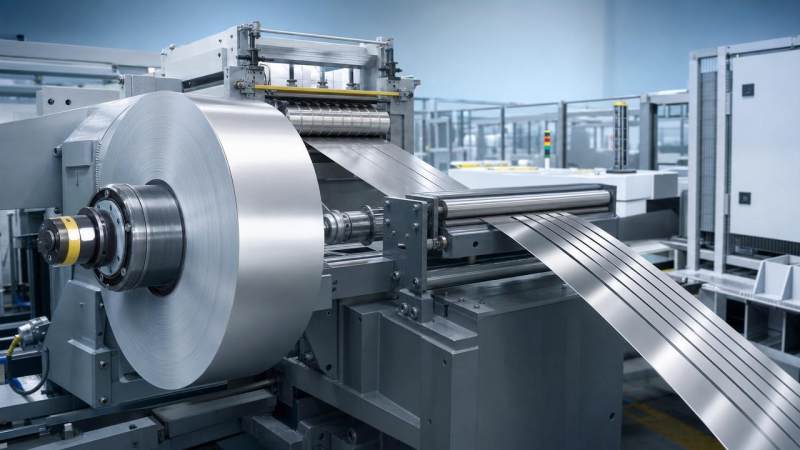
The edge of a stainless steel coil is more than a finished boundary. It is a control point for slitting, roll forming, stamping, and welding. If the edge is uneven, every later process becomes less predictable.
A high-quality stainless steel coil usually has uniform width, limited burr height, low edge wave, and stable straightness. It also shows fewer signs of tearing, rollover, or local hardening near the edge.
Common edge conditions include mill edge and slit edge. Mill edge is natural after rolling. Slit edge is created during cutting. Both can perform well, but only when controlled within suitable tolerances.
When a stainless steel coil enters production with inconsistent edges, operators often adjust knives, guides, tension, and feed speed repeatedly. Those corrections consume time and still may not stop waste.
Why the Industry Pays Close Attention to Coil Edge Condition
Steel processing lines now run faster and require tighter dimensional control. This makes edge quality a practical cost issue rather than a minor visual concern.
In many applications, the stainless steel coil is expected to support precise cutting, repeatable bending, and clean assembly. Poor edges reduce machine stability and increase hidden losses across the line.
- More frequent blade wear and knife adjustment
- Higher risk of strip wandering and camber
- Greater chance of coating or surface damage
- Additional sorting, trimming, and rework
- Lower yield from each stainless steel coil
These concerns matter across construction, fabrication, machinery, appliances, and component manufacturing. In all of them, stable feed behavior starts with a reliable stainless steel coil edge.
Main edge defects that increase waste
How Poor Stainless Steel Coil Edges Translate Into Material Loss
Waste rarely appears from one single failure. It usually grows from several small edge-related problems that interact through the production route.
First, burrs can damage guides, rollers, and coated surfaces. When scratched material no longer meets appearance or tolerance requirements, sheets or strips must be downgraded or discarded.
Second, camber changes the travel path of the strip. The line may need wider trim allowances to keep dimensions acceptable. That means lower yield from each stainless steel coil.
Third, uneven edges affect forming balance. Roll-formed or bent parts may twist, flare, or fail to seat correctly. Operators then slow the line, inspect more often, or scrap off-spec sections.
Fourth, damaged edges can trigger localized stress concentration. In thin gauges especially, cracks may start at the edge during punching or bending and grow quickly through the section.
For projects involving structural profiles, edge control also influences downstream profile quality. In related steel applications, components such as C-beam sections depend on stable decoiling, cutting, punching, and forming. When incoming strip edges are clean and straight, profile dimensions remain more consistent, surface finish is easier to protect, and processing services such as bending, welding, punching, decoiling, and cutting run with fewer interruptions.
This matters in purlins, wall beams, lightweight roof trusses, brackets, and light industrial frames. Material options like Q195, Q235, Q345, A36, SS400, and s235jr still benefit from the same basic rule: edge stability improves usable output.
Application Value Across Steel Processing and Fabrication
A well-controlled stainless steel coil supports cost control in several ways. It reduces scrap directly, but it also protects equipment efficiency and quality consistency.
In slitting lines, better edge quality means cleaner separation and lower burr formation. In roll forming, it supports balanced section geometry. In stamping, it lowers crack risk. In fabrication, it simplifies fit-up and finishing.
This is especially important when steel products must comply with ASTM, EN, JIS, or GB requirements. Stable edge condition helps keep tolerances realistic and repeatable during volume production.
Where edge quality has the strongest operational impact
- Precision slitting of narrow strips
- Cold forming of channels and sections
- Bending parts with tight radii
- Surface-sensitive decorative or visible components
- High-volume cutting and punching lines
Typical Scenarios and Material Control Points
Not every operation reacts to edge defects in the same way. The best control method depends on process type, gauge range, and final quality target.
When profiles are produced from galvanized, powder-coated, or black-finished materials, edge defects may also affect appearance. Clean edge handling protects coating quality and lowers secondary touch-up work.
Practical Steps to Reduce Waste From Stainless Steel Coil Edge Problems
Improvement starts before the coil reaches the line. Material specifications should define edge type, tolerance expectations, and acceptable burr levels for the intended process.
- Match edge requirement to the process, not only to basic material grade.
- Inspect incoming stainless steel coil for burrs, camber, width variation, and surface marks.
- Maintain slitting knives, guides, and tension systems on a fixed schedule.
- Run trial samples before full production on critical profiles or tight-tolerance parts.
- Track scrap sources separately to identify edge-related waste patterns.
It is also useful to align coil sourcing with downstream standards and forming methods. For example, if the strip will be perforated, bent, or shaped into structural sections, edge consistency deserves extra attention.
Reliable supply partners help by offering controlled processing, stable tolerances, and technical support. Strong quality systems are valuable when projects require certified materials and repeatable export-grade performance.
Next-Step Considerations for Better Yield and Stable Output
The quality of a stainless steel coil edge affects far more than appearance. It shapes slitting precision, forming behavior, equipment wear, and total production waste.
For steel projects with strict timelines and controlled costs, cleaner edges lead to better yield and fewer production interruptions. That benefit becomes even more visible in continuous processing environments.
Hongteng Fengda, a structural steel manufacturer and exporter from China, supports global construction, industrial, and manufacturing projects with dependable production, strict quality control, and customized steel solutions. With experience across angle steel, channel steel, steel beams, cold formed profiles, and OEM components, the company helps improve sourcing stability and downstream efficiency.
When evaluating the next stainless steel coil order, review edge condition together with grade, thickness, tolerance, and process route. That small step can reduce waste, protect output quality, and improve overall project performance.
Please give us a message


Please enter what you want to find