Warping is one of the most common challenges when fabricating stainless sheet metal, especially in precision-driven industrial and construction applications. For technical evaluators, understanding how heat input, residual stress, material thickness, and forming methods affect dimensional stability is essential for quality control and cost reduction. This article explains the main causes of distortion and how proper fabrication planning can minimize defects and improve production results.
For most technical evaluators, the core question is not simply why stainless sheet metal warps, but how to predict when it will warp, how serious the distortion may become, and which fabrication controls deliver the best balance of quality, lead time, and cost. In practice, stainless sheet metal usually warps because internal stresses are introduced or released unevenly during cutting, welding, bending, rolling, or cooling.
The most important judgment is this: warping is rarely caused by one factor alone. It is typically the combined result of material condition, sheet thickness, thermal input, part geometry, clamping strategy, sequence planning, and operator control. If these variables are evaluated early, many distortion problems can be reduced before production starts.
What Technical Evaluators Really Need to Check Before Approving Fabrication
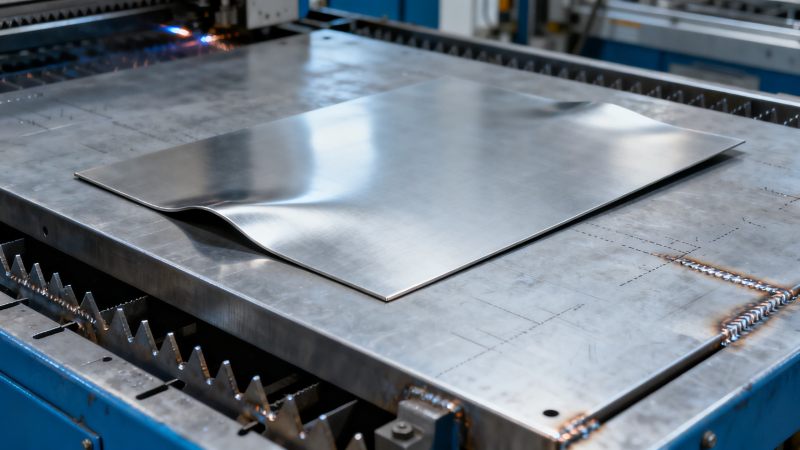
When evaluating stainless sheet metal fabrication quality, the most useful approach is to focus on distortion risk points rather than only reviewing final tolerances. A part may look acceptable after rework, but repeated flattening, forced fitting, or grinding often increases cost, weakens consistency, and creates hidden quality issues.
Technical evaluators usually care about five practical questions: whether the selected stainless grade is suitable for the forming method, whether the sheet thickness is adequate for the required flatness, whether welding and cutting heat are controlled, whether the fabrication sequence minimizes stress concentration, and whether the supplier has a repeatable correction process when distortion does occur.
These questions matter because stainless steel behaves differently from ordinary carbon steel. It has lower thermal conductivity and a relatively high coefficient of thermal expansion. That means heat tends to stay concentrated in smaller zones while the metal also expands and contracts more noticeably. The result is a higher tendency for localized deformation if process control is weak.
Why Stainless Sheet Metal Is More Prone to Warping Than Many Buyers Expect
One reason stainless sheet metal warps during fabrication is its thermal behavior. Compared with carbon steel, stainless steel does not dissipate heat as quickly. During laser cutting, plasma cutting, or welding, heat remains near the processed area for longer, producing steeper temperature differences between hot and cool zones. Those temperature gradients generate uneven expansion and contraction, which can permanently pull the sheet out of flatness.
Another reason is residual stress. Stainless sheet metal may already contain internal stress from rolling, slitting, leveling, or previous processing. Fabrication operations do not always create distortion from zero; often they release stress that is already stored in the material. A sheet may appear flat before cutting, then twist or bow as soon as slots, holes, or edge profiles are introduced.
Thickness also plays a major role. Thin stainless sheet metal is more sensitive to even moderate heat input and handling force. A thin panel with long unsupported spans can buckle, ripple, or dish more easily than a thicker plate. This is especially important in architectural cladding, equipment covers, ductwork, enclosures, and precision assemblies where flatness directly affects fit-up and appearance.
Part geometry further increases risk. Wide panels, asymmetrical cutouts, narrow strips, long seams, and parts with concentrated welds at one side tend to distort more than compact, symmetrical shapes. In other words, warping risk is not just about the metal itself; it is also about how the design distributes stiffness and thermal load.
Main Fabrication Processes That Cause Warping
Welding is one of the most common causes of distortion in stainless sheet metal fabrication. Every weld introduces local heating followed by cooling shrinkage. If the shrinkage is unbalanced, the sheet pulls toward the weld line, causing angular distortion, bowing, or twisting. Long continuous welds are especially risky on thin-gauge material because the thermal input accumulates over distance.
Cutting can also create significant distortion. Laser cutting is usually preferred for precision work, but even laser processes can warp stainless sheet metal if the cutting path concentrates heat, the sheet is too thin, or nesting density is too high. Plasma cutting and oxy-fuel methods generally introduce more heat and therefore greater distortion risk, although process selection always depends on thickness, tolerance, and economics.
Bending and forming operations create another source of shape instability. If bend allowance, grain direction, tool selection, or press brake settings are not properly matched, the part may spring back unevenly or develop localized curvature. For complex profiles, multiple bends can compound stress and leave the finished part harder to assemble within tolerance.
Mechanical leveling and correction themselves can become distortion factors if overused. Once a warped sheet is repeatedly forced back into shape, surface marks, strain hardening, and dimensional inconsistency may follow. Technical evaluators should therefore distinguish between controlled corrective processing and excessive rework that only hides a weak fabrication system.
How Heat Input, Cooling Rate, and Process Sequence Affect Dimensional Stability
If there is one area that deserves priority in evaluation, it is heat control. The amount of heat going into stainless sheet metal, how concentrated that heat is, and how the material cools afterward largely determine the final shape. Low thermal conductivity means heat does not spread away quickly, so process settings must be selected with care.
In welding, travel speed, amperage, joint design, filler selection, and intermittent versus continuous weld strategy all influence distortion. Lower and more controlled heat input often improves dimensional stability, but reducing heat too aggressively can create penetration or fusion problems. The right objective is not minimum heat in isolation, but balanced heat appropriate for the application.
Cooling conditions also matter. Rapid and uneven cooling can lock in stress, while inconsistent cooling across a large panel can cause one side to contract differently from another. Shops with stable fixturing, consistent ambient conditions, and disciplined handling procedures usually perform better than shops that rely on ad hoc operator adjustments after each part is produced.
Process sequence is frequently underestimated. A stainless sheet metal part that is cut, then partially formed, then welded, may behave very differently from one that is welded first and formed later. Strategic sequencing can distribute stress more evenly, maintain stiffness during critical steps, and reduce the amount of final correction needed. For technical evaluators, reviewing the fabrication route is often more valuable than reviewing individual operations separately.
How to Evaluate Supplier Capability for Distortion Control
When sourcing fabricated stainless components, technical evaluators should not assume that all suppliers manage warping equally well. A capable supplier can usually explain distortion risk before production, recommend design adjustments, and define process controls in measurable terms. A weaker supplier may only promise compliance after the fact, without a clear method for achieving it consistently.
Useful evaluation points include whether the supplier reviews flatness-critical dimensions during quotation, whether they assess weld location and sequence, whether they understand the relationship between thickness and unsupported span, whether they use suitable fixtures for thin sheet, and whether they inspect distortion at intermediate stages instead of only at final packing.
It is also worth checking whether the supplier has experience beyond one product category. Companies serving construction, industrial equipment, and manufacturing sectors often develop broader process knowledge about how different steel products behave under forming and joining conditions. For example, firms that manufacture structural items and reinforcement products may have deeper understanding of weldability, forming response, and standards compliance across material types.
In some projects, buyers sourcing stainless assemblies may also coordinate with other steel products used in the same structure or supply chain. In that context, a manufacturer capable of supplying products such as Rebar under ASTM, GB, EN, DIN, and JIS-related quality systems may offer an advantage in documentation discipline, material traceability, and broader fabrication support. This does not mean carbon steel reinforcement behaves like stainless sheet metal, but it does indicate whether the supplier is familiar with multi-standard export requirements and industrial application demands.
Practical Ways to Reduce Warping in Stainless Sheet Metal Fabrication
The most effective way to reduce warping is to address it at the design and planning stage. If a part requires tight flatness or fit-up tolerance, designers and buyers should avoid unnecessarily long unsupported spans, highly asymmetrical cut patterns, and excessive continuous welds on thin material. Small design changes can significantly improve manufacturability.
Material selection should also match the application. Not all stainless grades respond the same way in fabrication, and sheet temper or supply condition may influence formability and residual stress behavior. Evaluators should confirm not only the grade but also the delivery condition, thickness tolerance, surface finish, and whether leveling quality is suitable for precision work.
During cutting, optimized nesting, suitable power settings, proper support, and balanced cut paths can reduce heat concentration. During welding, fixturing, backstep techniques, staggered weld sequence, intermittent weld design where acceptable, and controlled tack planning can all help limit distortion. During forming, the correct tooling radius, bend sequence, and springback compensation improve repeatability.
Inspection should happen in stages rather than only after full completion. Measuring flatness after cutting, after primary forming, and after welding allows the team to identify the exact operation where distortion begins. This creates useful feedback for process improvement and prevents expensive downstream rework.
Finally, teams should define acceptable tolerance realistically. Some applications require cosmetic flatness, some require assembly fit, and some require both. Technical evaluators can reduce sourcing disputes by specifying which areas are critical, how flatness is measured, and what reference standard applies. Clear requirements are one of the strongest tools for controlling fabrication risk.
Common Warning Signs That Warping Risk Is Being Underestimated
There are several warning signs that a stainless sheet metal project may face distortion problems. One is a very thin sheet combined with long weld seams and tight final tolerances. Another is a design with many cutouts near edges, which reduces local stiffness and makes thermal movement more visible.
A further warning sign is when a supplier offers a low price but provides little detail on fixturing, sequence, or correction methods. In stainless fabrication, distortion control is not accidental. If the production plan does not describe how heat, stress, and shape will be managed, there is a higher chance that the supplier is relying on post-process rework instead of preventive control.
Buyers should also be cautious when tolerance requirements are copied from machined parts to fabricated sheet components without adjustment. Stainless sheet metal can achieve excellent accuracy, but tolerances must align with process reality. Unrealistic requirements often lead to hidden cost, high scrap rates, and delays rather than better quality.
Conclusion: Warping Is a Process Control Issue, Not Just a Material Problem
Stainless sheet metal warps during fabrication mainly because heat, stress, and geometry interact in uneven ways. Low thermal conductivity, higher thermal expansion, residual stress, thin sections, and poor sequence planning all increase the likelihood of distortion. For technical evaluators, the key is to assess the full fabrication system rather than focusing on material grade alone.
The most reliable way to reduce risk is to evaluate design suitability, process sequence, heat input, fixturing, inspection stages, and supplier capability before production begins. When these factors are controlled well, stainless sheet metal can deliver high precision, strong corrosion resistance, and consistent manufacturing performance. When they are ignored, warping becomes a recurring cost driver that affects quality, schedule, and overall project confidence.
In short, the best technical decision is rarely based on the lowest fabrication price. It is based on whether the supplier understands how to keep stainless sheet metal dimensionally stable from cutting to final assembly. That is the standard that protects both quality and total project value.
Please give us a message


Please enter what you want to find