Why the Right Galvanized Steel Sheet Matters in Cold Storage
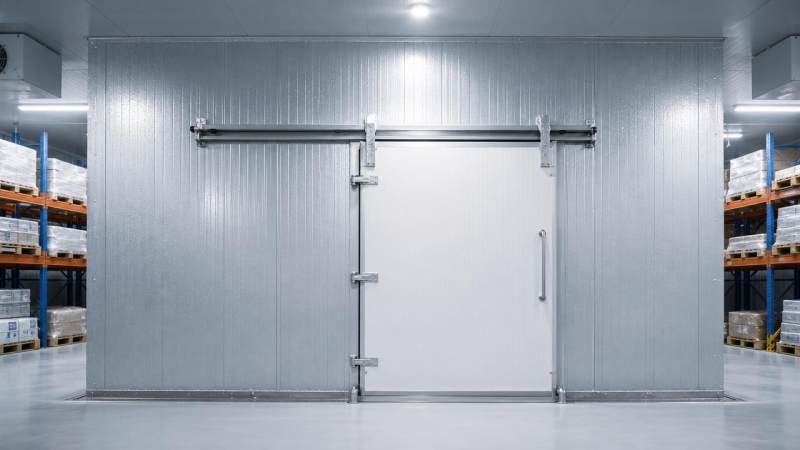
Cold storage environments demand materials that can withstand moisture, temperature fluctuations, and long-term structural stress.
Choosing the right galvanized steel sheet for cold storage is essential for durability, hygiene, and operational efficiency.
The right steel solution reduces maintenance issues and supports reliable performance in demanding industrial conditions.
In refrigerated rooms, every surface faces condensation, cleaning chemicals, and repeated thermal cycling.
If the steel sheet is poorly selected, corrosion starts early, insulation systems weaken, and repair costs rise fast.
That is why galvanized steel sheet for cold storage should be evaluated through a practical and structured process.
Why a Structured Selection Process Is Necessary
Cold storage projects often involve panels, doors, ceiling systems, supports, fasteners, and service areas.
A simple price comparison is not enough when selecting galvanized steel sheet for cold storage.
The material must match humidity exposure, washdown frequency, load conditions, and expected service life.
A clear checklist helps compare coating quality, sheet thickness, formability, compliance, and long-term protection.
It also reduces sourcing risks and prevents hidden issues during fabrication, installation, and daily use.
Key Points to Check Before Choosing Galvanized Steel Sheet for Cold Storage
- Check the zinc coating level first, because stronger coating protection improves resistance to condensation, moisture exposure, and surface damage in refrigerated environments.
- Confirm the base steel grade and mechanical properties, ensuring the sheet can handle forming, fastening, and structural stress without cracking or distortion.
- Review sheet thickness carefully, since insufficient thickness may reduce rigidity, while excessive thickness can increase cost and complicate fabrication.
- Inspect surface uniformity and finish quality, because uneven galvanizing can create weak points where corrosion may begin under cold and wet conditions.
- Verify compatibility with insulated panels, sealants, and fastener systems, so the full assembly performs reliably under repeated temperature cycling.
- Check resistance to cleaning agents and sanitation routines, especially in food-related cold rooms where hygiene standards are strict and frequent washing is common.
- Ask for compliance with ASTM, EN, JIS, or GB standards, because certified material quality supports consistent performance and easier project approval.
- Evaluate fabrication requirements such as cutting, bending, punching, and profile forming, since poor processing behavior can damage the coating layer.
- Confirm dimensional tolerance and flatness control, which affect installation quality, sealing performance, and the finished appearance of cold storage systems.
- Review supplier quality control, packaging, and lead time reliability, because transport damage and inconsistent batches can affect project efficiency.
Material and Component Considerations Beyond the Sheet
A strong cold storage system depends on more than wall cladding alone.
Support members, reinforcement parts, and connection components also need corrosion protection and dimensional stability.
For selected auxiliary applications, Galvanized Round Steel can support structural assemblies that require galvanized surfaces and reliable strength.
This product offers tensile strength of 570–820 MPa, galvanized surface treatment, and customized diameter and length options.
It is widely used in steel structure components, ancillary facilities, and industrial processing where anti-corrosion life matters.
When evaluating galvanized steel sheet for cold storage, it is wise to align sheet performance with the supporting steel system.
How Requirements Change by Cold Storage Application
Food Cold Rooms
Food storage spaces need clean surfaces, stable corrosion resistance, and reliable compatibility with sanitation procedures.
In these spaces, galvanized steel sheet for cold storage should have a consistent finish and dependable coating integrity.
Freezing Tunnels
Freezing tunnels face sharp temperature changes and continuous airflow, which increase stress on metal surfaces and joints.
Material selection should focus on coating durability, dimensional stability, and connection performance under cycling conditions.
Pharmaceutical or Clean Storage Areas
These environments demand surface consistency, cleanliness, and strict material traceability.
A suitable galvanized steel sheet for cold storage must support controlled maintenance and predictable long-term behavior.
Logistics Warehouses
Large cold warehouses usually prioritize durability, installation speed, and low lifecycle cost.
Here, sheet thickness, impact resistance, and supply consistency often become major decision factors.
Commonly Overlooked Issues That Cause Early Failure
- Ignoring edge protection can lead to early rusting after cutting, especially when exposed edges remain in humid and cold operating zones.
- Using incompatible fasteners may trigger galvanic corrosion, reducing the service life of the galvanized steel sheet for cold storage.
- Focusing only on initial price often hides later costs from maintenance, recoating, replacement, and production interruption.
- Poor packaging during transport can scratch the zinc layer, creating hidden defects before installation even starts.
- Skipping tolerance checks may result in poor panel fit, air leakage, and weak sealing around joints or openings.
Practical Steps for Better Material Selection
Start by defining the operating temperature range, internal humidity, and cleaning frequency.
Then match those conditions to the coating requirement, sheet thickness, and expected service life.
Request mill certificates, coating data, and tolerance details before ordering.
Ask for sample inspection if the project includes visible surfaces or demanding hygiene requirements.
Confirm fabrication methods in advance, including bending radius, cutting practice, and edge treatment after processing.
It is also useful to review supporting members, including profiles, channels, and galvanized round components where needed.
Reliable supply matters as much as material quality, especially for phased cold storage construction projects.
Working with an experienced structural steel supplier helps maintain consistent standards across all related steel products.
FAQ About Galvanized Steel Sheet for Cold Storage
Is galvanized steel suitable for humid refrigerated spaces?
Yes, if the zinc coating, sheet quality, and installation details match the environment and cleaning conditions.
What matters most besides coating thickness?
Base steel quality, surface uniformity, tolerance control, and compatibility with fasteners and panel systems are equally important.
Can galvanized steel sheet for cold storage reduce maintenance costs?
Yes, proper material selection can lower corrosion risk, reduce repairs, and extend the service life of the facility.
Final Takeaway
Choosing galvanized steel sheet for cold storage should never depend on price alone.
A careful review of coating, thickness, standards, fabrication performance, and project conditions leads to better long-term results.
When the sheet system and supporting steel components are aligned, cold storage structures perform more reliably and efficiently.
For stronger project execution, prepare a material checklist, verify technical data, and confirm supply consistency before final selection.
That practical step helps ensure the right galvanized steel solution for demanding cold storage applications.
Please give us a message


Please enter what you want to find