In any galvanized pipe manufacturer, coating quality is more than a surface detail—it directly affects corrosion resistance, service life, and project safety. For buyers comparing stainless steel pipe specifications, steel sheet for construction, or structural steel beams for construction, understanding coating performance helps reduce maintenance costs, improve reliability, and support better procurement decisions across industrial and construction applications.
Why coating quality is one of the first things buyers should check
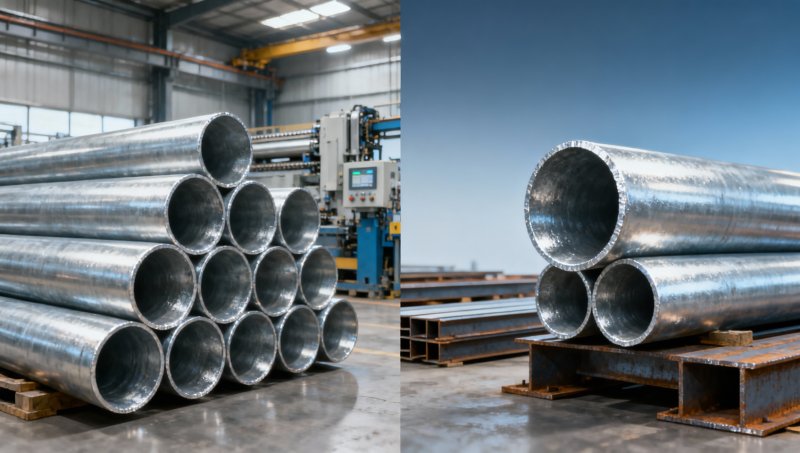
The core reason is simple: the zinc coating is the pipe’s first line of defense against corrosion. If the coating is inconsistent, too thin, poorly bonded, or damaged during production, transportation, or installation, the pipe may fail much earlier than expected. For project owners, contractors, distributors, and procurement teams, that means higher lifecycle cost, more maintenance, greater safety risk, and possible project delays.
When people search for information about a galvanized pipe manufacturer, they are usually not just asking how galvanized pipe is made. They want to know whether the supplier can deliver stable quality, whether the coating will hold up in real service conditions, and how to judge one manufacturer against another. This is especially important in construction, industrial support systems, infrastructure, fencing, water-related applications, and structural frameworks where long-term exposure to moisture or outdoor conditions is common.
A high-quality coating helps buyers achieve three practical goals: longer service life, more predictable performance, and lower total ownership cost. A poor coating may look acceptable at delivery but can quickly lead to white rust, red rust, coating peeling, reduced wall protection, and expensive replacement work.
What coating quality actually affects in real projects
For technical evaluators and quality teams, coating quality is not only a visual issue. It directly influences several critical performance areas:
- Corrosion resistance: A uniform zinc layer protects the steel substrate from moisture, oxygen, and many environmental contaminants.
- Service life: Better coating thickness and adhesion usually mean longer usable life, especially in outdoor or humid environments.
- Safety and structural reliability: In support structures, handrails, frames, and industrial systems, early corrosion can weaken performance over time.
- Maintenance frequency: Inferior coating increases repainting, inspection, repair, and replacement costs.
- Appearance and downstream usability: Uneven coating, ash inclusions, drips, rough surfaces, or bare spots can affect fabrication, welding preparation, and end-use appearance.
For decision-makers and finance approvers, the key point is that coating quality often determines whether a lower unit price is actually economical. A cheaper pipe with unstable galvanizing can become the more expensive option once downtime, repairs, claims, and shortened replacement cycles are considered.
How to judge a galvanized pipe manufacturer beyond price
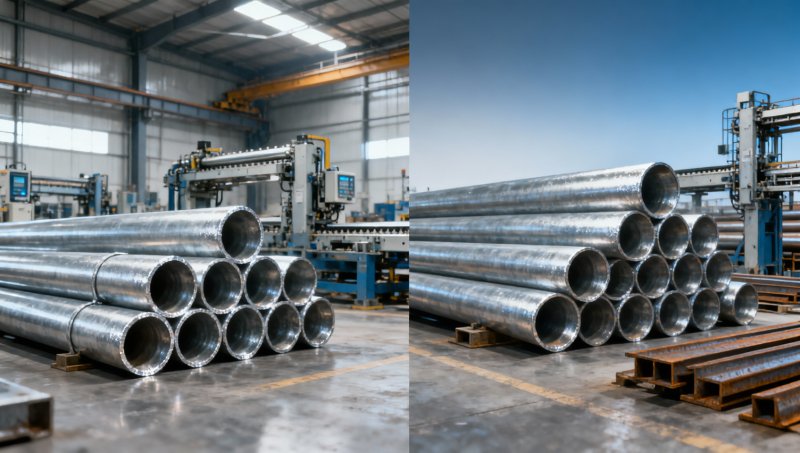
If you want to compare suppliers effectively, focus on measurable indicators instead of general promises. A reliable galvanized pipe manufacturer should be able to explain both its production process and its quality control method clearly.
Important points to verify include:
- Coating thickness consistency: Ask for actual coating thickness data, not only standard declarations. Consistency matters as much as peak values.
- Adhesion performance: The zinc coating should bond firmly to the steel surface and resist peeling or flaking during handling and fabrication.
- Surface condition: Check for smoothness, excessive zinc lumps, bare areas, burns, cracks, or obvious visual defects.
- Compliance with standards: Confirm whether the product follows ASTM, EN, JIS, GB, or project-specific requirements.
- Raw material and pretreatment control: Surface cleaning, pickling, fluxing, and process temperature control all affect final coating quality.
- Inspection capability: A qualified manufacturer should provide coating thickness reports, dimensional inspection, appearance checks, and where needed, corrosion-related test support.
- Application suitability: Indoor dry use, coastal exposure, industrial atmosphere, and high-humidity areas may require different expectations for coating performance.
For importers, distributors, and project managers, consistency between batches is also essential. One good shipment is not enough. The supplier should show stable process control, dependable lead times, and repeatable quality across orders.
Common coating problems that create hidden procurement risk
Many buyers focus on size, weight, and base steel grade, but hidden problems often begin with coating defects that are missed during sourcing. These issues may not cause immediate rejection, yet they can become costly after installation.
Typical risks include:
- Thin local coating: Some pipe sections corrode faster than others, creating uneven service life.
- Poor adhesion: Coating flakes off during cutting, threading, transport, or installation.
- Excessively rough or uneven surface: This can indicate unstable process control and affect downstream use.
- Inadequate edge or end protection: Pipe ends are often vulnerable during handling and site exposure.
- Weak packaging and logistics protection: Even a good coating can be damaged before arrival if bundling and export packing are poor.
These problems matter because galvanized pipe is often selected specifically to reduce corrosion risk. If the coating cannot perform as expected, the main reason for choosing galvanized steel is undermined.
Why quality control capability matters as much as manufacturing capacity
A large factory alone does not guarantee good coating quality. What matters more is whether the manufacturer controls each stage of production and checks the final result against agreed specifications. Strong quality control reduces sourcing uncertainty for global buyers.
As a structural steel manufacturer and exporter from China, Hongteng Fengda supports international customers with modern manufacturing facilities, strict quality control, and products aligned with major standards such as ASTM, EN, JIS, and GB. For buyers managing mixed steel procurement, this matters because coating quality is only one part of a broader supply reliability question. Many projects also require complementary products such as angle steel, channel steel, steel beams, cold formed steel profiles, and stainless materials for corrosion-sensitive applications.
For example, in projects where galvanizing is suitable for structural or external applications but higher corrosion resistance or cleaner surface finish is required for specific components, buyers may also review products such as 316 Stainless Steel Coil. It is used in demanding sectors including chemical, food processing, medical equipment construction, transportation, kitchenware, and outdoor decoration engineering. With tensile strength of at least 520, yield strength of at least 275, elongation of at least 55–60, and surface finish options such as BA, 2B, NO.1, NO.4, HL, and 8K, it can help procurement teams compare material solutions based on environment, fabrication needs, and lifecycle expectations rather than price alone.
What different stakeholders should ask before placing an order
Different roles in the buying process judge coating quality from different angles. A better purchase decision happens when these concerns are aligned early.
- Procurement teams: What is the coating specification, inspection method, lead time stability, and claim process?
- Technical evaluators: Is the coating thickness suitable for the service environment? Is adhesion verified? Are test reports available?
- Quality and safety managers: How are defects controlled, documented, and traced by batch?
- Project managers: Will the pipe arrive protected, on schedule, and ready for installation with minimal rework?
- Business and financial decision-makers: Does the supplier reduce long-term cost and project risk, not just offer a lower quotation?
- Distributors and resellers: Is the product quality consistent enough to protect reputation in the local market?
These are the questions that separate a routine purchase from a reliable sourcing strategy.
How better coating quality creates long-term business value
High coating quality delivers value well beyond product compliance. It supports longer service intervals, reduces customer complaints, lowers replacement frequency, and improves confidence in project execution. In competitive construction and industrial markets, that reliability can be a major commercial advantage.
For global buyers, the best manufacturer is usually not the one offering the lowest visible price, but the one providing the most dependable overall result: compliant production, stable coating performance, clear documentation, and fewer downstream surprises. That is especially true for exporters and project suppliers serving diverse climates and regulatory requirements.
In short, coating quality matters in a galvanized pipe manufacturer because it directly affects corrosion resistance, durability, safety, and total project cost. Buyers who evaluate coating thickness, adhesion, surface condition, standards compliance, and supplier quality control are far more likely to make sound procurement decisions. Instead of treating galvanizing as a basic finish, treat it as a performance factor that determines whether the pipe will truly deliver value over time.
Please give us a message


Please enter what you want to find