When selecting materials for food processing, hygiene and durability are paramount. A high-quality ss tube offers exceptional corrosion resistance, ease of cleaning, and structural integrity, making it the ideal choice for sanitary applications. As an information researcher evaluating material options, understanding the specific benefits of stainless steel in food-grade environments is crucial. This guide explores why choosing an ss tube is essential for maintaining strict sanitary standards and ensuring operational efficiency in the food processing industry.
The Core Demands of Food Processing Environments
Food processing facilities operate under some of the most stringent hygiene regulations globally. Every component that comes into contact with food, or even forms part of the processing environment, must prevent contamination. This is where the fundamental limitations of carbon steel or plastics become apparent. Carbon steel rusts and harbors bacteria in microscopic pits, while certain plastics can degrade under high temperatures or leach chemicals when exposed to aggressive cleaning agents.
An ss tube, typically manufactured from austenitic stainless steel grades like 304 or 316, addresses these vulnerabilities. The chromium content in the alloy forms a passive oxide layer on the surface, which self-repairs in the presence of oxygen. This passive layer is what provides the essential corrosion resistance required to withstand the harsh realities of a food plant—constant exposure to moisture, acidic food products, and caustic cleaning chemicals.
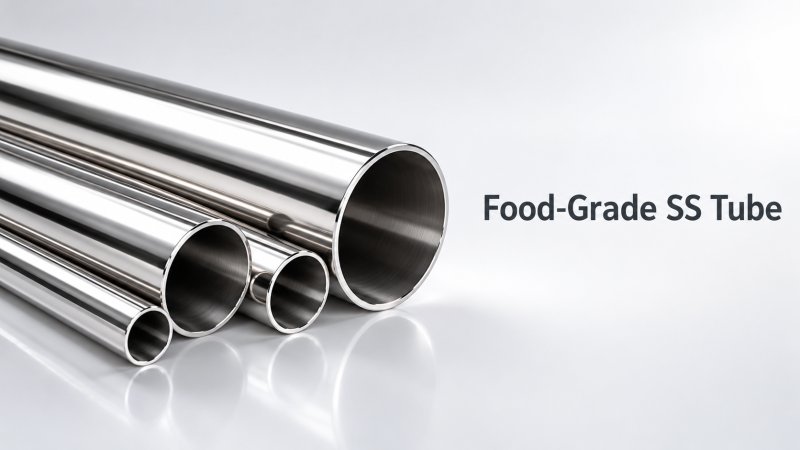
Moreover, the physical smoothness of a properly finished ss tube is critical. Sanitary standards dictate that internal surfaces must have a specific roughness average to prevent biofilm formation. A seamless or well-welded and polished ss tube ensures that there are no crevices for bacteria like Listeria or Salmonella to hide, making it vastly superior to alternatives when it comes to cleanability.
Material Properties and Cleaning Protocols
To truly understand why an ss tube is the industry standard, one must look at how it interacts with modern cleaning protocols. Food processing relies heavily on Clean-In-Place (CIP) and Sterilize-In-Place (SIP) systems. These systems pump highly concentrated acids, caustic sodas, and hot water or steam through the piping networks at high velocities.
Not all metals can survive this chemical assault. Aluminum, for instance, reacts violently with caustic cleaners, while copper can tarnish and contaminate the product. Stainless steel, however, maintains its structural and chemical stability. The high nickel and molybdenum content in grades like 316 further enhances resistance to pitting and crevice corrosion, which is particularly important in environments with high chloride concentrations, such as dairy or meat processing plants where salt is frequently used.
Surface finish is another critical, yet often overlooked, aspect of sanitary ss tube selection. The internal surface roughness directly impacts the ability to clean the pipe. A standard mill finish might be sufficient for water lines, but for food and beverage applications, an Ra value of 0.8 micrometers or less is typically required. To achieve this, tubes often undergo mechanical polishing or, more effectively, electropolishing. Electropolishing removes the microscopic peaks on the metal surface, leaving an ultra-smooth, passive layer that is highly resistant to corrosion and incredibly easy to clean.
Thermal stability is equally important. Processing lines often transition rapidly from hot product flows to cold CIP cycles, and then to high-temperature steam sterilization. The low thermal expansion coefficient and high thermal conductivity of an ss tube allow it to handle these thermal shocks without warping or losing its mechanical strength.
Structural Support and Auxiliary Fabrication
While the ss tube handles the direct fluid transport, the overall integrity of a food processing line also depends on its structural framework. Equipment supports, conveyor guides, and protective guarding must also meet strict hygiene and durability standards. This is where the broader category of stainless steel structural components comes into play.
For non-contact structural applications, such as equipment framing or facility support structures, manufacturers often utilize specialized profiles. For instance, a 304 Stainless Square steel rod can be an excellent choice for building robust, corrosion-resistant frames for processing machinery. These rods, often hardened by cold working processes, offer higher formability than many standard 300 series grades while maintaining flexibility and strength under pressure. They are widely used not just in food processing frameworks, but also in manufacturing kitchenware, medical instruments, and outdoor decoration engineering where a balance of strength and corrosion resistance is required.
Sourcing these structural components requires the same level of scrutiny as the sanitary tubing. The structural elements must align with the overall hygienic design principles of the facility, ensuring that support frames do not become secondary sources of contamination due to poor material selection or inadequate surface finishes.
Navigating Standards and Sourcing Risks
For an information researcher or procurement professional, selecting the right material is only half the battle; verifying its compliance and sourcing it reliably is the other. The food processing industry is governed by a complex web of international standards. Materials must comply with FDA regulations in the US, EFSA guidelines in Europe, and various local food safety authorities. Furthermore, the physical and chemical properties of the steel must meet standards such as ASTM, EN, JIS, or GB.
This is where partnering with an experienced manufacturer becomes critical. Hongteng Fengda, as a professional structural steel manufacturer and exporter based in China, understands the nuances of these global standards. By specializing in angle steel, channel steel, steel beams, and customized structural steel components, they provide solutions that comply with major international specifications. Serving customers across North America, Europe, the Middle East, and Southeast Asia, Hongteng Fengda supports global buyers with stable production capacity, consistent quality, and dependable lead times.
When sourcing materials for a food processing facility, whether it is sanitary tubing or structural supports, ensuring that the supplier has modern manufacturing facilities and strict quality control is non-negotiable. Relying on a supplier with stable production capacity helps mitigate sourcing risks. It ensures that the materials delivered match the exact chemical composition and mechanical properties required, preventing costly replacements or project delays. Dependable lead times are equally important, as food processing projects often operate on tight schedules where a delay in material delivery can halt the entire construction or upgrade process.
Evaluating Lifecycle Costs and Operational Efficiency
When evaluating material options, it is a common mistake to focus solely on the initial procurement cost. While an ss tube and high-grade stainless structural components may have a higher upfront cost compared to carbon steel or plastic alternatives, the lifecycle cost tells a different story.
The operational efficiency of a food processing plant is directly tied to its uptime and maintenance requirements. A substandard piping system will require frequent inspections, more aggressive cleaning cycles, and premature replacements. In contrast, a high-quality ss tube system minimizes unplanned downtime. The ease of cleaning reduces the time required for CIP cycles, saving water, chemicals, and energy. Furthermore, the durability of the material means that the system can operate safely for decades without structural degradation.
When factoring in the cost of potential product recalls due to contamination, or the financial impact of a production halt caused by a pipe failure, the initial investment in premium stainless steel components quickly justifies itself. It is an investment in risk mitigation and long-term operational stability, rather than just a line item on a construction budget.
Next Steps for Material Selection
Choosing the right materials for sanitary applications in food processing is a multi-faceted decision that goes beyond basic material properties. It requires a deep understanding of the specific process conditions, the chemical environment, the cleaning protocols, and the structural demands of the facility.
As you move forward with your material evaluation, it is essential to define the exact grade of stainless steel required for each specific application. Differentiate between the grades needed for direct product contact and those suitable for auxiliary structures and non-contact zones. Additionally, engage with your suppliers early in the design phase. Discuss your specific requirements for surface finish, welding standards, and documentation. Verify their quality control processes and ensure they can provide the necessary material test certificates and compliance documentation. By taking a comprehensive approach to material selection and supplier evaluation, you can build a food processing facility that is compliant, hygienic, and resilient.
Please give us a message


Please enter what you want to find