Meta Title: Why Choose 1.5 Inch Galvanized Pipe Threaded Both Ends for Site Installation
If you are trying to keep a site moving without rework, delayed fittings, or corrosion complaints a few months after handover, 1.5 inch galvanized pipe threaded both ends is often a practical choice. It is not the right answer for every system, but for many construction and industrial installations it reduces fabrication work on site, speeds up assembly, and gives crews a more predictable connection method. That matters when labor is tight, access is poor, and schedule pressure is real.
Many buyers first look at diameter and price. Project managers usually learn that the bigger issue is how the pipe behaves once it reaches site: Is it ready to install? Are the threads consistent? Will the coating hold up in storage and early service? Can local crews fit it without special welding work? Those are the questions that actually affect progress.
What makes 1.5 inch galvanized pipe threaded both ends useful on site
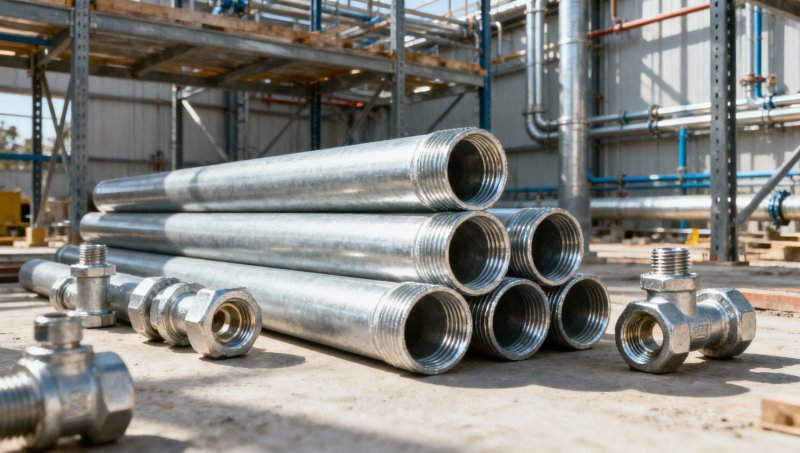
The reason this pipe is specified so often is simple: it removes steps. A pipe that arrives already threaded at both ends can go directly into assembly with couplings, fittings, valves, or short runs where field welding is either inconvenient or undesirable. For site teams, fewer fabrication steps usually mean fewer chances for dimensional error and fewer delays caused by waiting on cutting and threading equipment.
In practical terms, that helps in jobs such as temporary water lines, fire-related auxiliary runs where threaded systems are permitted by the project design, compressed air layouts, light industrial utility lines, agricultural service lines, and external installations where zinc protection adds value. Final suitability still depends on code, medium, pressure, and project specification, so the system designer’s requirements always come first.
There is also a reliability advantage. Factory-threaded ends are generally more consistent than rushed field threading, especially when site conditions are dirty, wet, or crowded. A clean thread profile makes sealing easier and reduces the risk of crossed threads, poor make-up, or leakage during testing.
A short answer, if you need one: choose it when you want a corrosion-resistant steel pipe that is quick to connect, easier to manage on site, and less dependent on field fabrication quality.
Why project schedules benefit from pre-threaded pipe
On busy sites, labor hours disappear into small tasks. Measuring, cutting, threading, cleaning, checking thread quality, and correcting bad cuts can consume more time than people expect. When the pipe arrives threaded on both ends, the installation team can focus on routing, support spacing, alignment, and final tightening.
This is especially useful when:
- the work area has limited power supply for threading machines
- the installation zone is elevated, congested, or weather-exposed
- multiple subcontractors are sharing the same work face
- the project has strict hot-work controls
- the handover window is short
One common mistake is assuming the labor saving is only in the threading itself. In reality, the bigger gain often comes from coordination. Pre-threaded materials are easier to sequence because the crew does not need to create a mini fabrication station in the middle of an active construction area.
Galvanizing matters, but only when it matches the environment
The zinc coating is a real advantage, but it should not be treated as a universal fix. Galvanized pipe performs well in many outdoor and humid service conditions because the coating helps slow surface corrosion. That makes it a sensible option for installations exposed to weather, intermittent moisture, and storage conditions that are less than ideal before commissioning.
Still, there are limits. If the pipe will carry media or operate in an environment that is chemically aggressive, high-temperature, or incompatible with zinc-coated surfaces, you need to check the actual service conditions. In some projects, black steel, stainless steel, lined pipe, or another material may be more appropriate. Good project decisions come from matching the pipe to the environment, not from assuming galvanized always means better.
This is where experienced sourcing helps. A supplier that understands structural and industrial steel products can usually identify whether your concern is really corrosion resistance, connection speed, structural support matching, or a combination of all three. Hongteng Fengda, a structural steel manufacturer and exporter from China, works across construction, industrial, and manufacturing supply with products aligned to ASTM, EN, JIS, and GB requirements, which is useful when a project involves mixed standards or export coordination.
Why threaded both ends is often better than site-threaded lengths
Some contractors prefer to thread everything on site for flexibility. That can work on small jobs or when final dimensions are still moving. But on larger projects, site-threaded pipe introduces several familiar risks.
First, thread quality becomes crew-dependent. Even a capable team can struggle when tooling is worn, pipe ends are damaged in handling, or the workspace is awkward. Second, galvanizing can be compromised at freshly cut and threaded areas unless those areas are treated correctly. Third, site-made threads often create fit-up delays because every adjustment pulls labor away from installation.
Pre-threaded both-end pipe is not perfect either. You need better planning for lengths, fitting counts, and routing. But where the layout is reasonably defined, that tradeoff usually works in your favor.
A useful rule on site is this: if your team already knows the run lengths, fitting pattern, and connection points, pre-threaded pipe tends to be the lower-risk choice. If the routing is still changing daily, you may need a mixed approach rather than an all-in decision.
Where buyers get caught out
The usual problems are not dramatic. They are small specification gaps that become expensive after delivery.
One is confusing nominal size with exact outside dimensions and fitting compatibility. Another is focusing on coating and forgetting thread standard. If your pipe thread type does not match the fittings or valves already approved for the project, the installation slows down immediately. Buyers should confirm the applicable standard, thread form, length tolerance, coating method, and intended fittings before placing the order.
Packaging and handling are also easy to underestimate. Threaded ends need protection. If thread protectors are poor or missing, transport damage can wipe out the convenience you paid for. The same applies to storage. Galvanized pipe stored directly on wet ground or left open to contamination can create preventable fitting issues later.
Another point many project teams overlook is the support system around the pipe. On industrial and steel-structure jobs, the pipe itself may be only one part of the coordination problem. Supports, brackets, wall beams, or lightweight framing members may need to align with the routing and corrosion expectations of the pipe system. In those cases, it can be practical to source adjacent steel items from a supplier with broader fabrication capability. For example, if the same project also requires purlins, wall members, brackets, or structural framing, reviewing options from a Channel Steel Supplier can simplify matching materials, tolerances, and delivery timing, especially where galvanized or anti-corrosion components are used together.
When this pipe is a strong fit, and when it is not
It is a strong fit when the installation team needs a straightforward, mechanical connection method and the route is already defined well enough to order usable lengths. It also makes sense when the site wants to reduce hot work, shorten installation time, and limit exposure to early corrosion during storage or service.
It may be a weaker fit when the system requires frequent field modifications, when service conditions are unsuitable for galvanized coating, or when the project specification calls for another joining method. In high-precision process systems or highly corrosive environments, a different material and connection strategy may be the better long-term answer.
This distinction matters because many procurement mistakes come from buying around one benefit. Fast installation is valuable, but not if it conflicts with service requirements. Corrosion resistance is valuable, but not if thread compatibility is wrong. The right decision balances installation efficiency, operating condition, and total project risk.
What to confirm before you place the order
Before approving a purchase, project teams should verify a few points with the supplier and with the installation contractor:
- applicable pipe standard and grade
- thread standard and fitting compatibility
- galvanizing method and coating expectations
- pipe length plan and allowance for couplings and fittings
- end protection and packing for transport
- inspection documents required by the project
- whether local codes permit threaded connections for that service
None of these checks are complicated, but skipping them is how simple pipe packages turn into site claims.
For international projects, supply consistency is often as important as the pipe itself. Hongteng Fengda supports global buyers with structural steel products, OEM solutions, and production aligned with recognized standards. That matters when a project manager is trying to reduce sourcing risk across different steel categories, not just buy one line item.
FAQ
Is 1.5 inch galvanized pipe threaded both ends suitable for outdoor installation?
Often yes, if the service environment is compatible with galvanized steel and the project specification allows it. Outdoor exposure is one of the common reasons buyers choose it.
Does pre-threaded pipe really save much time on site?
On organized projects, yes. The time saving usually comes from reduced field fabrication, faster assembly, and fewer fit-up corrections.
Is galvanized threaded pipe always better than black steel pipe?
No. It depends on the environment, medium, code requirements, and maintenance expectations. Galvanized is helpful in many cases, but it is not a universal upgrade.
What is the main risk when buying threaded both-end pipe?
Mismatch. Thread type, fitting compatibility, and length planning cause more problems than the base pipe size itself.
Final thought
If your job needs a pipe that is ready to connect, easier to manage on site, and better protected against routine corrosion exposure, 1.5 inch galvanized pipe threaded both ends is usually worth serious consideration. The key is not to buy it as a generic commodity. Buy it against the real installation method, the real service condition, and the real coordination demands of your site. That is what keeps the package useful after delivery, not just attractive on paper.
Image Placeholder Notes
- img_01: Suggested placement after the section on schedule benefits; content idea: side-by-side comparison of pre-threaded pipe installation versus field-threaded workflow; alt text: “1.5 inch galvanized pipe threaded both ends prepared for faster site installation”
Internal Link Anchor Text Suggestions
- galvanized steel pipe for construction projects: product category or application guide
- threaded steel pipe selection guide: technical article or buying guide
- channel steel for pipe support systems: structural support product page
- ASTM EN JIS GB steel supply capabilities: standards or quality assurance page
- custom structural steel components for industrial projects: OEM solutions page
External Source Directions
- industry association technical guidance on steel pipe and threaded connections
- government or regulatory pages covering piping codes and installation compliance
- official manufacturer technical documents for galvanized pipe coating and thread standards
Please give us a message


Please enter what you want to find