Why C channel size is becoming a bigger decision in steel construction
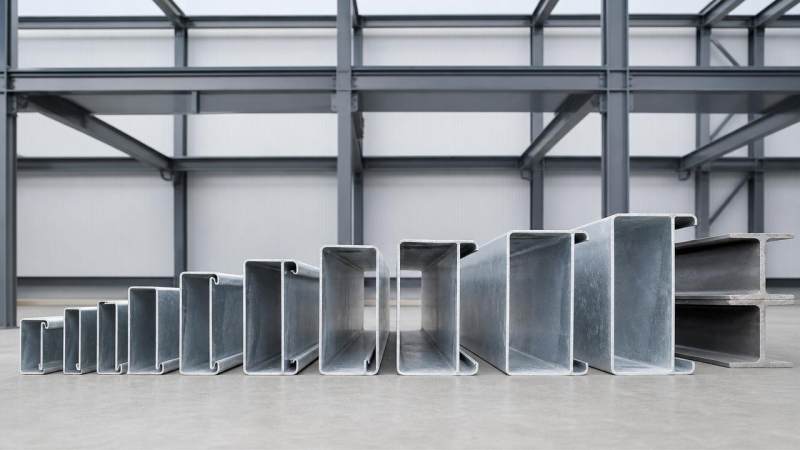
Choosing the right C channel size now carries more weight than before.
In modern steel projects, section size influences strength, fabrication speed, corrosion performance, and total installed cost.
That is why structural galvanized steel C channel for construction has become a key evaluation point across industrial structures and building frames.
Choosing the right C channel size directly affects strength, load distribution, installation efficiency, and long-term project performance.
For technical evaluation, structural galvanized steel C channel for construction must match design loads, connection conditions, and exposure environments.
This article explains why size selection matters and how reliable standards support safer and more efficient steel construction decisions.
The market signal is clear: section sizing is moving from routine choice to risk control
Steel construction is changing under pressure from tighter schedules, lighter structures, and stricter quality expectations.
As projects become more engineered, oversizing is no longer seen as the safest option.
Undersizing, however, creates clear structural and service-life risks.
This shift makes structural galvanized steel C channel for construction more than a commodity section.
It becomes a design-sensitive component that affects procurement accuracy and downstream installation performance.
In many cases, the chosen C channel size also affects galvanizing quality, connection details, and transport efficiency.
What current project conditions are pushing this change
- Longer spans and higher live-load expectations in industrial buildings.
- Greater use of prefabricated steel assemblies with tighter dimensional tolerance.
- More outdoor exposure requiring galvanized protection and stable coating quality.
- Pressure to reduce waste, simplify welding, and improve lifting efficiency.
- Growing dependence on international standards such as ASTM, EN, JIS, and GB.
Why structural galvanized steel C channel for construction performs differently by size
Every steel section carries loads according to geometry, thickness, and support condition.
For structural galvanized steel C channel for construction, size changes influence bending resistance, local buckling behavior, and torsional stability.
A larger web can improve load transfer, while thicker flanges can increase section rigidity.
But bigger is not always better.
Excess section size may increase dead load, complicate hole alignment, and raise zinc consumption during galvanizing.
Core technical effects of size selection
These variables explain why structural galvanized steel C channel for construction should be assessed as part of a full system.
Section size, steel grade, coating, and fabrication method work together.
The drivers behind smarter section selection are technical, economic, and environmental
Recent project decisions show that size optimization is no longer only an engineering exercise.
It also reflects budget targets, delivery planning, and lifecycle expectations.
Main factors shaping sizing decisions
- Load efficiency: accurate sizing improves strength-to-weight performance.
- Corrosion strategy: galvanized sections must fit the exposure class and maintenance plan.
- Fabrication compatibility: punching, cutting, and welding depend on stable dimensions.
- Installation speed: balanced sizes reduce handling difficulty and alignment problems.
- Supply continuity: standard ranges lower lead-time risk and improve sourcing reliability.
This is also where section coordination matters.
Some structures combine C channels with beams for balanced framing performance.
In industrial structure applications, I-beam products are often paired with channels for primary support and secondary framing.
Options include grades such as Q195-Q235, Q345, SS400, A36, ST37-2, and St52.
Typical dimensions cover 4.5mm-15.8mm thickness and 6-12m lengths, with tolerance controlled within ±1%.
Compliance with JIS, ATSM, DIN, GB, and EN helps keep multi-market projects consistent.
Capabilities such as bending, welding, decoiling, punching, and cutting also support integrated fabrication planning.
The impact of wrong C channel size spreads across the whole project chain
When section size is misaligned with real conditions, the effect rarely stays limited to one drawing detail.
It can appear during machining, shipment, erection, inspection, or later service life.
Where the consequences usually appear
- Design stage: repeated recalculation and delayed approval.
- Fabrication stage: extra trimming, poor hole matching, and heat distortion.
- Logistics stage: inefficient packing and higher freight weight.
- Installation stage: slower assembly and increased crane time.
- Operation stage: vibration, deformation, corrosion concentration, or early replacement.
These problems explain why structural galvanized steel C channel for construction should be reviewed beyond nominal dimensions.
Real project success depends on tolerance control, coating consistency, and dependable steel quality.
What deserves closer attention when evaluating structural galvanized steel C channel for construction
Several checkpoints can improve confidence before final specification or sourcing.
Key points worth checking first
- Confirm actual load path, not only estimated section preference.
- Check span, bracing interval, and connection detail together.
- Match steel grade with required strength and forming behavior.
- Review galvanizing suitability for humid, coastal, or chemical exposure.
- Ask for dimensional tolerance data and standard compliance records.
- Verify whether custom punching or cutting changes section performance.
- Consider availability of repeat production for future project phases.
Reliable production capacity matters here.
Hongteng Fengda, a structural steel manufacturer and exporter from China, supplies angle steel, channel steel, steel beams, cold formed steel profiles, and customized components.
With modern manufacturing facilities and strict quality control, products comply with major standards including ASTM, EN, JIS, and GB.
Stable production, consistent quality, and dependable lead times help reduce sourcing risk in global steel construction projects.
A practical way to judge the next move in sizing decisions
The best decision usually comes from combining engineering logic with supply reality.
A section that looks efficient on paper may fail if tolerance, coating, or delivery consistency is weak.
For upcoming projects, review structural galvanized steel C channel for construction early, not after fabrication details are fixed.
Early coordination helps avoid redesign, overuse of steel, and preventable field adjustments.
If a project faces demanding exposure, tight tolerances, or mixed framing systems, confirm section sizing with a supplier that can support standard and customized structural steel solutions.
That approach creates safer structures, better cost control, and more reliable long-term performance.
Please give us a message


Please enter what you want to find