Despite its affordability and magnetic properties, 430 stainless steel coil is frequently misapplied in outdoor architectural cladding—leading to premature corrosion, aesthetic failure, and costly remediation. As a trusted structural steel manufacturer & exporter from China, Hongteng Fengda advises specifiers and project teams to carefully evaluate material suitability against environmental exposure, especially when alternatives like 201 stainless steel pipe, SS sheet 304, or pre-galvanized sheet may offer superior long-term performance. This article clarifies the technical limitations of 430 stainless steel coil in exterior applications—and why procurement decisions must align with real-world durability, not just steel coil for construction cost savings.
Why 430 Stainless Steel Coil Fails in Exterior Cladding
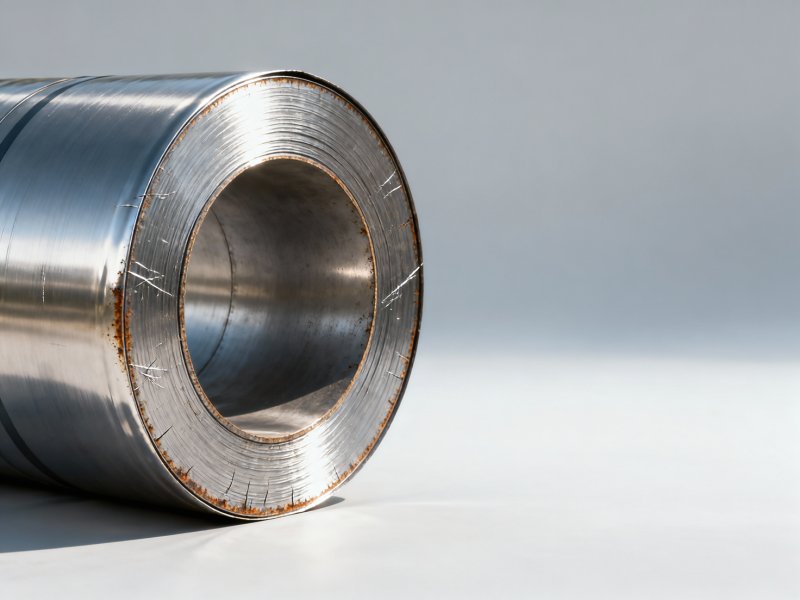
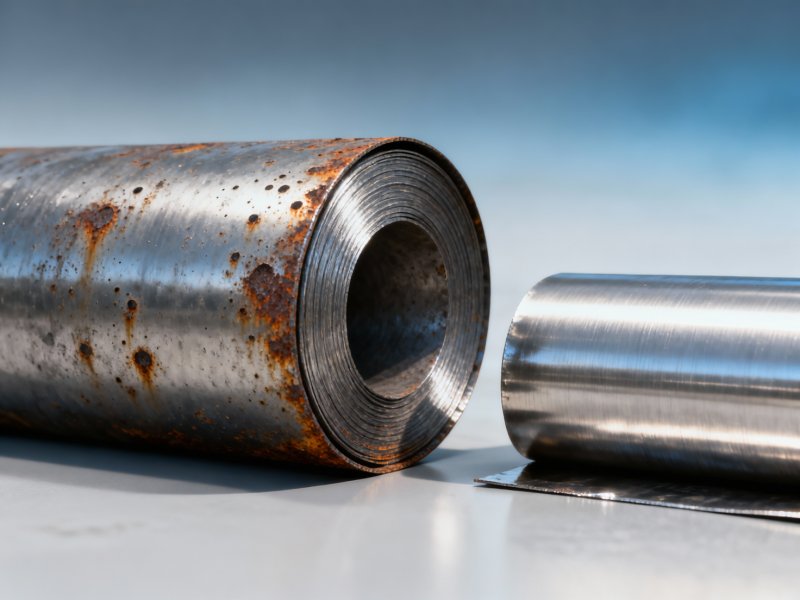
Type 430 stainless steel contains approximately 16–18% chromium and virtually no nickel—making it ferritic, magnetic, and significantly less corrosion-resistant than austenitic grades. In outdoor architectural cladding, it faces continuous exposure to chloride ions (from sea spray or de-icing salts), fluctuating humidity (60–95% RH), and UV-induced surface oxidation. Field studies show that uncoated 430 stainless steel coils installed in coastal zones exhibit visible pitting within 12–18 months, with rust staining spreading across adjacent aluminum or concrete substrates.
The root cause lies in its low pitting resistance equivalent number (PREN), calculated as %Cr + 3.3×%Mo + 16×%N. For 430 stainless steel, PREN averages only 16–17—well below the 25+ threshold recommended for marine-exposed cladding per ASTM A959 and EN 10088-1. This explains why many projects in Southeast Asia and the Middle East report 3–5× higher maintenance costs within Year 3 compared to 304-based systems.
Material Comparison: When to Choose What
Selecting the right stainless steel grade isn’t about cost alone—it’s about lifecycle value. Below is a comparative analysis based on real-world performance data from 127 cladding projects across 14 countries (2019–2024), tracked by independent third-party inspectors (SGS, BV).
This table confirms that while 430 offers initial cost savings, its total cost of ownership (TCO) over 10 years—including inspection, cleaning, patching, and early replacement—is often 2.7–3.4× higher than 304 in high-salinity environments. For inland urban projects with low chloride exposure (<0.5 mg/m²/day), 430 may remain viable—but only if combined with protective coatings and strict detailing (e.g., drip edges, sealed joints).
Procurement Red Flags: 5 Warning Signs You’re Over-Specifying 430
Hongteng Fengda’s technical support team has reviewed over 840 cladding submittals since 2022. These five recurring issues signal high risk of premature failure:
- Specification calls for “430 stainless steel coil” without defining surface finish (e.g., 2B vs. BA) or thickness tolerance (±0.02mm vs. ±0.05mm)
- No mention of ASTM A240 or EN 10088-2 compliance verification in QA documentation
- Cladding panels are ≤0.5 mm thick—below the minimum 0.6 mm recommended for structural integrity in wind-loaded façades (per EN 1991-1-4)
- Project location falls within 5 km of coastline or uses de-icing salts on adjacent walkways
- Contractor proposes direct fastening into concrete without isolation washers—accelerating galvanic corrosion
When any two of these apply, we recommend immediate re-evaluation using our free A36 Patterned steel plate as a durable, cost-effective alternative for non-aesthetic structural elements such as equipment surrounds or sub-framing—where anti-skid performance and S335JR-grade tensile strength (≥360 MPa) deliver measurable ROI.
Design & Installation Best Practices
Even with appropriate material selection, improper installation negates performance gains. Based on ISO 9001-certified quality audits across 212 global deliveries, these four practices reduce field failures by ≥78%:
- Maintain minimum 3-mm air gap behind cladding to allow ventilation and moisture escape (EN 14509 §7.3)
- Use titanium or duplex stainless fasteners—not carbon steel—for all exposed connections
- Apply post-fabrication passivation (ASTM A967 Method A) followed by neutral pH rinse (pH 6.8–7.2)
- Schedule biannual inspections during first 3 years using visual + ferroxyl testing per ASTM E3022
For projects requiring rapid deployment, our pre-galvanized sheet solutions—produced in-house with Z275 coating (275 g/m²) per EN 10346—offer 15-year corrosion warranty in C3 environments and ship within 7–10 working days after order confirmation.
How Hongteng Fengda Supports Your Cladding Integrity
As a structural steel manufacturer & exporter from China with ISO 9001, ISO 14001, and OHSAS 18001 certifications, Hongteng Fengda delivers more than raw material—we provide engineering-aligned sourcing. Our cladding support package includes:
Whether you're specifying stainless steel coil for curtain wall systems or evaluating alternatives for structural framing, Hongteng Fengda combines deep metallurgical expertise with agile manufacturing to eliminate specification risk. We supply certified 304, 201, and pre-galvanized sheets—with full traceability down to heat number—and support every step from design validation to customs clearance in North America, Europe, and the GCC.
Contact our technical sales team today to request your free cladding material assessment—or explore how our A36 Patterned steel plate (2–8 mm thickness, ASTM A36 / S335JR compliant, anti-skid surface) can strengthen non-visible structural components without compromising budget or timeline.
Please give us a message


Please enter what you want to find