In harsh processing and transport environments, material choice directly affects safety, maintenance costs, and project timelines. That is why 316L stainless steel pipe for industrial use remains a preferred option across chemical, marine, and high-corrosion applications. For project managers and engineering leaders, understanding its value helps reduce sourcing risks, improve long-term reliability, and support efficient project execution.
Why does 316L stainless steel pipe perform so well in harsh industrial lines?
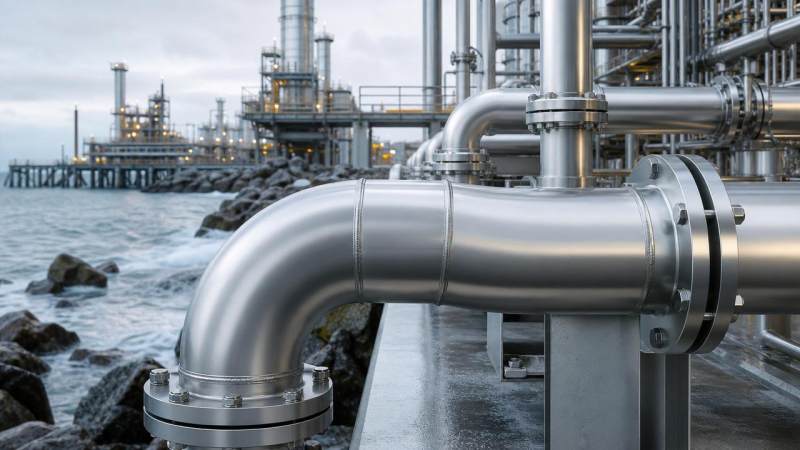
For many industrial systems, pipe failure does not begin with dramatic rupture. It starts with pitting, crevice attack, contamination, wall thinning, or weld corrosion. In corrosive service, these issues lead to unplanned shutdowns, higher inspection frequency, and difficult replacement schedules.
This is where 316L stainless steel pipe for industrial use becomes a practical engineering choice rather than a premium material selected only for specification reasons. Its chemistry and low-carbon design help it resist aggressive media while supporting weld integrity in fabricated piping systems.
Project managers often evaluate materials through three questions: Will it survive the service environment? Will it simplify construction and compliance? Will it lower lifecycle risk? In many harsh lines, 316L gives strong answers to all three.
- It offers improved resistance to chlorides and many chemical agents compared with lower alloy stainless grades.
- Its low carbon content helps reduce sensitization risk after welding, which matters for field fabrication and spool assembly.
- It supports cleaner process conditions in industries where contamination control is important.
- It balances durability with broad availability in international supply chains.
What the “L” grade changes in project execution
The “L” in 316L refers to lower carbon content. In practical terms, that means better behavior in welded zones, especially where post-weld corrosion resistance matters. For engineering teams, this can reduce concerns around heat-affected area degradation in demanding process lines.
That benefit is especially relevant in complex sites where pipe sections are cut, fit, welded, and modified during installation. Material performance must remain dependable even when fabrication is not limited to ideal factory conditions.
Which industrial environments most often require 316L stainless steel pipe for industrial use?
Not every line needs molybdenum-bearing stainless steel. However, many harsh service conditions quickly expose the limitations of carbon steel, coated pipe, or lower-grade stainless materials. The following applications are common decision points.
Typical service scenarios
- Chemical processing lines handling acidic or mildly chloride-containing fluids.
- Marine and coastal facilities exposed to salt spray, humid air, and corrosive washdown conditions.
- Food, beverage, and pharmaceutical transfer systems where cleanliness and corrosion control are both critical.
- Pulp, paper, and wastewater systems where mixed chemical exposure accelerates material degradation.
- Industrial utility lines where downtime costs are high and maintenance access is difficult.
The key point is not that 316L should replace every pipe material. It should be used where corrosion failure, contamination, or repair disruption would cost far more than the initial material difference.
The table below helps project teams connect service conditions with typical material decision logic when evaluating 316L stainless steel pipe for industrial use.
For project planning, the right interpretation is simple: the more expensive a shutdown, the more valuable corrosion resistance becomes. This is why material selection should be tied to operational consequence, not only purchase price.
How does 316L compare with other pipe materials in industrial projects?
A common sourcing mistake is to compare materials only by ton price or pipe schedule. Engineering reality is broader. Corrosion risk, fabrication complexity, coating maintenance, inspection frequency, and replacement access all affect total cost.
Comparison for procurement decisions
The table below gives a practical comparison framework for project managers who need to justify 316L stainless steel pipe for industrial use against common alternatives.
Galvanized products still have important roles in the steel industry. For example, Galvanized Pipe Manufacturers solutions in DX52D, hot-dip galvanized, or electroplated forms are widely used in construction, agriculture, machinery, low-pressure water or gas lines, and support structures where zinc protection matches the service condition.
That comparison matters because many projects contain both corrosive process piping and general utility or structural piping. The smartest procurement strategy is often mixed-material optimization, not one material for every line.
What should project managers check before buying 316L stainless steel pipe for industrial use?
The material grade alone is not enough. A good purchase decision requires matching standards, dimensions, surface condition, fabrication needs, and documentation to the actual service package.
Core buying checklist
- Confirm fluid composition, temperature range, pressure class, and whether chlorides or cleaning chemicals are present.
- Check required product standards and whether the project follows ASTM, EN, JIS, GB, or mixed documentation standards.
- Define dimensions clearly, including outside diameter, wall thickness, length tolerance, and any need for custom cut-to-length supply.
- Review welding, bending, threading, or polishing requirements before placing the order.
- Ask for inspection records, heat traceability where required, and clear packing plans for export transport.
For imported steel products, supply consistency is just as important as material specification. Buyers managing multinational projects need a supplier that can interpret drawings, communicate across standard systems, and maintain delivery reliability.
Selection factors that affect total project risk
The following table helps engineering and procurement teams turn technical requirements into a purchasing review structure.
This review method helps procurement move beyond price-only comparison. It also reduces disputes caused by incomplete specifications, especially in cross-border orders.
How do standards, fabrication, and compliance influence selection?
Industrial pipe supply is rarely just a material transaction. It is a documentation and fabrication control issue. Project teams may need mill standards, dimensional tolerance confirmation, and compatibility with site welding procedures.
Points that deserve early confirmation
- Whether the project specification references ASTM, EN, JIS, or GB and how equivalency will be evaluated.
- Whether pipe will be shop fabricated, field welded, or installed as prefabricated assemblies.
- Whether additional testing, material certificates, or third-party inspection may be requested by the owner or EPC team.
- Whether packaging, marking, and traceability requirements must fit international receiving procedures.
Hongteng Fengda works with global buyers across North America, Europe, the Middle East, and Southeast Asia, which is especially relevant when project documents use different standard systems. A manufacturer with experience in ASTM, EN, JIS, and GB alignment can reduce communication gaps and shorten approval cycles.
Where do cost savings actually come from when using 316L?
The purchase price of 316L is higher than standard carbon steel or many galvanized utility solutions. Yet harsh industrial lines are not judged only by material invoice value. They are judged by operating continuity, labor exposure, downtime risk, and service life.
Lifecycle economics to consider
- Lower replacement frequency in corrosive environments can offset higher initial spend.
- Reduced need for coatings or repeated protective maintenance simplifies long-term planning.
- Fewer leak-related shutdowns improve production stability and safety management.
- Better weld performance can reduce rework risk during installation and commissioning.
This does not mean 316L is always the lower-cost answer. It means the correct comparison should be made at system level. In mixed facilities, some lines justify stainless investment, while others are better served by galvanized or structural steel products engineered for general service conditions.
Common questions from engineering and procurement teams
Is 316L always better than 304 for industrial piping?
Not always. If the environment is mild and chloride exposure is limited, 304 may be adequate and more economical. But where salt, aggressive cleaning agents, or corrosive media are present, 316L often provides a safer margin and lower long-term risk.
Can galvanized pipe replace 316L in harsh process lines?
Usually not in aggressive chemical or high-purity service. Galvanized steel pipe is valuable in construction, machinery, support frames, low-pressure fluid transport, agriculture, and many general industrial applications. However, harsh process media often demand the corrosion profile of stainless steel rather than zinc-coated carbon steel.
What information should be prepared before requesting a quote?
Prepare the required standard, pipe size range, wall thickness, length, quantity, service condition, fabrication needs, destination market, and documentation requirements. If the project includes multiple steel categories, note which items are structural, which are utility piping, and which require corrosion-resistant stainless materials.
How can project teams reduce sourcing risk from overseas suppliers?
Use suppliers with stable production capacity, clear quality control, export experience, and familiarity with international standards. It also helps to confirm inspection documents, packaging details, communication flow, and lead time milestones before order release.
Why choose us for industrial steel and project-based supply support?
Hongteng Fengda is a professional structural steel manufacturer and exporter from China, serving global construction, industrial, and manufacturing projects with reliable steel products and customized solutions. Our core range includes angle steel, channel steel, steel beams, cold formed steel profiles, and customized structural steel components.
For project managers and engineering leaders, our value is not limited to production. We support specification review, standard matching, OEM requirements, export coordination, and quality control aligned with ASTM, EN, JIS, and GB references. This helps buyers reduce sourcing uncertainty and improve schedule control.
- Need help confirming whether 316L stainless steel pipe for industrial use is necessary for a specific line? We can review service conditions and material logic with your team.
- Need a mixed supply plan covering structural steel, utility pipe, and corrosion-resistant materials? We can assist with coordinated product selection.
- Need clarity on lead time, custom dimensions, OEM processing, or export packing? We can provide practical planning support before procurement is finalized.
- Need to align with certification or standard requirements for your destination market? We can discuss applicable documentation and production control points.
If you are comparing material options for a harsh industrial line, contact us with your drawings, size list, service environment, quantity forecast, and target standard. We can support parameter confirmation, product selection, delivery schedule review, customized solutions, certification discussion, sample arrangements, and quotation communication based on your project priorities.
Please give us a message


Please enter what you want to find