For technical evaluators comparing material performance, 304 stainless steel coil tubing for construction offers a strong balance of corrosion resistance, formability, and long-term reliability. Its suitability for demanding building environments makes it a practical choice for structural and industrial applications where durability, compliance, and cost control all matter.
The core question behind this topic is not whether 304 stainless steel is widely used, but whether it is the right specification for a given construction environment. For most indoor, urban, and moderately corrosive conditions, the answer is yes.
Technical evaluators typically need to balance service life, fabrication efficiency, code alignment, maintenance exposure, and total installed cost. That makes 304 stainless steel coil tubing for construction a material choice that should be judged through performance in use, not just purchase price.
Why technical evaluators often shortlist 304 stainless steel coil tubing first
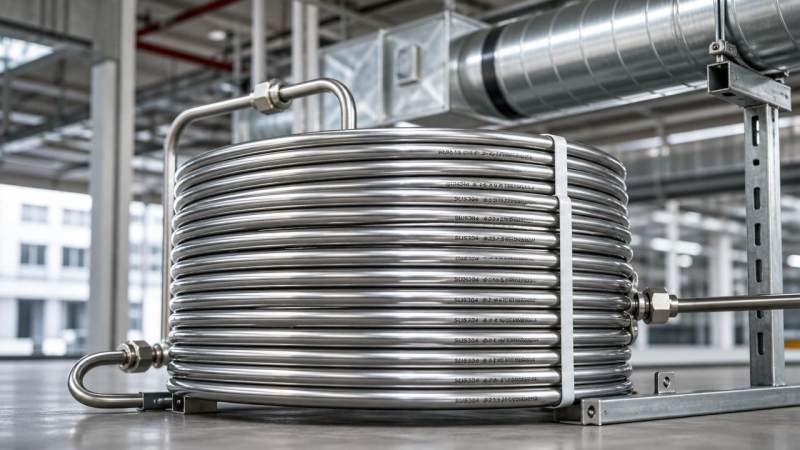
When engineers and procurement teams review tubing options, 304 grade often appears early because it delivers a practical middle ground. It resists many common forms of corrosion, is easy to fabricate, and is broadly available across global supply chains.
For construction applications, this balance matters. Materials that perform well but are difficult to bend, weld, source, or certify can create hidden project risk. 304 stainless steel coil tubing usually avoids that problem by offering reliable manufacturability alongside dependable in-service performance.
Its austenitic structure gives it good toughness and ductility, which helps during forming and installation. In projects requiring long runs, curved routing, compact layouts, or prefabricated assemblies, coil tubing can reduce joints, simplify handling, and improve consistency.
From a technical evaluation perspective, suitability comes down to whether the material fits the actual exposure category. In non-marine building environments, HVAC systems, architectural supports, utility lines, and light industrial construction, 304 is often a strong candidate.
What makes 304 stainless steel coil tubing suitable for construction environments
The main reason 304 performs well is its chromium and nickel content, which creates a stable passive layer on the surface. That protective film helps the tubing resist oxidation, moisture-related attack, and many everyday corrosive exposures found in buildings.
In practical construction terms, this means good durability in rain-exposed features, interior wet zones, commercial facilities, public infrastructure, and fabrication environments where carbon steel would need more intensive coating protection or maintenance planning.
Another advantage is formability. Coil tubing is commonly selected where installers need tighter bends, cleaner routing, or reduced cutting and joining. Good formability lowers the chance of cracking during fabrication and supports more efficient production of custom assemblies.
Weldability is also a major factor. Technical evaluators often prefer materials that can be welded with standard, well-understood procedures. 304 stainless steel generally supports this requirement well, provided heat input, filler selection, and post-fabrication cleaning are controlled properly.
Surface finish flexibility adds value too. Depending on the application, tubing may need a finish optimized for hygiene, appearance, or corrosion behavior. 304 can be supplied in finishes that suit exposed architectural use as well as functional industrial installation.
Where 304 coil tubing performs especially well in building projects
Not every construction application demands the same material properties. Evaluators should focus on where 304 creates measurable project advantages instead of assuming it is universally optimal. In the right setting, it improves both durability and installation efficiency.
One strong use case is HVAC and mechanical systems. Coil tubing can support fluid transfer, condensate management, instrumentation lines, and compact equipment connections. In these systems, corrosion resistance and bending capability help reduce leakage risk and maintenance intervention.
Another common area is architectural and exposed utility work. Where tubing remains visible or semi-visible, 304 offers a cleaner appearance than coated carbon steel and can retain that appearance with less upkeep in many interior or sheltered exterior environments.
Industrial and commercial buildings also benefit from 304 in process-related auxiliary lines, protective enclosures, handrail components, support members, and custom fabricated assemblies. These applications value the combination of strength, cleanliness, and resistance to ordinary atmospheric exposure.
For prefabrication, long continuous coils are a practical advantage. Fewer joints can mean faster assembly, fewer potential failure points, and simpler quality control. Evaluators looking at installation labor should consider this, not just the raw material rate.
What technical evaluators should verify before approving the material
Material suitability should never be based on grade name alone. A sound evaluation checks chemical composition, dimensional tolerances, surface quality, pressure requirements where relevant, forming radius limits, weld procedure compatibility, and traceability documentation.
Standards compliance is another critical step. Depending on the project location and application, buyers may need alignment with ASTM, EN, JIS, or GB requirements. Reliable suppliers should clearly document test reports, heat numbers, and inspection procedures.
Corrosion conditions must be defined with precision. Exposure to chlorides, coastal spray, deicing salts, industrial chemicals, or stagnant contaminated water can change the material decision. In such cases, the question is not whether 304 is good, but whether it is sufficient.
Evaluators should also consider fabrication quality. Stainless steel can lose some performance benefit if surfaces are contaminated during processing. Poor handling, embedded iron particles, or unclean weld zones can lead to avoidable corrosion issues later in service.
If the application involves pressure, sanitation, or critical safety loads, additional validation may be needed. That can include hydrostatic testing, non-destructive examination, finish verification, or review of welding qualifications before final approval.
How 304 compares with other common construction material options
Against carbon steel, 304 stainless steel coil tubing usually offers better corrosion resistance and lower maintenance demand. Carbon steel may have a lower initial price, but it often needs coating, repainting, or stricter environmental protection to achieve acceptable service life.
Against galvanized steel, 304 generally provides stronger long-term performance in wet or hygiene-sensitive environments. Galvanized materials can be cost-effective in many structural applications, but zinc coatings may degrade in certain service conditions or after fabrication damage.
Compared with 316 stainless steel, 304 is usually more economical and still highly capable for many building uses. However, 316 is often the better choice in marine, chloride-heavy, or highly aggressive industrial settings because of its enhanced pitting resistance.
This is why technical evaluation should be context-driven. If the environment is moderate, 304 often gives the best balance of cost and durability. If exposure is severe, moving to a higher alloy grade can prevent expensive performance failures.
Cost control is about lifecycle value, not just purchase price
Construction material decisions are frequently pressured by budget targets. Yet the most useful metric for technical evaluators is total cost of ownership. This includes fabrication efficiency, installation time, maintenance intervals, replacement risk, and service disruption.
304 stainless steel coil tubing for construction can reduce lifecycle cost in several ways. It often needs less protective finishing, supports reliable fabrication, and performs for long periods in ordinary building environments with comparatively low maintenance demand.
Its availability also matters. Because 304 is one of the most common stainless grades globally, sourcing is usually easier than for more specialized alloys. That helps buyers manage lead times, reduce procurement uncertainty, and maintain specification consistency across projects.
For export projects or multinational sourcing programs, standardization around a widely recognized grade can simplify technical review. It becomes easier to compare suppliers, verify documentation, and align material performance expectations across regions.
How related structural material choices influence the overall construction system
Technical evaluators rarely assess tubing in isolation. In real projects, stainless tubing interacts with structural frames, reinforcement systems, fabricated steel sections, and equipment supports. Material compatibility and coordination across the build are just as important as the tubing grade itself.
For reinforced concrete and broader structural applications, buyers may also review products such as Rebar. This product category is widely used as a structural steel bar and is valued for excellent formability and weldability across building applications.
Available specifications can include GB1499.2 HRB400, HRB500, HRB400E, HRB500E, ASTM A615 Grade 60, BS4449 460B, 500B, 500C, and AS/NZS 4671 500N. Certification alignment with ASTM, GB, EN, DIN, and JIS helps support international project requirements.
In practical sourcing terms, evaluating tubing and reinforcement together can improve coordination on compliance, lead time, and fabrication planning. This is especially useful when projects require both corrosion-resistant auxiliary systems and dependable structural steel supply.
Common concerns that can make 304 a poor choice if ignored
Although 304 is versatile, it is not a universal answer. The most common mistake is specifying it in chloride-rich locations without carefully assessing pitting and crevice corrosion risk. Coastal buildings and salt-exposed installations require particular caution.
Another issue is overlooking galvanic interaction. If 304 tubing is connected to dissimilar metals in wet service conditions, the assembly design should be checked carefully. Poor detailing can reduce the performance benefit of choosing stainless material in the first place.
Maintenance expectations should also be realistic. Stainless steel is low maintenance, not no maintenance. Surface deposits, construction residue, and contamination should be cleaned appropriately, especially in environments where appearance or hygiene is part of the specification.
Finally, supply quality matters as much as alloy choice. Inconsistent dimensional control, weak traceability, or poor packaging can create installation delays and site-level defects. For technical evaluators, supplier capability is part of material suitability.
How to make a sound approval decision
A practical approval process starts with defining the environment clearly. Is the tubing used indoors, outdoors, near chemicals, near salt, or in a visible finish application? Once exposure is defined, the evaluator can judge whether 304 provides adequate margin.
The next step is fabrication review. Check bend requirements, weld details, end-use pressures if applicable, finish expectations, and inspection standards. A material that performs well on paper may still create project issues if fabrication requirements are mismatched.
Then compare lifecycle economics. Consider not only the material cost, but also installation labor, expected maintenance, replacement difficulty, and the consequence of corrosion-related failure. This step often explains why 304 remains attractive in so many construction programs.
Finally, confirm supplier reliability. A capable manufacturing and export partner should provide consistent production, documentation, standard compliance, and delivery control. For global buyers, this reduces sourcing risk and supports smoother project execution.
Conclusion
For technical evaluators, the case for 304 stainless steel coil tubing for construction is strongest when the project demands a dependable balance of corrosion resistance, formability, weldability, and cost efficiency. In many building and industrial environments, it is a well-judged specification.
Its value becomes clear when decisions are based on actual service conditions rather than generic material rankings. Where exposure is moderate and fabrication flexibility matters, 304 can support long service life, efficient installation, and lower maintenance burden.
The best decision is still application-specific. Evaluate environment, compliance, fabrication, and supplier quality together. When those factors align, 304 stainless steel coil tubing is not just suitable for construction, but a technically and commercially sensible choice.
Please give us a message


Please enter what you want to find