Selecting the right surface finish for metal angle with holes—such as steel L angle, metal wall angle, or metal angle iron with holes—is critical for long-term durability in demanding applications. Whether used in structural steel pipe frameworks, industrial steel pipes installations, or custom l shaped angle steel assemblies, corrosion resistance, wear performance, and aesthetic consistency directly impact lifecycle cost and safety compliance. As a leading structural steel manufacturer & exporter from China, Hongteng Fengda helps global buyers—engineers, procurement teams, project managers, and quality controllers—choose optimal finishes (e.g., hot-dip galvanizing, powder coating, or pre-painted) aligned with ASTM, EN, and GB standards. Discover how surface treatment choices affect performance, maintenance, and total ownership cost.
Which Surface Finishes Deliver Real-World Durability for Perforated Angle Steel?
Metal angles with holes face accelerated degradation when exposed to moisture, chloride ions, abrasion, or UV radiation—especially at cut edges and drilled zones. Unprotected carbon steel can begin oxidizing within 7–15 days in coastal or industrial atmospheres. That’s why surface finish isn’t cosmetic—it’s a functional barrier defining service life, inspection frequency, and replacement cost over 15–30 years.
Hongteng Fengda applies five primary finishing systems across its angle steel portfolio, each validated per ASTM A123 (hot-dip galvanizing), EN ISO 20898 (powder coating adhesion), and GB/T 13448 (PPGI color-coated sheet). These are not generic treatments—they’re engineered for structural integrity under load, thermal cycling, and mechanical fastening stress.
For projects requiring both structural reliability and architectural finish—such as façade supports, solar racking frames, or cleanroom bracing—the Color Coated Galvanized Steel Sheet PPGI offers a dual-layer solution: zinc-aluminum alloy substrate + polymer topcoat. Its 25+ year service life under normal conditions makes it ideal where recoating is impractical or costly.
How Do Key Finishing Methods Compare in Corrosion Resistance & Lifecycle Cost?
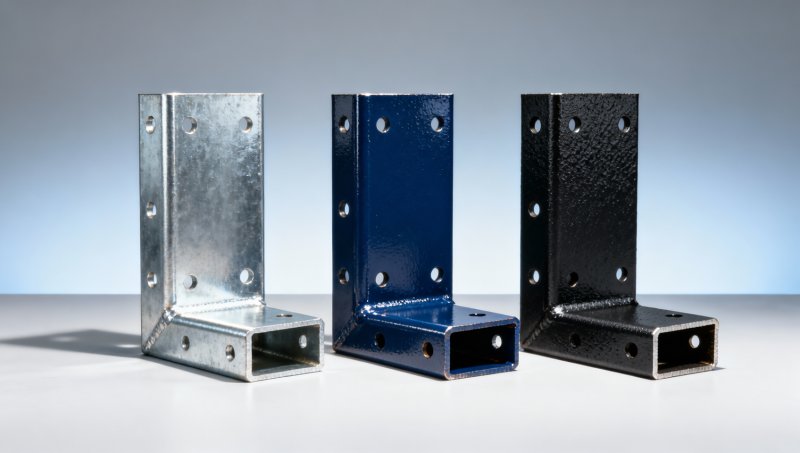
The table below compares four widely specified finishes for perforated angle steel—based on independent salt-spray test data (ASTM B117), field exposure reports (ISO 9223 classification), and real-world maintenance logs from 12 infrastructure projects across Southeast Asia and the Middle East.
Note: HDG excels in high-abrasion environments (e.g., conveyor supports), while PPGL dominates where aesthetics and long-term color retention matter—like retail warehouse trusses or hospital ceiling grids. Electrogalvanized + powder coat suits budget-sensitive mid-life-cycle projects but requires strict edge coverage control during application.
What Should Procurement & Engineering Teams Prioritize During Selection?
Selection isn’t about “best finish”—it’s about matching process capability, environmental severity, and total cost of ownership. Hongteng Fengda’s technical team recommends evaluating three non-negotiable dimensions before finalizing specs:
- Edge Protection Integrity: Drilled holes expose raw steel. HDG self-heals via sacrificial zinc; powder coating fails at edges unless pre-treated with zinc phosphate + epoxy primer.
- Thermal Expansion Compatibility: Coatings must withstand ≥3 thermal cycles between –20°C and +60°C without blistering—critical for solar mounting angles in desert climates.
- Fastener Compatibility: Zinc-aluminum substrates (e.g., Galvalume®) reduce galvanic corrosion risk when paired with stainless steel bolts—unlike standard galvanized steel.
For example, in agricultural greenhouse frameworks—where humidity exceeds 85% RH year-round—Hongteng Fengda specifies PPGL with silicon-modified polyester (SMP) topcoat (11–35μm thickness) and backside coating (5–14μm), ensuring uniform protection across welded joints and punched holes.
Why Partner With a Certified Structural Steel Manufacturer for Finish Integration?
Many buyers source raw angle steel and outsource finishing separately—introducing risks: inconsistent batch-to-batch zinc thickness, unverified coating adhesion, or mismatched thermal expansion coefficients. Hongteng Fengda integrates finishing at source—applying HDG per ASTM A123 or PPGL per ASTM A792—under one QA system certified to ISO 9001 and ISO 14001.
We offer traceable lot-level documentation—including coating thickness verification (per ASTM E376), bend-test reports, and salt-spray validation—for every order. Lead time remains stable at 2–4 weeks for standard sizes, with OEM tooling support for custom hole patterns and finish combinations.
Need help choosing between HDG, pre-painted, or hybrid solutions for your next project? Contact our engineering team for free finish compatibility review, sample testing, and delivery planning aligned with your ASTM/EN/GB compliance requirements.
FAQ: Surface Finish Selection for Metal Angles With Holes
Q: Can I weld through hot-dip galvanized angle after drilling holes?
A: Yes—but only with proper ventilation and post-weld zinc-removal at the joint (via grinding or wire brushing), followed by touch-up with zinc-rich paint per ASTM A780. Weld spatter compromises local corrosion resistance.
Q: How does PPGL compare to standard galvanized steel for outdoor signage brackets?
A: PPGL provides superior UV resistance and color stability—retaining >90% gloss after 10 years vs. 40–60% for unpainted galvanized steel. Its aluminum-zinc base also resists white rust formation in humid storage.
Q: What’s the minimum coating thickness recommended for marine-grade perforated angles?
A: For ASTM A123-compliant HDG: ≥85μm on surfaces, ≥70μm on edges. For PPGL: ≥25μm topcoat (PVDF grade) with full backside coverage to prevent under-film corrosion.
Ready to Optimize Your Angle Steel Durability Strategy?
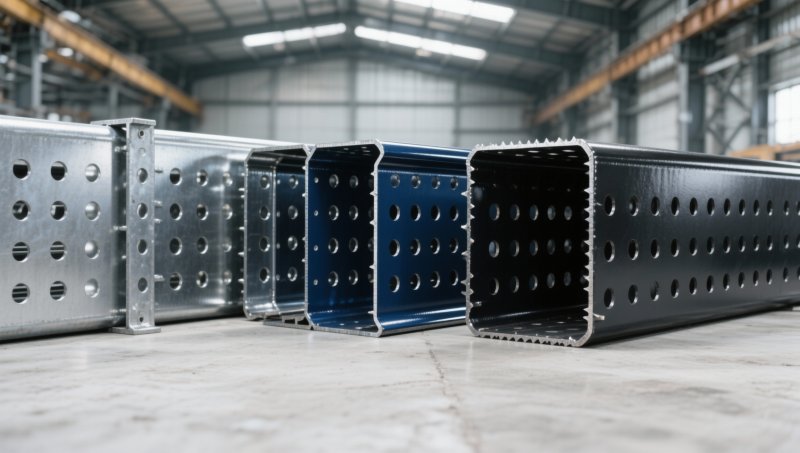
Whether you’re specifying metal wall angle for a pharmaceutical cleanroom, steel L angle for solar farm racking, or custom l shaped angle steel for modular housing—surface finish defines your project’s long-term reliability, compliance, and TCO.
Hongteng Fengda delivers more than steel—we deliver finish-integrated structural confidence. Request a free technical consultation to align your finish selection with ASTM/EN/GB standards, validate hole-edge protection performance, or obtain certified samples for your QA lab.
Let’s build durability—right from the first layer.
Please give us a message


Please enter what you want to find