Choosing the right rebar for concrete slab performance affects strength, crack control, and long-term durability. Whether you are comparing grades, coatings, or project budgets alongside galvanized sheet price, ss pipe price, or using an I beam weight calculator, understanding rebar for concrete slab selection helps engineers, buyers, and contractors make safer and more cost-effective decisions.
How does rebar choice change concrete slab performance?
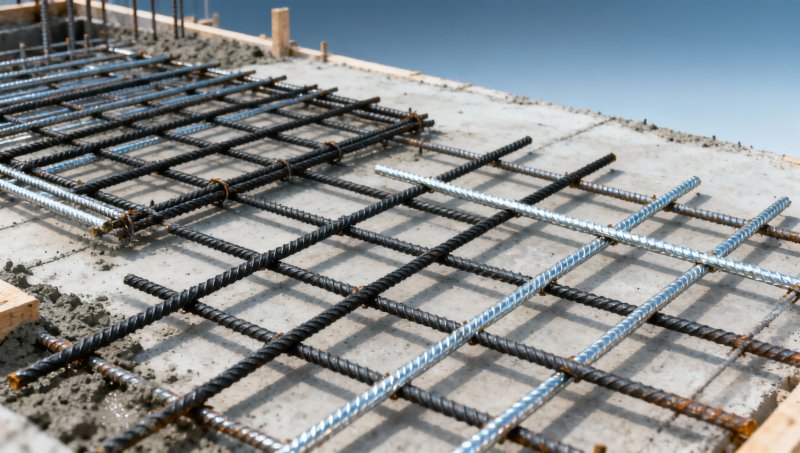
A concrete slab performs well only when concrete and reinforcement work together. Concrete resists compression effectively, but it is weaker in tension. Rebar for concrete slab applications helps absorb tensile stress, reduce crack width, and improve load distribution under foot traffic, vehicles, equipment, or stored materials. For slabs in houses, warehouses, workshops, roads, and industrial yards, the right reinforcement strategy can influence service life over 10–30 years depending on exposure and maintenance.
In practice, the best rebar is not a single universal option. A residential slab-on-grade may use a lighter reinforcement layout than a heavy-duty industrial slab. A coastal project may prioritize corrosion resistance, while an indoor manufacturing floor may focus on flatness, load cycles, and crack control. Buyers and technical evaluators therefore need to compare at least 3 core factors: bar grade, bar size, and environmental durability.
For procurement teams, another issue is compatibility with local codes and supply stability. Rebar must match the engineer’s structural design, but sourcing also depends on available diameters, coating methods, mill documentation, and delivery schedules. In cross-border purchasing, even a 2–4 week delay in steel supply can affect concrete pouring plans, labor coordination, and downstream installation.
That is why project managers should evaluate rebar for concrete slab needs from both engineering and purchasing perspectives. The goal is not only to meet design strength, but also to secure consistent quality, traceability, and practical value during fabrication, shipping, and on-site placement.
What does “best” usually mean in slab reinforcement?
In real projects, “best” usually means the option that balances structural requirement, cracking risk, corrosion condition, and budget. For one job, that may be standard carbon steel deformed rebar. For another, epoxy-coated or galvanized reinforcement may be more suitable. The answer depends on load class, slab thickness, concrete cover, moisture exposure, and expected maintenance interval.
- For dry indoor slabs, standard black rebar is commonly selected when corrosion risk is low and cost control matters.
- For marine, deicing salt, or humid zones, coated or corrosion-resistant reinforcement may reduce lifecycle repair costs.
- For slabs carrying forklifts, racks, or machinery, bar spacing and slab design often matter as much as bar grade.
Which rebar types and grades are commonly used for concrete slabs?
Most slab projects use carbon steel deformed rebar because the ribbed surface improves bond with concrete. In many markets, engineers specify grades such as ASTM-based reinforcement levels or equivalent EN, JIS, or GB standards. The actual grade requirement depends on design calculations, but common decisions usually fall within standard-strength rebar for general slabs and higher-strength rebar for heavier or more demanding applications.
Smooth round bars are less common for primary slab reinforcement where bond strength is important, but they may still be used in selected fabrications, accessories, or non-primary reinforcement contexts depending on local practice. Welded wire mesh can also be considered for light slabs, shrinkage control, or faster placement, though it is not always a full substitute for properly designed rebar in thicker structural slabs.
To make selection easier, the table below compares typical reinforcement options used in slab-related projects. Exact specification must still follow structural drawings, code requirements, and site exposure conditions.
The comparison shows that the best rebar for concrete slab work changes with service environment. In a dry warehouse, black deformed rebar may be sufficient. In a slab exposed to salt, washdown water, or repeated moisture, galvanized or coated reinforcement may offer better lifecycle economics, especially when repairs after 5–10 years would be disruptive.
How do size and spacing affect slab behavior?
Bar diameter and spacing strongly affect crack distribution and load performance. A design using smaller bars at closer spacing may control cracks differently from a design using fewer larger bars. For many slab applications, engineers review slab thickness, support conditions, joint layout, and live load before finalizing spacing. Procurement should never replace design logic with simple “bigger is better” assumptions.
As a practical rule, users and site teams should confirm 4 items before ordering: bar grade, bar diameter range, coating type if any, and quantity breakdown by length or bending schedule. These details reduce installation mistakes and help avoid mismatches between shop supply and site requirements.
What should buyers, engineers, and contractors compare before ordering?
A good procurement decision for rebar for concrete slab projects should combine technical review and supply risk control. Engineers focus on structural adequacy, while buyers need documentation, delivery reliability, and cost visibility. Quality and safety teams also need evidence that the supplied steel matches specification, especially when projects involve public infrastructure, industrial flooring, or export construction packages.
The next table summarizes a practical selection framework. It can support communication between design staff, project managers, and procurement teams during the first 7–15 days of technical clarification and quotation review.
This approach helps avoid a common mistake: choosing steel only by unit price. A lower price can become expensive if bar markings are unclear, coating is damaged, or shipment timing misses the slab pour window. In B2B construction procurement, total project cost often depends on coordination more than on raw material price alone.
A useful mid-project material reference
For projects that also require corrosion-resistant round steel for towers, ancillary structures, highway protection, street light poles, marine components, or fabricated accessories, it can be useful to review related supply sources together with slab reinforcement planning. One practical option is Galvanized Round Steel, available in DC01 material, with diameter ranges from 16–250 mm or customized lengths, and tensile strength of 570–820 MPa.
This type of galvanized round steel is applied in electric power towers, communication towers, railway and highway protection systems, marine components, building steel structure components, substation ancillary facilities, and a wide range of industrial processing parts. For buyers managing mixed steel packages, combining slab reinforcement review with related anti-corrosion steel items can improve vendor coordination, inspection planning, and shipment efficiency across 2–3 procurement batches.
Why integrated steel sourcing helps project control
When global buyers source from a manufacturer with modern facilities and controlled production, they can align technical requirements across angle steel, channel steel, steel beams, cold formed profiles, and customized steel parts. That matters for project owners and distributors who need ASTM, EN, JIS, or GB-based supply options with more predictable lead times and consistent quality records.
- Technical teams can compare steel specifications in one workflow instead of separating every item into unrelated inquiries.
- Procurement teams can reduce sourcing risk by checking standards, tolerances, and inspection documents from fewer suppliers.
- Project managers can better coordinate production windows, especially when delivery pressure is within 2–6 weeks.
How do environment, cost, and alternatives affect the best choice?
Cost evaluation should include both initial material price and expected maintenance exposure. In many inland projects, black rebar remains the economical choice. However, where moisture, chlorides, chemicals, or coastal air are present, the “cheapest” option at purchase may lead to higher repair expenses later. Slab repairs can involve cutting, demolition, patching, shutdown time, and operational loss, which often exceed the original reinforcement price difference.
For this reason, technical evaluators often compare 3 paths: standard carbon steel rebar, coated rebar, and alternative reinforcement systems such as welded mesh or fiber-reinforced concrete supplements. Fibers can reduce shrinkage cracking in some applications, but they do not automatically replace designed structural rebar. Slab performance must still be checked by engineering calculations and local construction practice.
Buyers should also consider environmental durability in terms of maintenance cycle. If a slab is expected to operate with wet cleaning every week, or in a salt-exposed area for 15–25 years, higher corrosion resistance may justify the additional procurement cost. If exposure is low and the slab is indoors with controlled conditions, standard rebar can remain the rational choice.
Typical decision scenarios
- Residential slab-on-grade: standard deformed rebar or welded mesh may be suitable, subject to design and local code requirements.
- Warehouse slab with forklifts: reinforcement layout, joint design, and concrete quality become more critical than price alone.
- Coastal industrial slab: galvanized or coated reinforcement may reduce corrosion-related intervention over the long term.
- Infrastructure slab in public use: traceability, standard compliance, and inspection records are usually non-negotiable.
Where do standards and compliance fit in?
Compliance is a core decision factor for technical teams and quality control personnel
Please give us a message


Please enter what you want to find