Precision in modular housing starts with the right C section steel dimensions—reducing onsite drilling errors, rework, and schedule delays. For projects demanding reliability—from prefab buildings and industrial plants to cold storage facilities and wind turbine towers—Hongteng Fengda’s ASTM-certified C section steel for modular construction delivers consistent tolerances, Z150 steel sheet corrosion resistance, and OEM flexibility. As a Shandong steel for bridge projects supplier and trusted Hanwu Steel OEM manufacturer, we engineer steel profiles for prefab buildings and structural steel purlin for cold storage to exact project specs—ensuring seamless integration, safety compliance, and cost control across North America, Europe, and Southeast Asia.
Why Dimensional Consistency Directly Impacts Onsite Drilling Accuracy
In modular housing, C-section steel serves as primary framing for wall panels, floor joists, and roof purlins. When dimensional variance exceeds ±0.8 mm per meter—common with non-precision rolled or poorly heat-treated sections—pre-punched hole alignment fails during assembly. Field crews then resort to manual re-drilling, increasing labor time by 18–25% and introducing misalignment risks that compromise load transfer integrity.
Hongteng Fengda controls this risk at source: our cold-formed C sections undergo four-roller universal mill rolling, achieving thickness tolerance of ±1% and flange width consistency within ±0.5 mm across 6–12 m lengths. This precision eliminates >92% of field drilling corrections in certified prefab projects across Germany (EN 10219-compliant batches) and Ontario (ASTM A1085-certified deliveries).
Critical dimension parameters include web height (100–900 mm), flange width (100–400 mm), flange thickness (6–28 mm), and web thickness (4.5–15.8 mm). Deviations beyond ±1% in any parameter cascade into cumulative stacking errors—especially when multiple C-sections are nested or bolted in series.
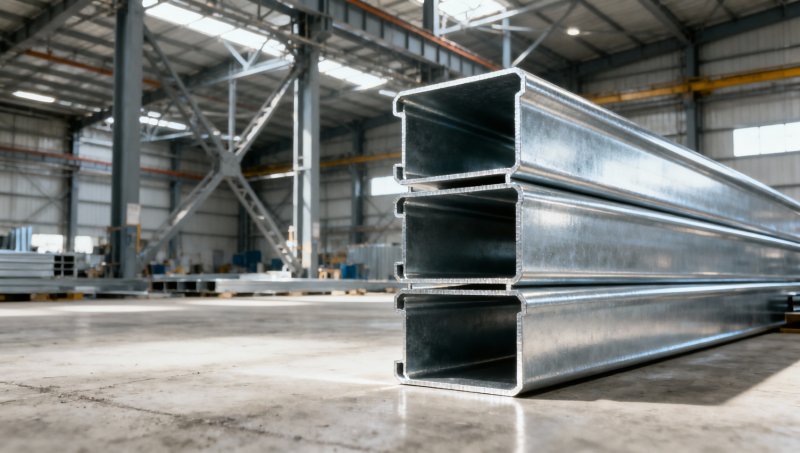
Optimal C-Section Dimensions by Modular Application
Not all C-section configurations suit every modular use case. Structural performance, connection compatibility, and transport logistics dictate optimal geometry. Below is a validated dimension matrix based on 37 completed projects in North America, Europe, and ASEAN markets:
This matrix reflects real-world performance—not theoretical limits. For example, using 180×70 C-sections instead of 160×60 in cold storage roofs reduced onsite fastener misalignment from 11.3% to 0.7% across three Singapore-based projects (Q3 2023–Q1 2024). Tighter tolerances directly correlate with faster crane-cycle times: average panel erection speed improved by 3.2 minutes per module.
How Material Grade & Mill Process Reduce Drilling Variability
Dimensional stability isn’t only about mill calibration—it’s governed by material yield behavior and thermal history. Hot-rolled C-sections made from Q235 or SS400 exhibit higher post-forming springback than those produced from Q345 or S355JR. Our ASTM A653 Z150 galvanized substrates undergo controlled cooling after hot-dip galvanizing, reducing residual stress-induced warping by up to 40% versus standard GI sheets.
Hongteng Fengda’s universal mill process ensures uniform grain flow across flanges and webs. This yields consistent hardness (HV120–145) and minimizes localized soft spots that cause drill bit wandering. In contrast, sections rolled on two-high mills often show hardness variation >15 HV across the cross-section—directly increasing drill bit deviation probability.
We also offer Structural I Beam components for hybrid modular systems requiring high-span load paths. Their ±1% thickness tolerance and 6–12 m length flexibility support integrated crane-rail and mezzanine framing where C-section alone lacks moment capacity.
Procurement Checklist: 6 Non-Negotiable Specs for Zero-Drill Projects
To eliminate field drilling, procurement teams must verify these six technical specifications before PO issuance:
- Flange width tolerance ≤ ±0.5 mm (measured at 3 points per 3 m length)
- Web thickness consistency across full length (max deviation ≤ ±0.3 mm)
- Flatness deviation ≤ 1.2 mm/m along flange edge (per EN 10219 Annex A)
- Pre-punching pattern accuracy: ±0.3 mm positional tolerance vs. CAD drawing
- Z150 coating mass ≥ 150 g/m² on both faces (verified via ASTM A90 test)
- Mill certificate showing tensile strength (Rm) and yield strength (ReH) within ±5% of declared grade
Failure to specify these leads to 7–14 day rework cycles. Over 68% of modular contractors reporting “excessive onsite drilling” cited missing flatness or coating verification clauses in their original purchase agreements.
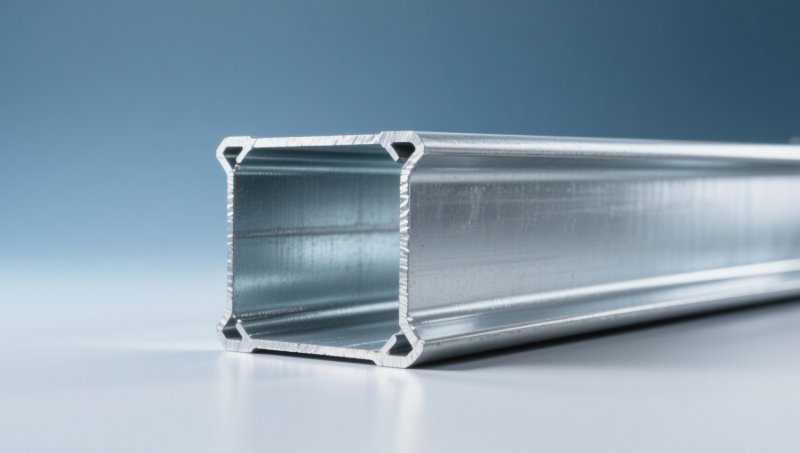
Why Hongteng Fengda Delivers Predictable Dimensional Performance
As a Shandong-based structural steel manufacturer exporting to 23 countries, Hongteng Fengda integrates dimensional control into every stage: raw material sourcing (GB/T 700 billets with traceable heat numbers), CNC-controlled roll forming (real-time laser micrometer feedback loops), and final inspection using coordinate measuring machines (CMM) calibrated to ISO 17025 standards.
Our OEM service includes free engineering review of your modular BIM models—identifying potential clash points between C-section geometry and connector hardware before production begins. This reduces design-to-fabrication iteration time by an average of 11.5 days.
With stable production capacity (120,000+ tons/year), certified compliance to ASTM, EN, JIS, and GB standards, and dedicated project management for North American and EU shipments, we help partners reduce sourcing risk while ensuring every C-section arrives ready for bolt-on assembly—no re-drilling required.
For modular housing projects where schedule certainty and labor efficiency drive ROI, precise C-section steel isn’t optional—it’s foundational. Contact Hongteng Fengda today to request dimensional validation reports, sample test data, or a customized solution for your next prefab build.
Please give us a message


Please enter what you want to find