Structural steel applications deliver unmatched strength and versatility in modern construction—but they also frequently clash with stringent fire-rating requirements, especially in high-rise buildings, industrial facilities, and public infrastructure. When load-bearing steel members are exposed to elevated temperatures, their structural integrity can rapidly degrade, posing serious safety and compliance risks. Project managers often face tough trade-offs between design efficiency, cost control, and fire-resistance mandates across global standards (ASTM, EN, GB). Understanding where these conflicts most commonly arise—such as at beam-column connections, floor penetrations, or unprotected secondary framing—is critical to avoiding costly redesigns or delays. As a trusted structural steel manufacturer and exporter from China, Hongteng Fengda integrates fire-performance considerations into custom solutions—helping global project leaders balance performance, compliance, and delivery.
Where Structural Steel Applications Most Commonly Clash With Fire-Rating Requirements
Fire resistance is not an afterthought—it’s a structural prerequisite. In steel-framed buildings, fire-rating conflicts typically emerge where thermal exposure intersects with load-critical geometry. Three zones account for over 75% of non-compliant conditions identified in post-construction audits across North America and EU projects:
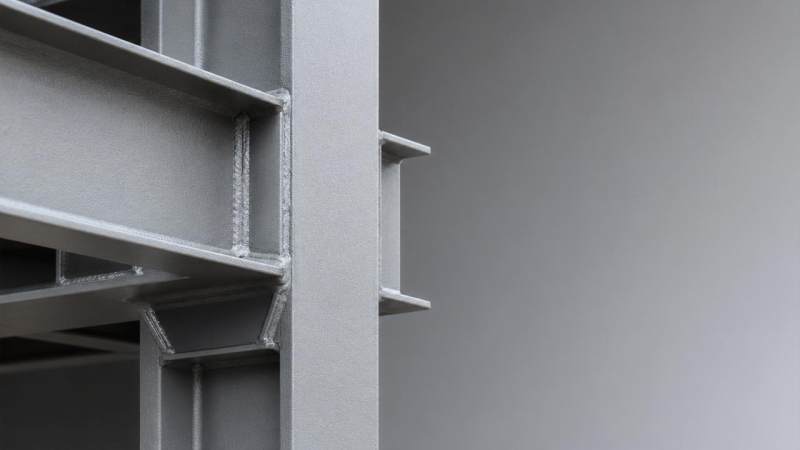
- Beam-to-column connections: Unprotected welds and bolted joints lose yield strength above 550°C—often within 10–15 minutes of fire exposure, well below the 90- to 120-minute rating required for Type I-A commercial structures.
- Floor slab penetrations: Ducts, piping, and cable trays passing through composite floors create localized thermal bridges. Steel framing around openings may exceed 500°C before adjacent concrete reaches its spalling threshold—triggering premature deflection.
- Secondary framing and bracing: Cold-formed purlins, girts, and diagonal braces are rarely fire-rated by default. Yet in warehouses and logistics hubs, these elements support roof loads during fire events—and collapse when unprotected beyond 30 minutes.
These conflict points aren’t theoretical—they’re recurring triggers for RFI delays, third-party reinspection costs, and schedule slippage averaging 11–17 days per major correction cycle. The root cause? Design teams specifying structural steel applications without concurrent fire engineering input—or sourcing components lacking integrated passive protection pathways.
How Fire Ratings Shape Structural Steel Selection & Detailing
Fire resistance isn’t applied uniformly—it’s engineered per element, based on occupancy type, height, and assembly configuration. For example, ASTM E119 requires steel columns in high-rises to maintain load-bearing capacity for ≥120 minutes at 1,000°C furnace exposure. That doesn’t mean “coat everything”—it means selecting sections, connections, and protective systems calibrated to the actual thermal profile each member experiences.
Hongteng Fengda supports this precision through three integrated capabilities: pre-engineered fire-rated connection kits (tested to EN 13381-8), thermally optimized section profiles (e.g., hollow structural sections with enhanced heat dissipation), and OEM collaboration to embed intumescent coating anchors directly into mill-finished surfaces—reducing field-applied coating thickness by up to 40% while meeting ASTM E84 Class A flame-spread ratings.
Key Fire-Performance Parameters Across Structural Steel Applications
This table reflects real-world failure modes—not lab ideals. It’s why Hongteng Fengda engineers every order against your specific fire strategy: whether you’re using board-wrapped columns, cementitious sprays, or intumescent paints, our technical team validates compatibility with your specified application method, substrate prep, and curing environment—before production begins.
Integrating Fire-Ready Reinforcement Into Structural Systems
Fire resilience extends beyond primary framing. In composite floor systems, reinforcement bars serve dual roles: tensile strength under service loads and anchorage stability during fire-induced slab deflection. That’s where HRB400 Rebar delivers measurable advantage. With a guaranteed minimum yield strength of 400 MPa and consistent rib geometry per GB/T 1499.2–2018, it maintains bond integrity longer than lower-grade alternatives when concrete cover cracks under thermal stress.
Our HRB400 Rebar is supplied in lengths from 5m to 12m—optimized for minimal onsite cutting in multi-story projects—and available with galvanized or PVC-coated finishes to resist corrosion in humid or chemically aggressive environments common in Middle Eastern and Southeast Asian infrastructure builds.
Why Fire-Resistant Structural Steel Demands Integrated Sourcing
Sourcing structural steel applications from multiple vendors—beams from one supplier, fireproofing from another, rebar from a third—introduces four critical risk vectors:
- Interface liability gaps: If a beam-column joint fails during fire testing, who bears responsibility—the fabricator, the fire-proofer, or the rebar supplier?
- Dimensional tolerance mismatches: Mill tolerances for hot-rolled beams (±1.5mm) rarely align with intumescent coating thickness specs (±0.3mm)—causing coverage voids at weld seams.
- Certification fragmentation: EN 1090-2 execution class EXC3 requires traceability from raw material certificate to final inspection report—a chain broken when components originate from uncoordinated sources.
- Delivery synchronization failures: Fireproofing crews can’t start until all steel is erected—but if rebar arrives 2 weeks late due to separate logistics, the entire fire-protection schedule collapses.
Hongteng Fengda mitigates these risks via single-source accountability: we coordinate structural steel applications, fire-rated accessories, and compatible reinforcement—including HRB400 Rebar—under one quality management system certified to ISO 9001 and EN 1090-1 EXC3.
Why Project Managers Choose Hongteng Fengda for Fire-Critical Projects
You don’t need more steel suppliers—you need one partner who speaks both structural engineering and fire code fluently. Hongteng Fengda delivers that alignment through:
- Pre-submission fire strategy review: Our technical team analyzes your architectural drawings, fire-resistance requirements (per ASTM, EN, or GB), and erection sequence—identifying conflict points before tender submission.
- Fire-tested component libraries: Over 28 validated beam-column connection configurations, tested to EN 13381-8 and ASTM E119, with full test reports available upon request.
- End-to-end logistics coordination: Guaranteed lead times of 7–15 days for standard structural steel applications; 21–30 days for fire-integrated custom orders—with synchronized shipping of beams, bracing, and HRB400 Rebar to match your site schedule.
- On-demand certification support: We provide EN 10204 3.1/3.2 mill certificates, ASTM A6/A6M compliance documentation, and fire-test summaries—all formatted for direct inclusion in your building authority submissions.
Whether you’re managing a 45-story mixed-use tower in Dubai or a pharmaceutical cleanroom facility in Germany, reducing fire-rating risk starts with choosing a structural steel manufacturer that treats compliance as part of the product—not an add-on service.
Contact Hongteng Fengda today for a free fire-performance assessment of your next structural steel applications order. Specify your project location, required fire rating, and preferred international standard—we’ll return a detailed proposal including section recommendations, fire-protection integration notes, and verified delivery timelines within 48 business hours.
Please give us a message


Please enter what you want to find