For technical evaluators, selecting the right corrosion resistant steel plate depends on more than surface durability.
It requires understanding operating conditions, load demands, fabrication requirements, and lifecycle cost.
In construction, industrial equipment, marine structures, and harsh processing environments, corrosion resistant steel plate delivers value when protection and strength work together.
The best-performing plate balances corrosion resistance, weldability, dimensional stability, and compliance with ASTM, EN, JIS, or GB standards.
Where corrosion resistant steel plate performs best in real operating conditions
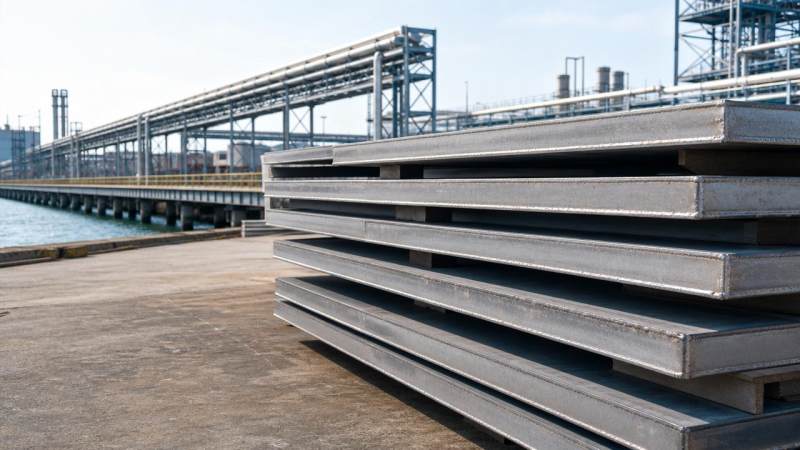
Corrosion resistant steel plate performs best where moisture, chemicals, salt, abrasion, or temperature variation can shorten structural service life.
Its value is highest when replacement is expensive, downtime is costly, or safety margins must remain stable for years.
Good selection starts by mapping exposure intensity, mechanical loading, joining methods, inspection access, and expected service duration.
A corrosion resistant steel plate may be chosen for atmospheric exposure, immersion, process contact, or protective lining systems.
Each condition requires different priorities, including alloy grade, coating compatibility, thickness allowance, and fabrication control.
Why application background changes material performance
The same corrosion resistant steel plate can perform differently in two projects with similar drawings.
Temperature, chloride level, pH value, ventilation, drainage, and surface contamination all influence actual durability.
A sheltered steel platform may need less protection than a coastal frame exposed to salt spray and standing water.
Industrial equipment may require stronger resistance to acidic condensate, alkaline cleaning, or slurry abrasion.
This is why corrosion resistant steel plate should be evaluated as part of a complete steel system.
Connections, brackets, channels, beams, welds, bolts, and drainage details can determine whether protection succeeds or fails.
Coastal and marine structures with salt exposure
Marine environments are among the strongest use cases for corrosion resistant steel plate.
Salt particles accelerate corrosion, especially in splash zones, tidal areas, offshore platforms, and port handling structures.
Plate selection should consider chloride resistance, coating adhesion, edge protection, and compatibility with weld repair procedures.
Drainage design also matters because retained seawater can attack cut edges, seams, and bolted interfaces.
For coastal buildings, corrosion resistant steel plate helps protect base plates, exposed platforms, access decks, and utility supports.
When access for repainting is difficult, a higher-grade plate or combined coating system may reduce lifecycle cost.
Industrial plants where chemicals and humidity combine
Chemical plants, power stations, pulp facilities, and wastewater areas expose steel to complex corrosion risks.
Humidity may carry acidic gases, alkaline residue, chlorides, or process vapors onto steel surfaces.
Corrosion resistant steel plate performs well in equipment housings, storage areas, walkways, tanks, and protective barriers.
The key judgment is whether corrosion is atmospheric, chemical contact, condensation-driven, or combined with abrasion.
If cleaning chemicals are used regularly, surface finish and coating compatibility should be reviewed before ordering.
A plate that resists one chemical may not resist another under higher temperature or concentration.
Construction projects needing long service life outdoors
Outdoor construction often benefits from corrosion resistant steel plate in exposed load-bearing and support areas.
Typical uses include equipment foundations, bridge attachments, building facades, rooftop supports, and utility frames.
The plate must maintain strength while resisting rain, pollution, freeze-thaw cycles, and trapped debris.
In structural assemblies, connected profiles also influence durability and load transfer.
For matching support components, Channel In Steel can be specified in Q195, Q235, Q345B, Duplex, 201, 304, or 316 grades.
Available options include hot-dip galvanized or hot-blown galvanized finishes for brackets, purlins, wall beams, and mechanical columns.
Common parameters include 1.5mm-25mm thickness, 80-160mm height, and 6-12m length or customized dimensions.
When plate and channel components follow the same standards, fabrication control becomes easier.
Transportation, machinery, and manufacturing equipment
Manufacturing equipment often needs corrosion resistant steel plate where moisture, lubricants, cleaning agents, and mechanical stress overlap.
Automobile plants, conveyor systems, material handling equipment, and packaging lines all create varied exposure patterns.
The best plate choice depends on wear, vibration, forming, welding, and surface cleaning frequency.
For machinery bases, dimensional stability and flatness may be as important as corrosion resistance.
For moving assemblies, weight control may require optimized thickness rather than excessive corrosion allowance.
A corrosion resistant steel plate with predictable weldability helps reduce rework during equipment fabrication.
How different scenarios change selection priorities
This comparison shows why corrosion resistant steel plate should not be selected by grade name alone.
The operating environment must be translated into measurable requirements before pricing and procurement decisions.
Practical adaptation advice for project use
A structured review helps match corrosion resistant steel plate to actual field demands.
- Define whether exposure is atmospheric, immersed, chemical, abrasive, or mixed.
- Confirm required standards, such as ASTM, EN, JIS, or GB.
- Check plate thickness, tolerance, flatness, and welding method.
- Review edge treatment, holes, cutouts, and heat-affected zones.
- Compare initial cost with maintenance, inspection, and replacement cost.
For steel structure assemblies, supporting members should match the durability strategy of the plate.
The previously noted Channel In Steel supports construction, automobile manufacture, lightweight roofing, brackets, arms, and beam applications.
Certifications such as ISO, CE, SGS, BV, BIS, UL, or NEMA can support project documentation requirements.
Common misjudgments that reduce service life
One frequent mistake is assuming corrosion resistant steel plate eliminates the need for design protection.
Poor drainage, sharp corners, unsealed welds, and crevices can still create localized corrosion.
Another mistake is comparing prices without checking thickness tolerance, grade consistency, testing records, and traceability.
Lower upfront cost can become expensive if inspection intervals shorten or replacement happens early.
Fabrication can also affect the final protection level of corrosion resistant steel plate.
Cutting, welding, grinding, and bending may damage coatings or change surface conditions.
Post-fabrication inspection should include edges, weld beads, drilled holes, and areas around fasteners.
Ignoring compatibility between plates, beams, channels, and fasteners can cause galvanic corrosion in mixed-metal assemblies.
Supplier capability matters in demanding steel projects
Reliable corrosion resistant steel plate sourcing depends on more than inventory availability.
Stable production, controlled tolerances, testing support, and export experience reduce project risk.
Hongteng Fengda is a structural steel manufacturer and exporter based in China.
The company supplies angle steel, channel steel, steel beams, cold formed profiles, and customized structural components.
Products can comply with ASTM, EN, JIS, and GB standards for global construction and industrial projects.
Consistent quality control helps align corrosion resistant steel plate requirements with connected structural steel components.
Stable lead times and OEM support are important when projects require coordinated delivery across multiple steel categories.
Action steps before final specification
Before placing an order, define the exposure environment, service life target, and applicable standard.
Then confirm grade, thickness, dimensions, surface treatment, testing documents, and fabrication requirements.
Share drawings, load conditions, and environmental details to receive a practical steel selection recommendation.
The right corrosion resistant steel plate performs best where its properties match the real scenario, not only the datasheet.
For construction, industrial, marine, and manufacturing applications, careful selection improves durability and controls lifecycle cost.
A professional steel partner can help evaluate corrosion resistant steel plate options and matching structural components for dependable project performance.
Please give us a message


Please enter what you want to find