Why carbon seamless pipe is gaining attention in higher-demand steel applications
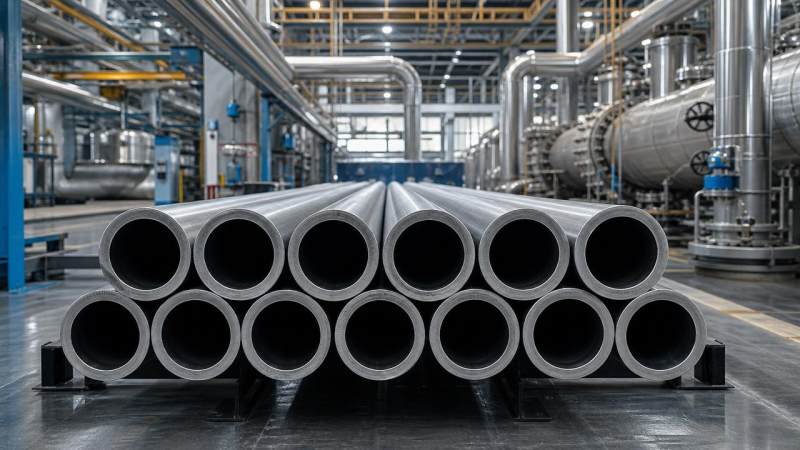
For buyers comparing industrial pipe options, carbon seamless pipe often delivers added value where strength, pressure performance, and reliability matter most.
In demanding structural and industrial applications, pipe selection affects safety, maintenance cycles, and project cost over time.
That is why carbon seamless pipe remains a preferred solution in many environments where failure risk is unacceptable.
Compared with welded pipe, it offers a continuous structure without a weld seam, which can improve confidence under stress.
As standards tighten and end-use conditions become more complex, the value discussion is moving beyond initial price alone.
Today, carbon seamless pipe is increasingly evaluated through total lifecycle performance, inspection efficiency, and consistency across batches.
Market signals show a shift toward performance-led pipe selection
Across steel-intensive sectors, buyers are placing greater weight on operating pressure, fatigue resistance, and material predictability.
This shift is especially visible in energy, process systems, heavy equipment, and structural support applications.
Welded pipe still serves many general purposes well, especially in lower-pressure or cost-sensitive installations.
However, carbon seamless pipe is being selected more often where pressure cycling, impact loading, or harsh service conditions are expected.
The trend is not simply about premium material choice.
It reflects broader demand for reduced downtime, stronger compliance confidence, and fewer quality variables during installation and operation.
What is driving this change
Where carbon seamless pipe adds value over welded pipe
The biggest advantage of carbon seamless pipe appears when service conditions amplify the weakness of a welded seam.
In moderate conditions, welded pipe can be practical and economical.
In critical conditions, seamless construction often improves confidence and durability.
Typical situations where seamless pipe brings more value
- High-pressure transport lines
- Boiler and heat exchange systems
- Oil, gas, and petrochemical service
- Mechanical tubing under repeated loading
- Cold-region or impact-sensitive installations
- Critical structural and industrial support systems
Because carbon seamless pipe has no longitudinal weld, stress distribution can be more uniform in many working environments.
This often matters when pressure surges, vibration, or temperature fluctuations are part of normal operating conditions.
Another benefit is stronger reliability perception during project approval and end-user review.
For projects involving multiple steel components, material matching and quality consistency are equally important.
Alongside pipe systems, corrosion-resistant bars and profiles may also be required in related fabrication work.
One example is 306 Stainless Square steel rod, used in construction, manufacturing, automotive parts, shipbuilding, and medical instruments.
Its 201 stainless steel composition, broad size range, and compliance with ASTM, AISI, JIS, GB, DIN, and EN support mixed-material project needs.
The real comparison is not price alone but total project exposure
A lower unit price can make welded pipe attractive at the quotation stage.
Yet that comparison can be incomplete if service demands are high.
When evaluating carbon seamless pipe, a more useful question is whether it reduces total project exposure.
Key cost factors beyond initial purchase
This is where carbon seamless pipe often justifies its premium.
It can lower hidden costs that only appear after commissioning, inspection, or years of operation.
How this trend affects steel supply, fabrication, and project planning
The move toward performance-led material selection is changing how steel products are sourced and specified.
For pipe users, it means more technical review before finalizing material grades and production methods.
For steel suppliers, it increases the need for stable manufacturing, traceable quality records, and international standard alignment.
For fabrication planning, it encourages earlier coordination between pipe choice, fitting compatibility, and operating conditions.
Practical impacts now being seen
- More detailed specification reviews at the inquiry stage
- Greater demand for mill test documentation and dimensional consistency
- Closer attention to pressure class and service environment
- Higher value placed on dependable lead times and batch stability
- Broader use of approved suppliers with export experience
Hongteng Fengda supports this shift with structural steel manufacturing and export capability for global industrial and construction projects.
With modern production facilities and strict quality control, the company supplies steel products aligned with ASTM, EN, JIS, and GB requirements.
That matters when project success depends on consistent quality, controlled sourcing risk, and dependable schedules.
What deserves closer attention before choosing carbon seamless pipe
Not every application requires seamless construction.
The value of carbon seamless pipe becomes clearer when selection is linked to actual service demands.
Focus points that improve decision quality
- Review real operating pressure, not only design assumptions
- Check whether pressure cycling or vibration is present
- Consider temperature extremes and corrosion environment
- Verify dimensional tolerances and inspection expectations
- Match standards, certification, and traceability to project needs
- Compare total installed and lifecycle cost, not unit price only
These checks help identify whether welded pipe is sufficient or whether carbon seamless pipe will provide better long-term value.
A practical way to judge the next move
A useful decision model is to separate applications into general service and critical service categories.
General service may allow welded pipe without meaningful performance compromise.
Critical service often makes carbon seamless pipe the stronger choice.
In current steel markets, better decisions come from matching pipe type to actual risk profile.
When strength, pressure integrity, and long-term confidence are central, carbon seamless pipe often proves its value clearly.
The next step is to review specifications, compare lifecycle exposure, and source from partners with reliable production and export support.
Please give us a message


Please enter what you want to find