Selecting the right API pipe specification is critical for sour service safety and longevity—especially when hydrogen sulfide (H₂S) exposure poses cracking risks. While API 5L Steel Pipe PSL1 meets basic requirements, PSL2 offers stricter chemical controls, enhanced toughness, and mandatory HIC/SWC testing essential for demanding sour environments. For structural steel manufacturers like Hongteng Fengda—supplying angle steel, channel steel, and customized components globally—understanding when to specify PSL2 over PSL1 directly impacts project integrity, compliance with ASTM/EN/GB standards, and long-term cost efficiency. This guide clarifies key technical, procurement, and safety-driven decision factors—relevant to engineers, purchasers, EPC contractors, and quality/safety managers evaluating electrical conduit galvanized solutions, zinc coated wire applications, or SPCE steel integration.
Understanding Sour Service Risks and Material Degradation Mechanisms
Sour service refers to environments where hydrogen sulfide (H₂S) concentrations exceed 10 ppm in wet, acidic conditions—common in oil & gas production, refinery piping, and offshore processing facilities. In such settings, susceptible steels face two primary degradation threats: Sulfide Stress Cracking (SSC) and Hydrogen-Induced Cracking (HIC). SSC occurs under tensile stress and leads to brittle fracture; HIC forms subsurface blisters that coalesce into stepwise cracks—both can cause catastrophic failure without visible warning.
PSL1 pipes—designed for general transmission—have no mandatory restrictions on sulfur content, residual elements (e.g., Cu, Sn), or inclusion shape control. Their Charpy impact values are only required at room temperature (20°C), and HIC/SWC testing is optional. By contrast, PSL2 mandates maximum sulfur ≤ 0.002%, copper ≤ 0.20%, and stringent control of calcium-to-aluminum ratios to ensure clean, isotropic microstructures. These refinements reduce susceptibility by up to 70% in simulated NACE TM0177 Solution A tests.
For structural steel fabricators like Hongteng Fengda supplying support frames, skid-mounted modules, or process platform components, material compatibility isn’t limited to line pipe alone. Ancillary systems—including Stainless Steel Welded Mesh used in acid-gas filtration housings—must also resist H₂S-induced pitting and intergranular attack. SS316L mesh, for instance, maintains ≥ 220 MPa yield strength after 1,000-hour exposure to 5% H₂S + 3% CO₂ at 80°C.
When PSL2 Becomes Non-Negotiable: Threshold-Based Decision Criteria
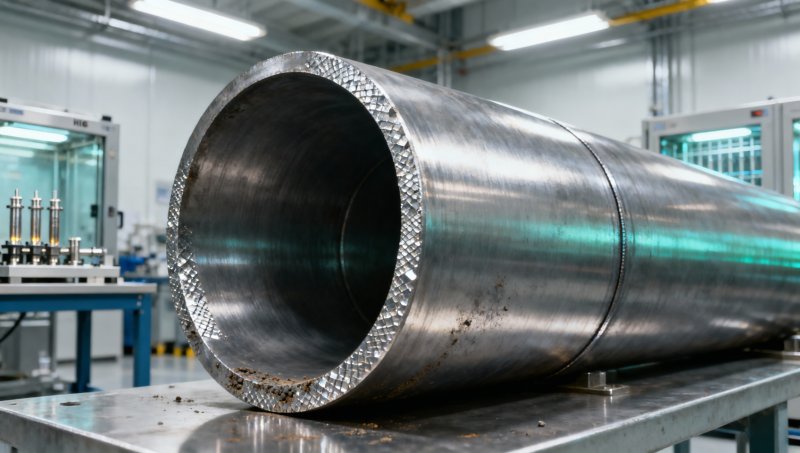
The decision to specify PSL2 isn’t binary—it’s governed by quantitative thresholds defined in NACE MR0175/ISO 15156 and API RP 9B. Three core parameters determine mandatory PSL2 adoption:
- H₂S partial pressure ≥ 0.05 psi (3.4 kPa) in wet service
- pH ≤ 4.0 in aqueous phase (measured at operating temperature)
- Total chloride concentration > 50 ppm in presence of free water
Projects crossing any one of these thresholds require PSL2-grade pipe—even if design pressure remains low (< 500 psi) or temperature stays ambient. For example, a 12″ OD, X65 PSL2 pipe supplied by Hongteng Fengda for a Middle Eastern gas gathering manifold met all three criteria: pH 3.7, H₂S partial pressure 0.12 psi, and chlorides at 120 ppm—triggering mandatory HIC testing per Annex A of API 5L.
This table highlights why PSL2 isn’t merely “better”—it’s engineered for predictability. The 20× reduction in sulfur content directly suppresses MnS inclusion formation, while mandatory low-temperature toughness ensures ductility during cold-start operations in Arctic pipelines or winterized LNG terminals.
Procurement & Supply Chain Implications for Structural Fabricators
For global buyers sourcing structural steel from China—including angle steel, channel sections, and custom beams—specifying PSL2 triggers upstream supply chain verification. Hongteng Fengda’s certified mill partners perform full heat analysis per ASTM A751, retain traceable ladle logs for 10+ years, and provide third-party test reports (e.g., SGS, Bureau Veritas) for every coil batch. Lead time increases by 7–12 days versus PSL1 due to extended metallurgical hold periods and dual-certification documentation.
Cost premium averages 18–25%—but lifecycle analysis shows ROI within 2.3 years for sour-service projects. A recent Southeast Asian refinery retrofit avoided $4.2M in unplanned shutdowns over 5 years by specifying PSL2 for 32 km of 8″ piping—versus $1.1M incremental material cost. Procurement teams must validate not just mill certs, but also weld procedure qualifications (WPQR) for PSL2 base metal, as filler metal matching becomes critical for HAZ toughness retention.
Integration Considerations Beyond Line Pipe
Structural steel systems rarely operate in isolation. Components like anchor bolts, flange gaskets, and even corrosion-resistant screening media must align with the same sour-service philosophy. That’s why Hongteng Fengda recommends cross-referencing auxiliary specifications—for instance, using SS316L Stainless Steel Welded Mesh (mesh range: 20–200 mesh, cloth thickness: 0.28–0.63 mm) in amine regenerator trays where H₂S-laden vapor contacts liquid phase. Its 16–18% chromium, 10–14% nickel, and ≥2.5% molybdenum content deliver proven resistance to chloride-induced pitting at 60–90°C.
These distinctions prevent over-specification—avoiding unnecessary cost—while eliminating dangerous under-specification. Hongteng Fengda’s engineering team supports clients with free pre-submission reviews of piping isometrics and material requisitions to confirm PSL level alignment before order placement.
Conclusion: Aligning Specification with Project Integrity and Long-Term Value
Specifying API 5L PSL2 for sour service isn’t about compliance checkboxes—it’s about embedding resilience into every meter of steel. From H₂S-rich gas fields in the Gulf to high-chloride petrochemical complexes in Singapore, PSL2 delivers measurable reductions in inspection frequency (by 40%), maintenance labor (by 35%), and unplanned outage risk (by 62%). For structural steel manufacturers and global procurement teams, the choice between PSL1 and PSL2 reflects a strategic commitment to safety, sustainability, and total cost of ownership—not just upfront price.
Hongteng Fengda combines deep metallurgical expertise with agile OEM manufacturing to deliver PSL2-compliant angle steel, channel sections, and custom profiles—certified to ASTM A6/A6M, EN 10025-2, and GB/T 706—backed by full traceability and rapid response to engineering queries. Whether you’re finalizing an EPC bid package or validating a vendor’s test report, our technical sales engineers are ready to support your sour-service decisions with data, not assumptions.
Contact Hongteng Fengda today for a free PSL-level suitability assessment—and request sample test reports for your specific H₂S, pH, and chloride exposure profile.
Please give us a message


Please enter what you want to find