When Is a Gal Steel Sheet Suitable for Outdoor Enclosures?
A gal steel sheet can be a practical choice for outdoor enclosures when corrosion resistance, durability, and budget control are key project priorities.
For project managers, selecting the right coating, thickness, fabrication method, and environmental suitability helps prevent premature rust, maintenance issues, and costly replacements.
This guide explains when galvanized steel sheets perform well outdoors and which specification details should be evaluated before approving an enclosure design.
Quick Answer: When Does a Gal Steel Sheet Work Outdoors?
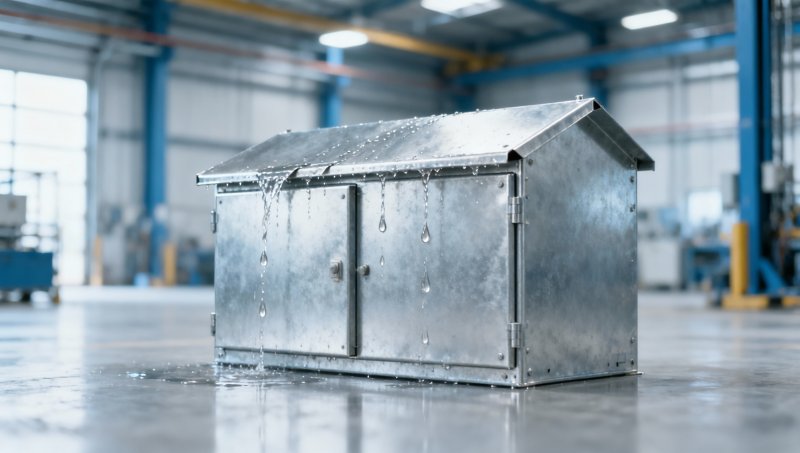
A gal steel sheet is suitable for outdoor enclosures when the environment is moderately corrosive, drainage is controlled, and cut edges receive appropriate protection.
It is commonly used for electrical cabinets, equipment housings, utility boxes, HVAC covers, agricultural shelters, storage units, and industrial control enclosures.
The zinc coating provides sacrificial corrosion protection, meaning it can help protect exposed steel even when small scratches occur during handling or installation.
However, galvanized steel is not automatically the best answer for every external application, especially near coastlines, chemical plants, or continuously wet locations.
Project teams should evaluate the enclosure's expected service life, local climate, installation conditions, maintenance access, and consequences of corrosion-related failure.
For many standard commercial and industrial projects, a properly specified gal steel sheet offers a cost-effective balance between protection, fabricability, and availability.
Start With the Actual Outdoor Exposure Conditions
The most important decision factor is not simply whether an enclosure will be outdoors, but how severe its real exposure will be.
An enclosure placed beneath a canopy faces different risks than one installed beside a roadway, cooling tower, fertilizer facility, or coastal loading area.
Rainwater alone does not always create severe corrosion, particularly where surfaces dry quickly and enclosure joints do not retain standing water.
Repeated wet-dry cycles can become more damaging when airborne salt, industrial pollutants, dust, or chemical residues remain on the coated surface.
Project managers should identify whether the enclosure will experience direct rainfall, splashback, condensation, high humidity, salt spray, ultraviolet exposure, or airborne contaminants.
In inland urban and industrial areas with normal atmospheric exposure, galvanized sheet often provides reliable service when fabrication and installation practices are controlled.
In dry inland regions, the coating may perform especially well because moisture remains on the surface for shorter periods and corrosion reactions are limited.
Humid tropical climates require more careful assessment because high temperatures, frequent rainfall, and persistent moisture can reduce coating life more quickly.
For coastal installations, the distance from the shoreline matters, but wind direction, elevation, salt deposition, and cleaning frequency can matter just as much.
If a project is located near seawater or chemical emissions, consider heavier zinc coatings, additional paint systems, stainless steel, aluminum, or alternative protective materials.
Choose the Right Galvanized Coating for the Required Service Life
Not all galvanized products provide the same zinc mass, coating thickness, surface finish, or long-term outdoor corrosion performance.
A project specification should clearly define the coating designation rather than relying only on the general term galvanized steel.
Continuous galvanized sheet is commonly supplied with zinc coatings expressed by mass per unit area, such as ASTM coating designations or equivalent standards.
Higher coating weights generally provide longer corrosion protection, although enclosure geometry, exposure severity, and fabrication damage also influence final performance.
For example, light commercial enclosures in protected locations may use standard coated sheet, while exposed infrastructure cabinets may require more robust protection.
Hot-dip galvanized fabricated assemblies can provide a thicker zinc layer than many pre-galvanized sheet products, particularly on structural components.
However, hot-dip galvanizing after fabrication may not be practical for every enclosure because enclosed cavities, distortion risks, venting requirements, and tolerances require planning.
Pre-galvanized gal steel sheet is often preferred for panels and folded housings because it is efficient for high-volume processing and offers consistent material availability.
Where a long design life is critical, many buyers specify a duplex system combining galvanized steel with an appropriate paint or powder coating.
A duplex coating system can provide additional barrier protection while also improving appearance, color identification, ultraviolet resistance, and maintenance planning.
Thickness Matters for More Than Structural Strength
Sheet thickness affects stiffness, dent resistance, fastening performance, vibration behavior, welding results, and the enclosure's ability to remain sealed over time.
A thin gal steel sheet may be economical initially, but it can deform around hinges, latches, cable entries, mounting points, and unsupported panel spans.
Deformation can create gaps that admit water and dust, placing more stress on seals and increasing the corrosion risk inside the enclosure.
Thicker material is often justified for roadside cabinets, exposed machinery guards, outdoor electrical enclosures, and installations subject to accidental impact.
Thickness should be determined through enclosure size, panel dimensions, internal equipment weight, wind loading, mounting arrangement, and access door frequency.
For large doors or removable side panels, reinforcement channels, folded edges, ribs, or internal frames may reduce deflection without excessive material consumption.
This is where customized cold-formed steel profiles can create value by improving stiffness while controlling total enclosure weight and fabrication cost.
Project managers should avoid treating thickness as a standalone purchasing criterion because inadequate detailing can undermine even a heavy-gauge galvanized enclosure.
A reliable supplier can review drawings and recommend practical thickness ranges based on forming capability, shipping conditions, and the final operating environment.
Control Corrosion at Cut Edges, Holes, and Welded Areas
The zinc coating protects the base steel, but cutting, drilling, punching, welding, and grinding can create locations requiring additional attention.
Small exposed edges may receive some sacrificial protection from adjacent zinc, yet this effect has limits in severe or constantly wet environments.
Freshly cut edges can develop localized corrosion sooner when water remains trapped along hems, seams, overlapping panels, or poorly drained horizontal surfaces.
Specify clean cutting methods and avoid excessive burrs because rough edges can damage gaskets, hold moisture, and complicate later coating repairs.
Welded sections need particular care because high heat can damage nearby zinc, create fumes during manufacturing, and leave unprotected steel after finishing.
After welding, affected areas should be cleaned and repaired using a compatible zinc-rich coating, metallizing process, or approved repair method.
Repair coating selection should match the expected service conditions and should be applied according to the manufacturer’s required surface preparation procedures.
Fastener selection also matters because incompatible materials can create galvanic corrosion, staining, or premature failure around connection points.
Galvanized fasteners are commonly compatible with galvanized sheet, while stainless fasteners may require isolation washers in certain wet or salt-exposed designs.
A well-prepared drawing package should identify weld locations, touch-up requirements, drainage holes, sealant locations, and hardware materials before production begins.
Design the Enclosure So Water Cannot Stay on the Steel
Good enclosure design often has a larger impact on service life than small differences in base material price or nominal coating weight.
Outdoor enclosures should shed water quickly through sloped roofs, drip edges, protected seams, raised bases, and properly positioned drainage paths.
Flat horizontal ledges collect water, dust, and pollutants, creating corrosion cells that can shorten coating life even in otherwise moderate environments.
Door tops, roof seams, cable-entry plates, hinges, and mounting brackets deserve close review because they frequently become moisture-retention points.
Use continuous weather seals where required, but do not create completely trapped cavities that cannot drain, vent, dry, or receive inspection.
Where condensation is expected, vents, breathable elements, heaters, insulation, or internal drainage strategies may be necessary to protect sensitive equipment.
Ground-mounted enclosures should be elevated above splash zones and protected from irrigation runoff, snow accumulation, cleaning chemicals, and pooled surface water.
For wall-mounted units, allow enough clearance for airflow and maintenance while preventing water from collecting between the rear panel and supporting structure.
Outdoor paint systems perform better when details prevent standing water, because no coating system should be expected to compensate for poor drainage indefinitely.
Consider Fabrication, Appearance, and Procurement Risks
Gal steel sheet supports bending, punching, roll forming, and assembly efficiently, making it useful for customized outdoor enclosure projects with repeatable dimensions.
Still, fabrication parameters should be reviewed because tight bend radii, aggressive forming, and rough handling can crack or damage zinc coatings.
Manufacturers should use tooling appropriate for coated sheet and protect finished surfaces during stacking, transport, and assembly operations.
White rust can develop when newly galvanized materials are stored wet without adequate ventilation, particularly when sheets are tightly packed after shipment.
This condition is different from normal red rust, but it can affect appearance and may reduce coating quality if left unaddressed.
Specify dry storage, separated stacking, protective packaging, and inspection procedures for shipments traveling through humid ports or long-distance sea freight routes.
Surface appearance should also be discussed early because galvanized materials can vary in spangle pattern, brightness, passivation, and coating texture.
If the enclosure is customer-facing or used in public infrastructure, a painted finish may offer more consistent appearance and easier branding options.
For export projects, suppliers should provide material certificates, coating information, dimensional inspection records, and packaging details aligned with the purchase specification.
Clear acceptance criteria reduce disputes over coating defects, fabrication tolerances, finish repairs, and damage that may occur during international transportation.
Know When Galvanized Steel Is Not the Best Choice
A gal steel sheet may be unsuitable when corrosion failure would create major safety, operational, environmental, or regulatory consequences for the project.
Examples include highly saline offshore areas, chemical processing zones, wastewater facilities, aggressive agricultural environments, and locations exposed to deicing salts.
Acidic or alkaline substances can consume zinc rapidly, so exposure to fertilizers, cleaning chemicals, animal waste, or industrial process emissions requires specialist evaluation.
Outdoor enclosures that must remain visually pristine for many years may also require a higher-performance paint system or a more corrosion-resistant metal.
Stainless steel may offer stronger corrosion resistance in demanding environments, although its higher initial cost can be difficult to justify for standard installations.
Aluminum can be attractive where low weight is important, but it has different strength, galvanic compatibility, thermal movement, and fabrication considerations.
Painted carbon steel may be viable where a controlled coating process is available, but coating damage can expose the substrate without zinc’s sacrificial protection.
The appropriate choice should be based on lifecycle cost, not simply material purchase price, especially when replacement requires shutdowns or difficult site access.
A Practical Specification Checklist for Project Managers
Before releasing an outdoor enclosure order, define the installation environment and identify salt, chemicals, moisture, temperature changes, ultraviolet exposure, and impact risks.
Confirm the required design life and determine whether routine inspection, cleaning, repainting, or replacement will be practical after installation.
State the required steel grade, sheet thickness, galvanized coating designation, surface finish, and any additional paint or powder coating requirements.
Review the enclosure drawing for sloped surfaces, drainage, door sealing, cable entries, welds, joints, lifting points, and mounting interfaces.
Identify all cut-edge treatment requirements and specify the repair method for welded or damaged galvanized areas before fabrication begins.
Confirm compatible fasteners, hinges, locks, seals, gaskets, mounting brackets, and grounding components to avoid unintended corrosion mechanisms.
Request samples or first-article approval when the project has demanding appearance, weatherproofing, dimensional, or compliance requirements.
For international sourcing, verify the supplier’s experience with relevant ASTM, EN, JIS, or GB standards and request supporting inspection documentation.
Include packaging requirements for sea freight, such as moisture barriers, protected corners, stable palletization, and instructions for dry unloading and storage.
This structured review helps teams choose a gal steel sheet enclosure that performs reliably rather than discovering specification gaps after site installation.
Conclusion
A gal steel sheet is well suited to many outdoor enclosures when the environment is moderate, the coating is correctly specified, and the design prevents moisture retention.
It offers project managers a practical combination of corrosion resistance, fabrication flexibility, supply availability, and cost control for industrial and construction applications.
The decision becomes less favorable in coastal, chemical, continuously wet, or highly contaminated environments unless stronger protective measures are included.
Evaluate exposure conditions, coating weight, sheet thickness, drainage design, edge protection, and lifecycle maintenance before approving the final enclosure specification.
With these factors addressed early, galvanized steel can provide dependable outdoor performance while reducing sourcing risk, maintenance burden, and replacement costs.
Please give us a message


Please enter what you want to find