Choosing the right structural material can directly affect safety, cost, and project efficiency. A Steel Beam for construction is often the better choice when high load capacity, long spans, and stable structural behavior are required. In commercial buildings, industrial facilities, and large-scale frames, the right beam selection supports faster installation, lower maintenance pressure, and more predictable project performance.
Why a checklist helps when selecting a Steel Beam for construction
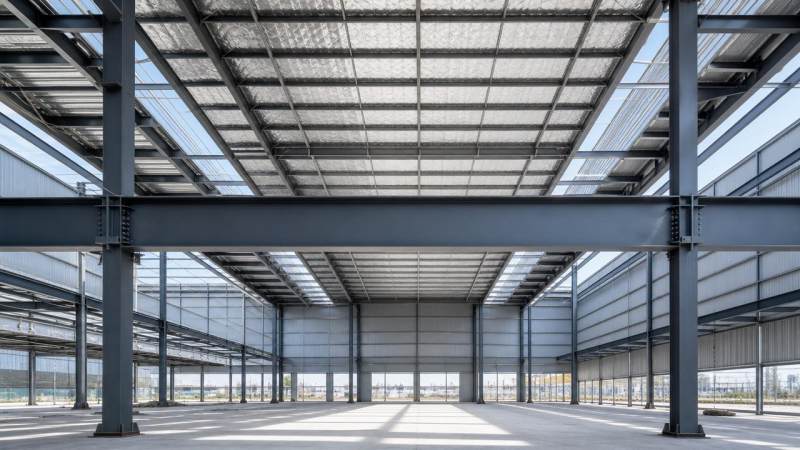
Material selection often fails when decisions rely only on upfront price. A checklist makes beam choice more practical by linking structural demand, fabrication limits, site conditions, and lifecycle cost into one review process.
Using a checklist is especially useful when comparing a Steel Beam for construction against reinforced concrete, timber, or lighter cold formed sections. It helps identify where steel creates measurable value instead of assumed value.
Core checklist: when a Steel Beam for construction is the better choice
- Confirm long-span needs first. Choose a Steel Beam for construction when open floor areas, fewer columns, and flexible internal layouts are important for the building function.
- Check load intensity carefully. Use steel beams when floors, machinery platforms, storage zones, or roof systems must carry concentrated or repeated heavy loads safely.
- Review construction speed targets. Select steel when off-site fabrication, easier site assembly, and shorter structural erection windows can reduce schedule pressure.
- Measure foundation impact. Prefer steel beams when lower structural self-weight can help reduce foundation size, excavation demand, or substructure reinforcement.
- Evaluate dimensional accuracy. Choose steel where straightness, repeatability, and controlled factory tolerances are important for modular or coordinated construction systems.
- Plan for future modification. Use a Steel Beam for construction when later expansion, mezzanine addition, equipment upgrades, or structural strengthening may be needed.
- Assess seismic and dynamic conditions. Steel beams perform well where ductility, energy absorption, and reliable structural response matter under vibration or lateral movement.
- Compare total lifecycle cost. Select steel when maintenance planning, reusable components, and reduced project delays outweigh a higher initial material price.
Key performance signs that steel is the right structural answer
A Steel Beam for construction becomes more attractive when a project demands clear spans over production lines, warehouse aisles, parking areas, or retail floors. These layouts benefit from fewer obstructions and easier equipment movement.
Steel is also preferred when dead load must stay controlled. Lower member weight can simplify transport, crane lifting, and support design while maintaining strong bending resistance.
How material support products improve beam performance
Beam performance does not depend on the main member alone. Roof sheathing, wall systems, decking, and protective cladding also affect durability and project efficiency.
In beam-supported building envelopes, corrosion-resistant sheets can extend service life in humid or exposed environments. One practical option is Galvanized Steel Sheet, especially where roofing, wall panels, or secondary coverings need good formability and atmospheric corrosion resistance.
Available grades such as DX51D, SGCC, S250GD, and S350GD support broad construction use. Typical thickness ranges from 0.12mm to 6.00mm, with widths from 600mm to 1500mm and customizable lengths up to 12m.
For projects matching primary steel beams with durable enclosure systems, these sheets offer easy welding, plastic processing, and zinc-based corrosion protection under ASTM, EN, JIS, and GB related standards.
Application scenarios where a Steel Beam for construction stands out
Industrial buildings and factories
Factories often require wide bays, crane support, suspended services, and frequent equipment changes. A Steel Beam for construction fits these conditions because it handles high loads without forcing many internal columns.
Steel framing also improves adaptation. When production lines move or platforms are added, bolted or welded beam systems are usually easier to modify than heavier cast-in-place alternatives.
Commercial and multi-use buildings
Retail halls, offices, and mixed-use spaces often prioritize open interiors and service integration. A Steel Beam for construction supports long spans, ceiling coordination, and future layout updates with less structural disruption.
Where project timelines are tight, prefabricated steel members can also reduce on-site wet work. That helps limit weather delay and improves overall sequencing.
Warehouses and logistics centers
Storage facilities depend on clear movement paths, rack loading capacity, and efficient vertical space use. A Steel Beam for construction supports roof spans and mezzanine systems while keeping floor areas usable.
This is important when forklifts, conveyors, and high-bay racking create concentrated loads and operational vibration over long service periods.
Infrastructure and heavy-duty support frames
In platforms, transport structures, equipment supports, and utility frames, steel beams are often selected for strength-to-weight efficiency. They also allow precise connection detailing and easier sectional replacement if needed.
Commonly overlooked points before choosing a Steel Beam for construction
- Do not ignore fire protection. Steel loses strength at elevated temperatures, so coating, encasement, or fire-rated assembly design must be reviewed early.
- Do not underestimate corrosion exposure. Coastal air, chemical contact, and persistent moisture may require galvanizing, painting, or better drainage detailing.
- Do not focus only on beam size. Connections, stiffeners, bracing, and support reactions often control performance as much as the beam section itself.
- Do not forget transport and lifting constraints. A long or heavy beam may be structurally correct but difficult to ship, handle, or erect efficiently.
- Do not separate beam choice from service integration. Ducts, cable trays, sprinklers, and access zones can affect depth selection and connection placement.
Practical execution steps for better beam decisions
- Define the span, design load, support spacing, and expected future modifications before comparing materials.
- Match the beam section to fabrication capacity, standard availability, and required compliance standards such as ASTM, EN, JIS, or GB.
- Review corrosion and fire requirements together instead of adding protection systems after section selection.
- Coordinate primary beams with secondary members, decking, enclosure materials, and connection details during early structural planning.
- Confirm lead time, batch consistency, and quality control from the steel supplier before finalizing the procurement schedule.
Conclusion: deciding when a Steel Beam for construction makes sense
A Steel Beam for construction is the better choice when a project needs high strength, long spans, lower structural weight, faster erection, and future flexibility. It becomes even more valuable when total project efficiency matters more than simple material comparison.
The most reliable approach is to evaluate beam demand through span, load, environment, fire performance, connection design, and installation constraints. When these factors align, steel delivers clear technical and economic advantages.
For projects requiring dependable structural steel supply, customized sections, and internationally compliant production, Hongteng Fengda provides structural steel solutions that support stable quality, efficient sourcing, and consistent delivery for global construction applications.
Please give us a message


Please enter what you want to find