Choosing the right pipe size and connection style can directly affect installation speed, sealing performance, and long-term durability. If you are wondering when a 1.5 inch galvanized pipe threaded both ends is the right fit, it usually depends on pressure needs, assembly convenience, and corrosion resistance in practical industrial or construction use. Understanding these factors helps operators select safer, more efficient steel pipe solutions.
In practical terms, a 1.5 inch galvanized pipe with threads is a good fit when you need a medium-flow steel pipe that is easy to assemble, easy to replace, and resistant to rust in normal working environments.
For operators, the key question is not only pipe size. The real decision depends on fluid type, working pressure, thread compatibility, exposure conditions, maintenance frequency, and whether future disassembly is likely during operation.
If the system needs quick field installation without welding, a 1.5 inch galvanized pipe threaded both ends often becomes a practical choice. It is especially useful in water delivery, compressed air, temporary site lines, and utility support systems.
When is a 1.5 inch galvanized pipe with threads actually the right fit?
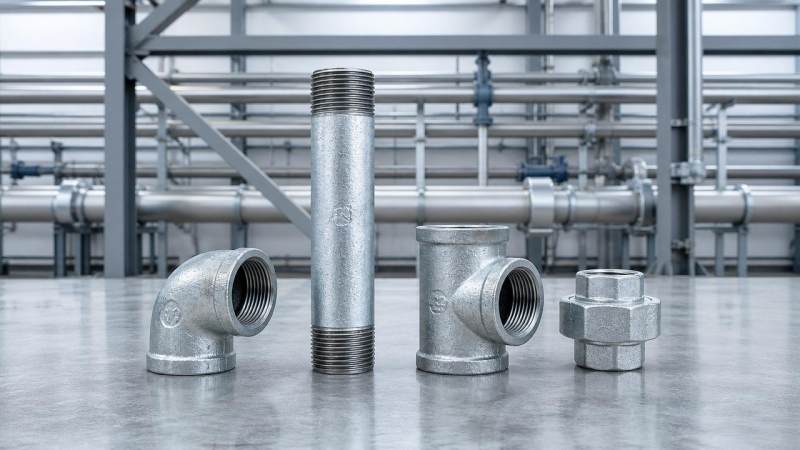
The best fit is when your application needs a balance between flow capacity and manageable pipe size. A 1.5 inch pipe carries more volume than small branch lines but remains easier to handle than larger distribution piping.
Threaded ends make sense when installers or operators need faster assembly using couplings, elbows, tees, or unions. In many maintenance-heavy environments, threaded pipe saves time because sections can be removed without cutting or rewelding.
Galvanizing adds a zinc coating that helps the pipe resist rust in damp or mildly corrosive conditions. This makes it suitable for exposed utility systems, building service lines, agricultural setups, and selected industrial support applications.
However, the fit is strongest in moderate-duty systems, not every system. If the line operates under very high pressure, strong vibration, severe chemical exposure, or buried long-term corrosion risk, another pipe type may be better.
What operators usually care about before choosing this pipe
Most operators want clear answers to five practical questions. First, will it handle the required flow? Second, can it be installed quickly? Third, will the threads seal reliably? Fourth, how long will it resist corrosion? Fifth, how easy is maintenance?
A 1.5 inch galvanized pipe threaded both ends performs well when the job requires regular fittings, branch connections, or future replacement. This is why it remains common in facility piping, construction support systems, and general service applications.
Ease of handling is another factor. Larger pipes need more lifting effort, more support planning, and more installation space. A 1.5 inch size often gives operators a practical middle point between capacity and on-site convenience.
Availability also matters. Standard threaded galvanized pipe and fittings are widely used in many markets, which helps reduce downtime when repairs are needed. Common sizes are easier to source than customized connection systems.
Typical applications where this pipe size and thread style work well
One common use is water supply or non-potable utility water in workshops, farms, equipment rooms, and temporary project facilities. The threaded design helps crews assemble the line with standard tools and common fittings.
Another suitable use is compressed air systems with appropriate pressure control and correct fitting selection. In these cases, operators value the combination of moderate flow capacity and easy connection to valves, regulators, and branch lines.
It is also a practical option for fire protection auxiliary sections, drainage support lines, scaffold-related utility routing, and external service piping where corrosion resistance is needed but full stainless steel is unnecessary.
On construction sites and industrial retrofits, threaded galvanized pipe is useful where welding access is limited. It allows connection in areas where sparks, hot work permits, or shutdown restrictions make welded piping less convenient.
For mechanical support structures near piping runs, users often pair utility piping with structural steel members. In such projects, profiles like Z-beam can support lightweight roof systems, wall beams, brackets, and steel framework layouts.
These structural components are available in materials such as Q235B, Q345B, SS400, S235, S275, S355, A36, and A572 grades. Galvanized coated and perforated options can also help when corrosion resistance and installation flexibility are both required.
For operators working around steel workshops or light manufacturing lines, matching pipe systems with suitable structural members improves layout efficiency. Customized lengths from 2 to 12 meters and thicknesses from 6 to 25 millimeters are often practical.
How to judge whether 1.5 inch is the correct size for your system
Pipe size should always be matched to actual demand, not habit. If the line must feed several outlets, carry moderate flow, or reduce pressure loss compared with smaller branches, 1.5 inch may be the right choice.
If the line serves only a single low-demand point, this size may be larger than necessary. Oversized pipe can increase material cost, support requirements, and installation effort without giving real operational benefit.
On the other hand, undersized piping creates pressure drop, weak downstream performance, and possible equipment inefficiency. Operators often notice this as unstable supply, slower fill times, or inconsistent pressure at the far end of the line.
A simple way to judge is to look at three things together: expected flow rate, length of run, and number of fittings. Long runs with many elbows and tees usually need more allowance than short straight runs.
If your layout includes future expansion, a 1.5 inch line can also be a good fit because it offers some extra capacity. This is often helpful in workshops or utility systems where additional branches may be added later.
Why threaded both ends can be better than plain-end pipe in some jobs
The main advantage is installation speed. A pipe threaded both ends can connect directly with standard threaded fittings, reducing the need for welding equipment, skilled hot-work operations, and post-weld surface treatment.
This is especially useful in maintenance situations. If a section fails, operators can remove and replace it with less disruption. In rented facilities, temporary projects, or phased upgrades, this flexibility has clear value.
Threaded systems also help in locations where open flame or welding sparks are restricted. Chemical storage areas, occupied facilities, and live operational zones often benefit from a connection method that avoids hot work.
That said, threads must be cut accurately and assembled correctly. Poor threading, cross-threading, over-tightening, or unsuitable sealant can cause leakage, fitting damage, or difficult future disassembly.
Operators should always confirm thread standard compatibility, such as NPT or BSP, before installation. Even a good pipe is not a fit if the threading system does not match the available couplings and valves.
Where galvanized threaded pipe may not be the best choice
This pipe is not ideal for every environment. In systems carrying aggressive chemicals, strongly acidic or alkaline media, or highly corrosive fluids, galvanized coating may degrade too quickly for safe long-term use.
It may also be less suitable in high-vibration systems. Repeated movement can stress threaded joints over time, especially if support spacing is poor or if connected equipment causes frequent pulsation.
For concealed, buried, or highly wet environments, additional corrosion protection may be necessary. External galvanizing helps, but it does not eliminate all corrosion risks, especially where coating damage occurs during handling or threading.
Very high pressure or critical safety systems may require welded, flanged, grooved, or specialty piping instead. In those cases, engineering standards and local codes should determine the final connection method.
If fluid cleanliness is critical, operators should also evaluate whether zinc-coated internal surfaces are acceptable. Some specialized process systems require other materials to avoid contamination or compatibility problems.
Installation points operators should not ignore
Before installation, inspect threads for damage, deformation, or coating loss. Clean the ends and confirm that each fitting engages smoothly by hand before final tightening with tools.
Use appropriate thread sealant or PTFE tape based on system requirements. Too little sealing material can lead to leakage, while too much can interfere with thread engagement or break loose into the system.
Do not force alignment through the threaded joint alone. If the pipe run is misaligned, the joint can carry stress that later causes leaks or cracks. Proper supports and layout accuracy are essential.
After installation, pressure testing should be done according to the relevant standard and the actual service conditions. A successful test gives operators confidence before the line enters daily use.
It is also wise to mark threaded joints for inspection during early operation. Small leaks often appear after thermal cycling, vibration, or initial pressurization, so early follow-up checks can prevent larger failures.
How galvanized pipe supports long-term operating value
For many users, value is not just purchase price. Real value includes service life, downtime reduction, ease of repair, and reduced corrosion-related failures. Galvanized threaded pipe often performs well across these practical criteria.
Its broad acceptance in construction and utility work means operators can usually source fittings, nipples, unions, and valves without long delays. This helps keep maintenance plans realistic and replacement work efficient.
When chosen correctly, a 1.5 inch galvanized pipe threaded both ends can reduce complexity on site. It gives crews a familiar installation method and provides enough capacity for many general service applications.
For buyers involved in larger structural steel and industrial projects, consistent material quality is also important. Working with a reliable steel manufacturer helps reduce specification risk and improves overall project coordination.
Final decision: when is it a fit and when should you choose something else?
A 1.5 inch galvanized pipe with threads is a fit when you need moderate flow capacity, reliable corrosion resistance in normal environments, and convenient assembly without welding. It is especially practical for service lines, utility piping, and maintenance-friendly systems.
It becomes an even better choice when future disassembly, repair, or system extension is likely. Operators often benefit from the simplicity of threaded installation and the broad availability of matching fittings.
But it is not the best answer for every job. If your system faces severe corrosion, very high pressure, strong vibration, or strict process compatibility requirements, you should evaluate other materials and connection methods.
The smartest approach is to judge the full operating condition, not the pipe alone. Check flow, pressure, environment, thread standard, maintenance needs, and code requirements together before making the final selection.
In short, the 1.5 inch galvanized pipe threaded both ends is a strong practical option for many real-world industrial and construction tasks, as long as the application matches its strengths and avoids its known limitations.
Please give us a message


Please enter what you want to find