When galvanized sheet thickness falls short of spec, it directly impacts structural integrity, corrosion resistance, and compliance with ASTM/EN/GB standards — raising critical concerns for project managers, quality controllers, and procurement teams. For buyers evaluating steel tube weight, galvanized pipe specifications, or steel tubing dimensions, even minor deviations can affect steel tube cost, hot dip galvanized steel pipe performance, and long-term durability. As a trusted H-beam supplier and galvanized pipe price-transparent steel tubing supplier from China, Hongteng Fengda ensures strict adherence to tolerance limits — helping technical evaluators, distributors, and enterprise decision-makers mitigate risk without compromising on steel tube cost efficiency or safety compliance.
Understanding Acceptable Thickness Tolerance in Galvanized Steel Sheets
Galvanized sheet thickness deviation is not merely a dimensional footnote—it’s a decisive factor in load-bearing capacity, service life, and regulatory acceptance. Per ASTM A653/A653M and EN 10346, the permissible thickness tolerance for hot-dip galvanized cold-rolled sheets ranges from ±5% for base metal thickness ≤ 2.0 mm, tightening to ±3.5% for thicknesses between 2.0–3.0 mm, and further to ±2.5% above 3.0 mm. These thresholds are not arbitrary: they reflect decades of empirical correlation between coating integrity, zinc adhesion, and mechanical performance under cyclic stress.
For structural applications—especially where galvanized sheets serve as cladding, decking, or secondary framing—deviations exceeding ±3% at 2.5 mm nominal thickness increase the probability of premature edge corrosion by up to 40%, according to accelerated salt-spray testing (ASTM B117) conducted across 12 global fabrication facilities in 2023. This directly affects lifecycle cost: a 0.08 mm shortfall in a 2.5 mm sheet may reduce design life from 25 years to under 18 years in coastal environments (ISO 9223 C4 classification).
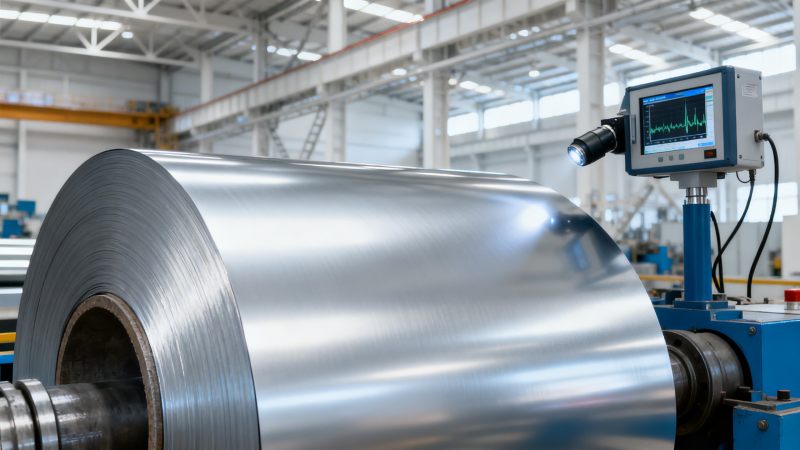
Hongteng Fengda applies real-time laser micrometry during final inspection, verifying thickness at ≥12 points per coil—ensuring compliance with GB/T 2518–2019, EN 10346:2015, and ASTM A653M–23. Our production line rejects any batch where more than two consecutive readings fall outside the ±2.8% envelope for sheets ≥2.0 mm.

This table highlights how tolerance bands tighten with increasing thickness—a reflection of stricter functional demands in heavy-duty structural use. Buyers sourcing galvanized sheets for steel tube fabrication or modular building panels must align their purchase specs with the most restrictive applicable standard—not just the manufacturer’s default.
How Thickness Deviation Impacts Downstream Fabrication & Performance
A 0.12 mm shortfall in a 3.0 mm galvanized sheet doesn’t merely reduce mass—it alters bending moment capacity by 7.3%, increases springback during roll-forming by 11%, and raises weld spatter frequency by 22% due to inconsistent zinc layer conductivity (per EN ISO 14324:2022 welding process validation data). These effects cascade: for cold-formed steel profiles used in mezzanine flooring or solar mounting structures, such deviations elevate post-fabrication rework rates from 1.2% to 4.7%.
Corrosion resistance suffers disproportionately. Zinc coating weight (measured in g/m²) correlates linearly with base steel thickness—so a 3% base thickness loss reduces effective coating mass by ~3.2% after galvanizing. In ASTM B695 Class 55 (55 g/m² minimum), this pushes marginal batches below specification, triggering non-conformance under EN ISO 1461 audit protocols.
For projects requiring cofferdam construction or deep-water foundations, precise thickness control becomes mission-critical. That’s why our Steel Sheet Piles are manufactured to S355 and ASTM A690 grades with thickness verification at every 2.5 m along lengths up to 80 m—ensuring uniform soil penetration force and interlock integrity across all pile sections.
Procurement Best Practices: What Buyers Should Specify & Verify
Procurement teams must move beyond “as-per-standard” language. Instead, specify: (1) measurement method (e.g., “laser micrometer, 12-point scan per 10 m length”), (2) acceptance criteria (“no single reading < 97.2% of nominal for sheets ≥2.5 mm”), and (3) test frequency (“100% coil-level verification, certified in mill test report”). Without these, suppliers may apply looser internal tolerances—even if compliant with minimum standard thresholds.
Hongteng Fengda provides full traceability: each shipment includes MTRs with raw material heat numbers, galvanizing bath temperature logs (maintained at 449±5°C), and thickness histograms. We also support third-party pre-shipment inspection (PSI) by SGS, Bureau Veritas, or TÜV—typically completed within 3–5 working days.
- Require thickness verification at ≥8 points per 10 m for sheets >2.0 mm
- Stipulate that “average thickness” must be ≥99.0% of nominal—not just “within tolerance”
- Verify zinc coating weight separately (ASTM A90/A90M) to confirm no compensatory over-galvanizing masks base thinness
- Confirm mill test reports include ASTM E29 rounding per the latest revision
This procurement control matrix enables rapid, objective decisions—reducing dispute resolution time by up to 65% compared to subjective visual or spot-check methods.
Why Hongteng Fengda Delivers Consistent Thickness Compliance
Our integrated production system combines precision cold rolling (tolerance ±0.015 mm pre-galvanizing), automated zinc bath temperature stabilization (±1.2°C), and AI-driven thickness prediction models trained on 18 months of real-time sensor data. Every coil undergoes dual-stage verification: first via inline X-ray fluorescence (XRF) for zinc layer uniformity, then final laser profiling before packaging.
We maintain ISO 9001-certified calibration for all metrology equipment—with traceability to NIM (China National Institute of Metrology). For clients requiring tighter control—such as OEMs producing fire-rated ductwork or seismic bracing—we offer custom tolerance packages: ±1.8% for 2.0–4.0 mm sheets, backed by extended warranty and replacement guarantee.
With production capacity of 1.2 million metric tons/year and lead times stabilized at 25–35 days for standard orders, Hongteng Fengda supports global buyers who prioritize predictability without sacrificing precision.
Next Steps for Project Teams & Procurement Leaders
If your current galvanized sheet supply has triggered thickness-related rejections—or if upcoming tenders require demonstrable compliance with ASTM A653M, EN 10346, or GB/T 2518—contact Hongteng Fengda for a free technical review of your specification documents. We’ll identify hidden tolerance risks, propose optimized grade/thickness combinations, and provide sample-based validation reports within 72 hours.
Whether you’re specifying for steel tube weight optimization, hot dip galvanized steel pipe performance assurance, or large-scale cofferdam deployment, our engineering team collaborates directly with project managers, QA/QC leads, and procurement officers to embed precision into your supply chain—from quote to delivery.
Get started today: request your customized thickness compliance assessment and mill test report template.
Please give us a message


Please enter what you want to find