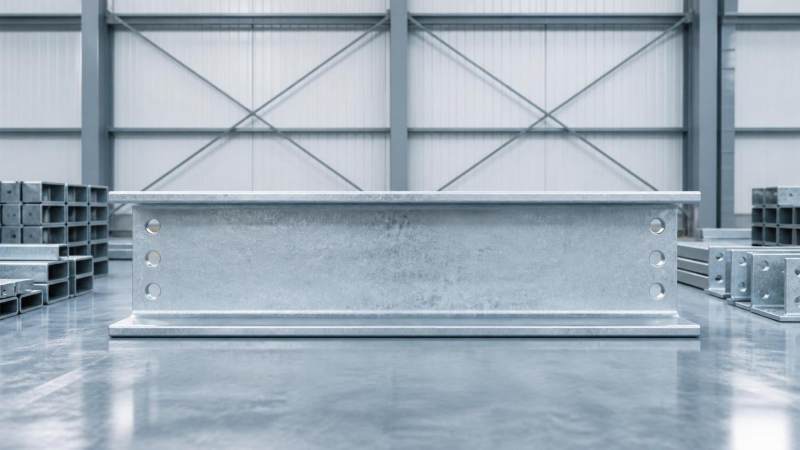
A galvanized h beam is worth the extra corrosion protection when the structure is expected to stay exposed, hard to access, or expensive to interrupt for repairs. In day-to-day work, the question usually appears when a team notices early rust on cut edges, bolt zones, or welded areas and realizes that routine repainting will not be easy once the steel is in service.
That is where the decision becomes less about initial material cost and more about control. If the environment is coastal, humid, chemical, or simply outdoors for long periods, corrosion can turn into a safety and maintenance issue long before the steel has reached the end of its design life. For teams responsible for inspection and risk control, a galvanized solution is often about reducing uncertainty, not chasing a premium finish.
When the coating becomes part of the safety plan
Many projects start with a simple assumption: standard steel will be enough if the design is strong. In practice, strength and durability do not always age at the same pace. A member can meet structural demand on paper and still become a concern if surface corrosion weakens connections, makes visual inspection harder, or creates maintenance delays in a critical area.
The extra corrosion protection is usually justified when the steel will face moisture traps, splash zones, road salts, cleaning chemicals, or repeated temperature change. Outdoor support frames, platform members, service structures, and equipment bases are common places where coating performance affects inspection frequency as much as appearance.
In some fabrication lines, teams also compare a galvanized h beam with other corrosion-resistant options such as a 304 Stainless Square steel rod when the project includes mixed materials or special mounting parts. The point is not to swap one product for another, but to understand where each material helps the overall system stay reliable.
Common mistakes that make the choice unclear
One common mistake is treating corrosion protection as a visual preference. A bright surface can look “safe,” while a plain surface can look questionable, but appearance alone does not tell you how the steel will behave after months of exposure. Another mistake is focusing only on the main member and ignoring cut ends, holes, drainage points, and connection details, where rust often begins first.
There is also a planning error that shows up often in maintenance-heavy sites: choosing a cheaper finish because the initial purchase is easier to approve, then absorbing repeated inspection, touch-up, and access costs later. If scaffolding, shutdown time, or confined access is involved, the real burden is often not the coating itself but the work needed to keep the structure serviceable.
For quality teams, this is where a decision should move from habit to evidence. The question is not “Is galvanized always better?” but “What exposure, access, and compliance conditions make the protection worthwhile here?”
How to judge whether galvanized protection is justified
Start with the environment. If the structure is indoors, dry, and easy to inspect, basic protection may be enough. If it sits outdoors, near water, in industrial air, or in a place where surface moisture lingers, galvanizing becomes more attractive because it gives the steel a longer buffer before corrosion starts to interfere with serviceability.
Next, look at maintenance access. If the member is easy to reach, repainting or repair may be manageable. If it is high, enclosed, built into a larger assembly, or difficult to isolate during operation, then extra corrosion protection usually makes sense because it lowers future intervention.
Then check the consequences of failure. A fence post and a lifting support are not judged by the same standard. The more the component affects safety, uptime, or repeated inspection workload, the more value there is in a durable surface treatment.
Finally, confirm whether the coating approach fits the fabrication sequence. Holes, welds, and custom cut lengths should be reviewed before production so the protective layer is not compromised by late changes. This is also where material selection matters. In some assemblies, a 304 Stainless Square steel rod may be used for related parts that need different shaping or finishing behavior, while the main beam keeps the galvanizing strategy.
What to verify before release to fabrication
Before approving the order, it helps to ask a few practical questions: Will water sit on horizontal surfaces? Are there sharp corners or enclosed joints? Is the structure likely to be washed, sprayed, or exposed to salty air? Can inspectors actually reach the key locations without special access work?
These questions are simple, but they expose most of the hidden risk. If the answer points toward persistent moisture or difficult maintenance, galvanized protection is usually easier to defend than relying on a future repair plan that may never be convenient to execute.
It also helps to align the surface condition with the rest of the specification. Thickness, straightness, connection details, and coating continuity should all be checked together. A corrosion-resistant surface does not replace good fabrication; it supports it.
Keeping the decision practical
A galvanized h beam is worth the extra corrosion protection when the project needs predictable service life, fewer maintenance interruptions, and better control over exposure-related risk. That is especially true for safety-sensitive structures, outdoor installations, and places where early rust would create more than a cosmetic problem.
If you are reviewing a specification now, the most useful approach is to map the environment, access, and failure impact first, then decide whether galvanizing is a sensible part of the control plan. When those three factors point in the same direction, the choice usually becomes clear without needing to overcomplicate it.
Please give us a message


Please enter what you want to find