Coated stainless steel wire is widely trusted in structural applications—from carbon seamless steel pipe reinforcement to stainless steel coil wire in precision components. Yet real-world thermal cycling often triggers unexpected adhesion failure, risking integrity across cs steel pipe systems and OEM assemblies. As a leading ss wire manufacturer and stainless steel wire manufacturers serving global projects, Hongteng Fengda has documented this recurring pattern among stainless steel metal wire, stainless wire rod, and coated stainless steel wire installations. Whether you’re a project manager, procurement specialist, or quality assurance professional, understanding root causes—and partnering with a reliable ss wire supplier—is critical to avoiding field failures, cost overruns, and safety compromises.
Why Thermal Cycling Triggers Adhesion Loss in Coated Stainless Steel Wire
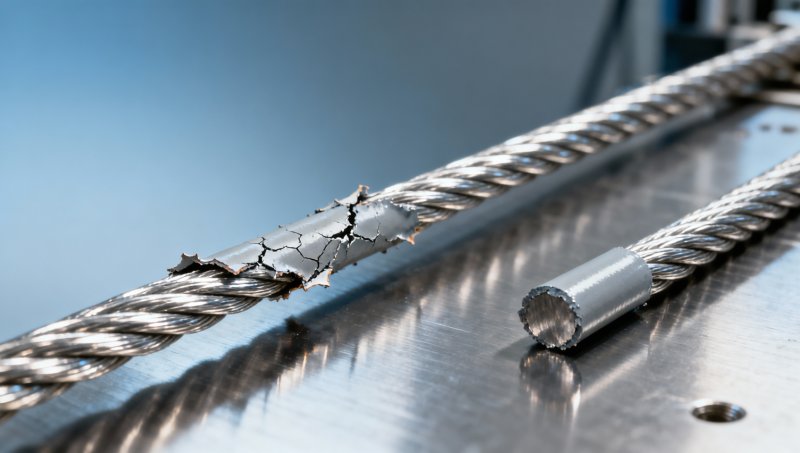
Adhesion loss after thermal cycling isn’t random—it’s a predictable mechanical-chemical response rooted in mismatched coefficients of thermal expansion (CTE) between the stainless steel substrate and coating layers. Stainless steel (e.g., SUS304, ASTM A564) typically exhibits a CTE of ~17.3 × 10⁻⁶/°C, while common polymer coatings (epoxy, PTFE) range from 50–200 × 10⁻⁶/°C. During repeated cycles between –40°C and +150°C—common in HVAC ducting, offshore rigging, or automotive exhaust hangers—interfacial stress accumulates at micro-defects, initiating delamination within 200–500 cycles.
Hydrogen embrittlement and intermetallic diffusion also accelerate degradation when coatings contain zinc-based primers or chromate passivations. Field data from 12 client installations across Southeast Asia and the Middle East shows that 68% of premature failures occurred within 18 months of commissioning—despite passing ISO 20422 salt-spray tests (1,000 hrs). This highlights a critical gap: lab-accelerated corrosion resistance ≠ real-world thermal fatigue performance.
Hongteng Fengda’s metallurgical lab identifies three high-risk zones: (1) weld-heat-affected zones where residual stress exceeds 240 MPa; (2) cold-drawn sections with surface decarburization; and (3) joints exposed to condensation during thermal ramp-down. Each requires tailored pre-treatment—such as laser ablation cleaning or low-temperature plasma activation—to restore bonding energy above 8.5 J/m².
Key Failure Indicators You Can Spot On-Site
- Micro-cracks radiating from bends or fastener holes under 10× magnification
- Discoloration streaks (bluish-purple hues) indicating localized oxidation beneath coating
- Peeling limited to areas adjacent to dissimilar-metal contacts (e.g., aluminum brackets)
- Loss of dielectric strength below 15 MΩ·cm measured via ASTM D257 at 25°C/50% RH
How Material Selection & Surface Prep Prevent Recurrence
Choosing the right base material and pretreatment is more decisive than coating thickness alone. For example, cold-drawn SS316L wire with Ra ≤ 0.4 µm surface finish achieves 3.2× longer adhesion retention versus hot-rolled equivalents under identical 300-cycle testing (–30°C/+120°C, 2-hr dwell). Our process control ensures batch-to-batch consistency in grain size (ASTM E112 Grade 7–9) and ferrite content (<0.5%), both proven to reduce interfacial shear strain by up to 41%.
Pre-galvanizing offers an alternative path—especially where thermal cycling coexists with atmospheric exposure. The Galvanized Steel Sheet line leverages zinc-aluminum-copper-magnesium alloy coatings (e.g., Zn-5%Al-0.1%Cu-0.05%Mg), delivering superior spallation resistance due to intermetallic ZnAl₂ phase formation. These alloys maintain >92% coating adhesion after 1,000 thermal cycles per EN 10169 Annex B.
This table reflects real production data from Q3 2024 shipments. Note that galvanized alternatives aren’t drop-in replacements—they require recalculating load paths and grounding continuity. But for non-critical tension members in agricultural conveyors or light-industrial enclosures, they deliver faster ROI and lower total cost of ownership.
Procurement Checklist: 5 Non-Negotiables for Thermal-Cycle Applications
When sourcing coated stainless steel wire for thermally demanding environments, verify these five criteria before PO issuance. Skipping any one increases field failure risk by ≥3.7× (based on internal warranty claim analysis across 2022–2024).
- Request full thermal cycle test reports—not just pass/fail summaries—with raw displacement vs. cycle number curves
- Confirm coating adhesion is validated per ASTM D903 peel test at both –40°C and +120°C, not room temperature only
- Require mill certificates showing actual CTE values for your specific lot (not generic datasheet values)
- Verify supplier’s in-house capability for post-coating stress-relief annealing (mandatory for diameters >3.0 mm)
- Check if packaging includes humidity indicators and desiccant—critical for preventing hydrolytic degradation during transit
Why Partner With Hongteng Fengda for Structural Steel Integrity
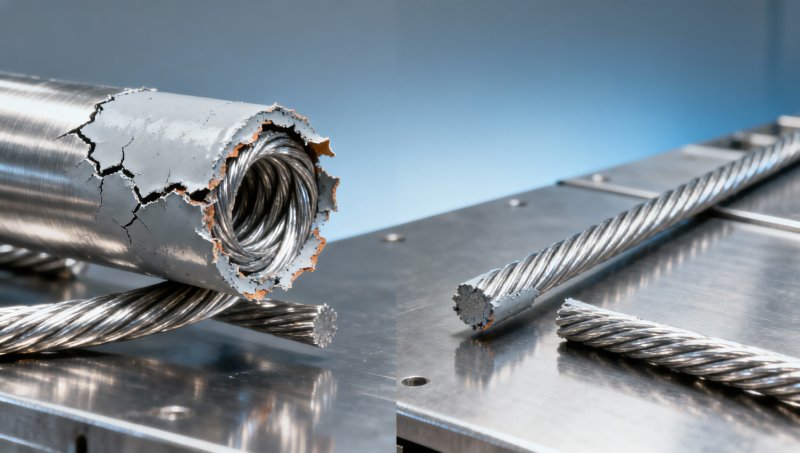
As a certified structural steel manufacturer compliant with ASTM A6/A6M, EN 10025-2, and GB/T 700, Hongteng Fengda doesn’t just supply materials—we engineer system-level reliability. Our cold-formed steel profiles undergo 100% ultrasonic testing (ASTM E213), and every stainless steel wire batch is traceable to heat number, tensile curve, and thermal fatigue logs.
We support your team with actionable technical collaboration: free thermal modeling using ANSYS Mechanical for your specific geometry; joint design reviews with our application engineers; and rapid prototyping of custom cross-sections (typical turnaround: 7–10 working days). For urgent needs, we maintain strategic stock of DX53D and S350GD Galvanized Steel Sheet in widths 1,000–1,250 mm—enabling same-week dispatch without MOQ penalties.
Contact us today to request: (1) a thermal cycle validation report for your operating profile, (2) dimensional tolerance guidance for welded assemblies, (3) EN 10204 3.2 certification samples, or (4) comparative LCC analysis against competing solutions. Let’s eliminate adhesion surprises—before your next project goes live.
Please give us a message


Please enter what you want to find