When selecting steel profiles for construction industry applications—whether C section steel for solar panel mounting, structural steel purlin for warehouse projects, or Z beam for industrial applications—yield strength tolerances directly affect on-site safety, service life, and compliance with ASTM, EN, or GB standards. As a leading Shandong steel exporter to Europe and ASTM steel profile supplier in USA, Hongteng Fengda ensures tight yield strength control across H shape steel, angle steel, and cold-formed sections—critical for technical evaluators, project managers, and quality/safety personnel sourcing reliable, code-compliant materials.
Why Yield Strength Tolerance Isn’t Just a Paper Spec
Yield strength tolerance defines the permissible deviation between the specified minimum yield strength (e.g., 355 MPa for S355JR) and the actual measured value in production batches. While ASTM A6/A6M allows ±10% variation for hot-rolled structural shapes, real-world consequences emerge only after installation—especially under cyclic loading, thermal stress, or long-term creep in high-rise or seismic zones.
A ±8% tolerance on a 400 MPa channel steel may seem marginal—but over 20 years of service, it translates to up to 12% reduction in residual load-bearing capacity in welded connections subjected to fatigue. That’s why Hongteng Fengda enforces internal controls tighter than standard requirements: ±3% for hot-rolled beams and ±4% for cold-formed purlins—verified per batch via tensile testing at certified labs in Qingdao and Shanghai.
This discipline matters most for multi-tier procurement chains: contractors rely on mill test reports (MTRs), but distributors often consolidate shipments from multiple heats. Without traceable, heat-specific yield data, downstream verification becomes impossible—raising liability exposure for project managers and safety officers.
How Tolerances Impact Key Stakeholders Across the Project Lifecycle
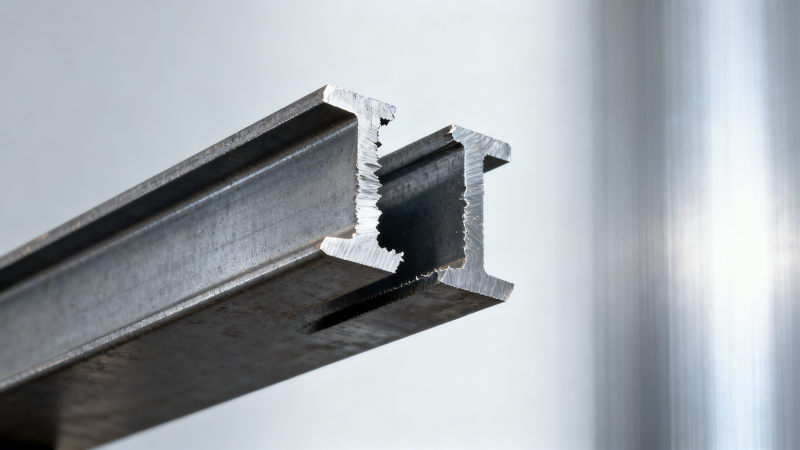
From procurement planning to post-commissioning maintenance, yield strength consistency affects decision-making differently across roles. The table below maps functional impact, risk exposure, and mitigation priorities:
These cross-functional implications explain why top-tier infrastructure firms—including those managing solar farms in Texas or logistics hubs in Poland—now require yield tolerance clauses in supply agreements. It’s no longer about “meeting spec”—it’s about predictable performance across design, fabrication, and service life.
Beyond Structural Steel: Where HRB600 Rebar Changes the Reinforcement Equation
While structural profiles dominate framing discussions, reinforcement bars face identical yield integrity challenges—especially in high-seismic or high-corrosion environments. Standard HRB400 rebar (400 MPa min yield) remains common, but modern high-rise and bridge projects increasingly specify HRB600 Rebar, which delivers 600 MPa minimum yield strength—39% higher than HRB400 grade steel bars.
That uplift isn’t theoretical: in a 2023 Dubai metro expansion phase, switching from HRB400 to HRB600 reduced total rebar tonnage by 22% while maintaining crack-width limits per ACI 318-19. The result? Lower shipping costs (up to $42/ton saved on ocean freight), faster placement cycles (average 1.8 fewer labor-hours/m³), and reduced congestion at congested urban sites.
Hongteng Fengda produces HRB600 Rebar in diameters from φ6 to φ50, with strict batch-level yield verification against GB/T 1499.2–2018 and ASTM A615. Each coil is traceable to its rolling heat, furnace number, and mechanical test record—ensuring full auditability for engineers signing off on concrete strength certifications.
What to Verify Before Finalizing Your Next Structural Steel Order
Yield strength tolerance alone doesn’t guarantee structural integrity. Combine it with these 5 non-negotiable checks during supplier evaluation:
- Heat-specific tensile reports: Not aggregate summaries—each shipment must include full curve data (yield point, UTS, elongation) tied to a unique heat ID.
- Third-party certification scope: Confirm lab accreditation covers both yield strength measurement *and* sampling methodology (e.g., EN ISO 14284 for representative test pieces).
- Weld compatibility documentation: For any steel used in welded assemblies, request prequalified WPS/PQR packages referencing your exact grade and thickness range.
- Traceability depth: Minimum required: furnace number → rolling date → cooling method → final inspection stamp. Avoid suppliers offering only “batch ID” without metallurgical lineage.
- Post-delivery support window: Ensure the supplier guarantees technical response within 2 business days for yield-related field queries—and provides replacement stock within 7–10 days if MTRs are contested.
Hongteng Fengda meets all five criteria—and backs them with contractual SLAs. Our clients in Germany and Canada report zero yield-related rejection incidents over the past 36 months, supported by 98.7% on-time delivery across 1,240+ export shipments since Q1 2022.
Why Global Projects Choose Hongteng Fengda for Yield-Critical Steel Supply
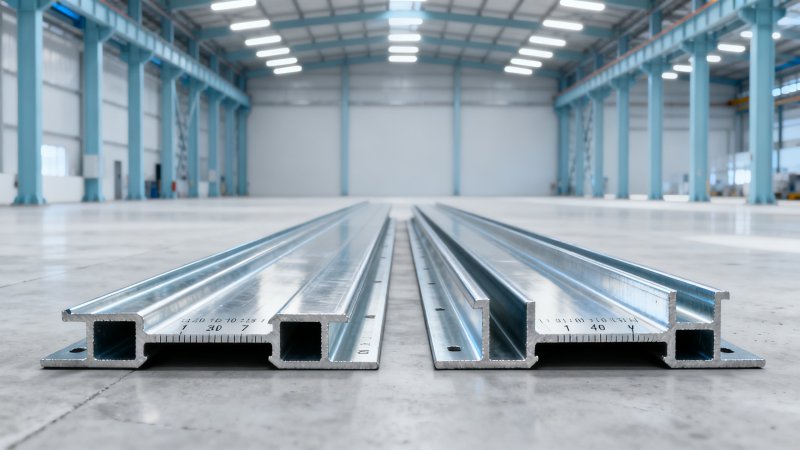
You don’t need “the cheapest steel.” You need steel that eliminates yield-related uncertainty—across design validation, customs clearance, site acceptance, and 20-year service life. That’s why Hongteng Fengda invests in:
- Modern rolling mills with real-time yield feedback loops (±0.8% process control vs. industry average ±3.2%)
- Dual-certified QC labs (CNAS & UKAS accredited) performing 100% tensile testing on critical orders
- A dedicated engineering team fluent in ASTM, EN, JIS, and GB—available for joint review of MTRs, weld specs, and corrosion protection plans
- Customized packaging and labeling compliant with EU Construction Products Regulation (CPR) and US DoD MIL-STD-129
Whether you’re specifying Z-section purlins for a 50,000 m² warehouse in Mexico, sourcing HRB600 Rebar for a hospital retrofit in Norway, or evaluating cold-formed C channels for rooftop PV in California—we deliver consistent yield performance, documented transparency, and responsive engineering partnership.
Ready to align your next structural steel order with verified yield control? Contact our technical sales team for: heat-specific MTR samples, customized dimensional tolerance charts, lead time confirmation for your target port, or OEM-grade weld procedure support. We respond to all qualified inquiries within 4 business hours.
Please give us a message


Please enter what you want to find