Choosing the right structural profile directly affects load performance, fabrication efficiency, and project cost. For technical evaluators comparing section types, understanding when a Z-beam offers clear advantages over channels, angles, or other beam profiles is essential. This article explains the key application scenarios, structural benefits, and selection factors behind using a Z-beam in demanding construction and industrial projects.
When Is a Z-Beam the Better Engineering Choice?
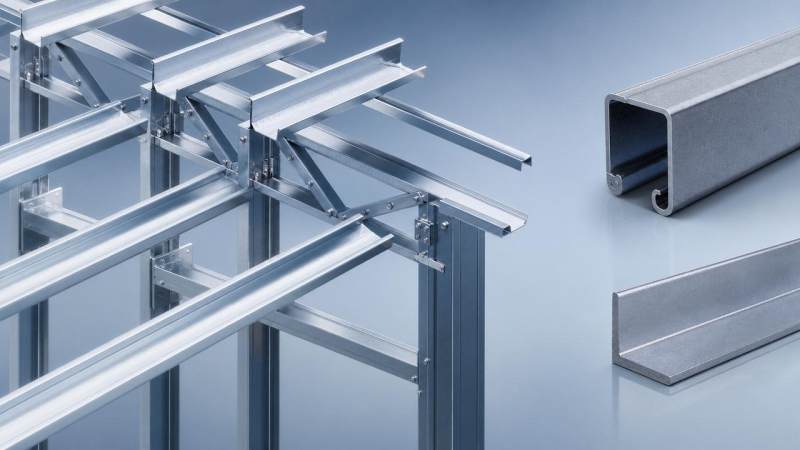
For most technical evaluators, the real question is not “what is a Z-beam,” but “when does a Z-beam outperform other structural profiles in practice?” The short answer is that a Z-beam is usually chosen when profile geometry, spanning efficiency, overlap capability, and installation economy matter more than simple familiarity with standard I-beams or channels.
In many structural systems, especially purlins, girts, side rails, lightweight framing, and cold-formed support members, a Z-beam provides a better balance of bending performance, material efficiency, and connection flexibility. It is particularly valuable in long-run roof and wall systems where overlapping members can improve continuity and reduce local weakness at supports.
Compared with angles, channels, and some other open sections, a Z-beam often performs better in applications where directional loading, secondary framing efficiency, and reduced dead load are key design priorities. That does not make it universally superior. It means it becomes the rational option when the project demands optimized section use rather than defaulting to traditional profiles.
What Technical Evaluators Usually Need to Confirm First
When reviewing whether a Z-beam is appropriate, technical evaluators usually focus on four questions. First, can the profile carry the required loads safely under the actual support conditions? Second, does it simplify fabrication, transport, and erection? Third, does it lower total installed cost rather than only reducing raw material weight? Fourth, does it align with corrosion, durability, and international specification requirements?
These questions matter because profile selection affects much more than section modulus. A seemingly minor switch from a channel or angle to a Z-beam can influence connection detailing, bracing layout, overlap design, packaging density, installation speed, and even long-term maintenance risk. For evaluators responsible for technical approval, the most useful comparison is therefore system-based, not profile-based in isolation.
This is why Z-beam selection is often strongest in industrial buildings, agricultural structures, warehouse systems, utility support frameworks, and modular or prefabricated steel assemblies. In these contexts, engineers are not only chasing strength. They are also managing procurement consistency, handling efficiency, and the interaction between primary and secondary members.
Where a Z-Beam Typically Has Clear Advantages Over Channels and Angles
A Z-beam is often preferred in secondary structural systems because its shape supports efficient placement across roof and wall lines. In purlin and girt applications, one of the biggest advantages is overlap continuity. Adjacent Z sections can be lapped over supports, which improves structural continuity and can reduce maximum bending moments compared with non-lapped simple-span arrangements.
Channels can also be used in these systems, but they do not provide the same practical overlap geometry as easily. This makes Z-beam sections highly attractive in pre-engineered buildings and long building envelopes, where repeated spans and predictable support spacing allow designers to benefit from standardized lapped member arrangements.
Compared with angle steel, a Z-beam generally offers better bending resistance for framing applications where the load is not purely axial or where eccentricity would cause undesirable twist in simpler sections. Angles are versatile and economical in bracing or minor support roles, but they are usually less efficient than Z profiles for members expected to behave as continuous linear framing elements.
Another advantage is material efficiency. Because many Z-beam products are cold formed, they can deliver useful structural performance with relatively low self-weight. In projects sensitive to dead load, shipping volume, and handling time, this can improve overall project economics even if the unit price per ton is not the only deciding factor.
Why Load Direction and Continuity Often Drive the Decision
Technical evaluators should pay close attention to how the member will actually be loaded. Z-beam profiles are commonly selected where gravity loads, wind suction, and cladding reactions act through roof or wall framing systems. In these conditions, the profile’s geometry and support detailing can be optimized for repeated loading patterns across multiple bays.
Continuity is one of the most important reasons a Z-beam is chosen. In multi-span systems, lapped Z sections can behave more efficiently than isolated simple-span members. This can reduce deflection, improve load sharing between spans, and support more economical member sizing. For industrial roofing and wall cladding systems, this benefit is often substantial enough to influence the entire framing strategy.
By contrast, if the member is a heavily loaded primary beam with major concentrated loads, torsional sensitivity, or strict composite floor behavior, an I-beam or hot-rolled wide flange section may still be the more suitable profile. Z-beams excel in the right role, but not in every role. Proper selection depends on matching the section to the structural function rather than forcing one profile into all applications.
How Fabrication and Installation Efficiency Support Z-Beam Use
Another reason a Z-beam is chosen over other structural profiles is fabrication and erection efficiency. Cold-formed Z members are often easier to standardize in projects with repeated geometry. This simplifies production planning, bundling, transportation, and on-site sequencing. For exporters and global project suppliers, standardization can also improve consistency across batches and reduce tolerance-related issues during installation.
Installation crews often benefit from lighter member weight, easier manual positioning, and simpler repetitive connection details. When a project includes extensive secondary framing, these practical advantages can create meaningful labor savings. A profile that is slightly more efficient structurally but harder to install may not be the better commercial choice. Z-beam systems often succeed because they support both engineering and site execution goals.
For projects requiring coordinated material packages, buyers frequently evaluate not only open structural sections but also associated steel components used in envelope, support, and utility systems. In corrosion-sensitive environments, galvanized tubular products may be used alongside Z sections for ancillary frames, service supports, and low-pressure fluid transport. For example, Galv Steel Tube can be integrated into construction, machinery, agricultural, transport, and industrial support systems where corrosion resistance and service life are key concerns.
Available in DX52D material and produced to standards such as ASTM, EN, JIS, GB, AISI, and DIN, this type of galvanized tube is used in applications ranging from support frames and shed construction to pipelines for water, gas, and oil under general low-pressure conditions. For technical evaluators, this matters because the best structural profile decision often sits within a broader material system, not as a stand-alone section choice.
What Selection Criteria Matter Most in Technical Evaluation
If the goal is to decide whether a Z-beam is appropriate, the evaluation should be structured around real engineering criteria. Start with span length, support spacing, load type, and serviceability limits. Deflection often matters as much as strength in cladding support systems, especially where roofing panels, façade alignment, or equipment interfaces are sensitive to movement.
Next, review continuity assumptions. If the design can benefit from lapped construction over supports, a Z-beam may offer a measurable system advantage. If the member must function as an isolated cantilever or handle major torsional loading without adequate restraint, another profile may be safer or more economical.
Connection detailing is also critical. A technically efficient section loses value if connection fabrication becomes complicated, inconsistent, or field-sensitive. Evaluators should confirm bolt patterns, seat conditions, flange accessibility, bracing requirements, and compatibility with adjacent cladding or support components. In many real-world projects, connection simplicity has a direct effect on installation quality and schedule reliability.
Material environment should not be overlooked. If the structure operates in humid, coastal, agricultural, or chemically exposed conditions, corrosion protection may alter the profile decision. Protective coatings, galvanizing options, maintenance expectations, and regional code compliance all affect lifecycle value. A lower initial material cost can become a poor decision if corrosion control is not aligned with the operating environment.
Common Application Scenarios Where Z-Beam Selection Makes Sense
Z-beams are widely chosen in pre-engineered buildings, particularly for roof purlins and wall girts. These are among the most established use cases because the section supports efficient spanning between portal frames while allowing lapped continuity and repetitive installation. Warehouses, factories, logistics centers, and agricultural buildings often benefit from this arrangement.
They are also useful in lightweight industrial support systems, equipment shelters, mezzanine edge framing in selected configurations, and modular steel structures where low weight and transport efficiency matter. In export-oriented projects, where shipping density and fast on-site assembly can influence procurement strategy, Z-beams can support cost control beyond the steel tonnage itself.
Another suitable scenario is any project with long linear framing runs and predictable bay repetition. Repetition improves the value of standardized fabrication and simplifies quality control. This fits well with global sourcing models in which structural steel manufacturers provide both standard profiles and customized secondary steel solutions for construction and industrial applications.
However, evaluators should be cautious about using a Z-beam simply because it is lighter or familiar in purlin design. If the member acts as a primary transfer beam, supports heavy dynamic equipment, or faces significant biaxial bending without adequate restraint, more robust profiles may be necessary. The right choice depends on actual structural demand, not category habit.
Typical Mistakes to Avoid When Comparing Z-Beam with Other Profiles
One common mistake is comparing sections only by weight per meter. This can lead to a misleading conclusion because lighter profiles are not automatically more economical once deflection, overlap length, bracing, and connection requirements are considered. The proper comparison is total installed performance per cost, not just raw steel usage.
Another mistake is ignoring erection logic. A profile that performs well in calculation but complicates field alignment, hole matching, or overlap installation can create hidden costs. Technical evaluators should work with realistic fabrication tolerances and installation sequences rather than idealized drawings alone.
A third mistake is applying the same profile standard across all regions without checking compliance requirements. International projects may require ASTM, EN, JIS, or GB alignment depending on the market. Manufacturers with modern facilities and strong quality control can help reduce sourcing risk here, especially when consistency, lead time, and documentation are part of the technical approval process.
Finally, some teams overlook the relationship between secondary framing and the broader steel package. A Z-beam decision should fit with channels, angles, tubes, custom components, and corrosion protection strategy. Better integration across the material package often produces better project outcomes than optimizing one section in isolation.
How to Make a Practical Go/No-Go Decision
A practical decision framework is straightforward. Choose a Z-beam when the member serves as a secondary structural profile, when multi-span continuity or overlap is beneficial, when low self-weight improves handling and cost, and when the loading pattern aligns with typical purlin, girt, or linear framing behavior. These are the conditions where the profile’s geometry delivers clear value.
Do not assume it is the best choice for primary heavy-load beam applications, highly torsion-sensitive conditions, or situations demanding stronger major-axis performance with minimal restraint. In those cases, channels, I-sections, rectangular tubes, or other profiles may be technically superior depending on the exact design brief.
For technical evaluators, the strongest approach is to compare options through structural behavior, fabrication practicality, corrosion strategy, and installed cost together. When those factors are reviewed as a system, the circumstances in which a Z-beam is the better choice usually become clear very quickly.
Conclusion
When a Z-beam is chosen over other structural profiles, it is usually because the project benefits from efficient secondary framing, lapped continuity, lighter handling weight, and practical installation advantages. Its value is strongest in roof and wall support systems, pre-engineered buildings, modular industrial structures, and repetitive framing layouts where system efficiency matters more than using the most familiar profile.
For technical evaluators, the key is to judge the Z-beam by function, not by category. If the application involves long linear spans, repeatable support spacing, and the need for balanced structural and commercial performance, a Z-beam can be the most rational option. If the member must carry heavy primary loads or resist demanding torsional effects, another profile may be the better engineering answer. The right decision comes from matching section behavior to project reality.
Please give us a message


Please enter what you want to find