When Steel Wire for concrete reinforcement fails earlier than expected, the consequences can extend far beyond material loss to serious safety, quality, and project delay risks. For quality control and safety professionals, understanding the root causes behind premature wire failure is essential to preventing structural defects, reducing compliance issues, and ensuring reliable long-term performance in demanding construction environments.
Why Early Failure Is Getting More Attention Across Construction Projects
A noticeable change in recent years is that early failure of Steel Wire for concrete reinforcement is no longer treated as an isolated site issue. It is increasingly viewed as a broader risk signal linked to supply chain pressure, faster project cycles, more complex exposure environments, and tighter compliance demands. Quality control teams and safety managers are now expected to identify not only obvious defects, but also weak process points that allow reinforcement wire to degrade before the structure reaches its intended service life.
This shift matters because modern concrete structures are being designed and built under conditions that are less forgiving. Coastal projects, industrial facilities, transport infrastructure, warehouses, and lightweight steel-concrete hybrid systems all place higher demands on reinforcement reliability. At the same time, procurement decisions are often made under cost pressure, creating a wider gap between specification on paper and performance in use. As a result, premature cracking, corrosion initiation, loss of bond, and reduced tensile performance have become warning signs that cannot be ignored.
For professionals responsible for inspection and site safety, the trend is clear: Steel Wire for concrete reinforcement must now be evaluated through a full-life perspective, not just by checking whether the delivered batch appears acceptable at receiving stage.
The Strongest Trend Signals Behind Premature Reinforcement Wire Failure
Several industry changes are driving this issue into sharper focus. The first is the rising use of high-efficiency construction schedules. Materials may be stored longer on site, exposed to rain, contamination, or repeated handling. The second is a broader sourcing network, where buyers may compare more suppliers across regions but receive batches with inconsistent metallurgy, coating condition, dimensional tolerance, or packaging protection. The third is stricter owner and regulator expectations around traceability, durability, and documented conformity with ASTM, EN, JIS, or GB requirements.
A fourth signal is the growing overlap between concrete reinforcement systems and broader structural steel applications. Many projects now combine reinforced concrete zones with secondary steel framing, purlins, brackets, and support members. That means quality leaders are being asked to assess material interfaces, corrosion exposure, and compatibility of protection strategies more carefully than before.
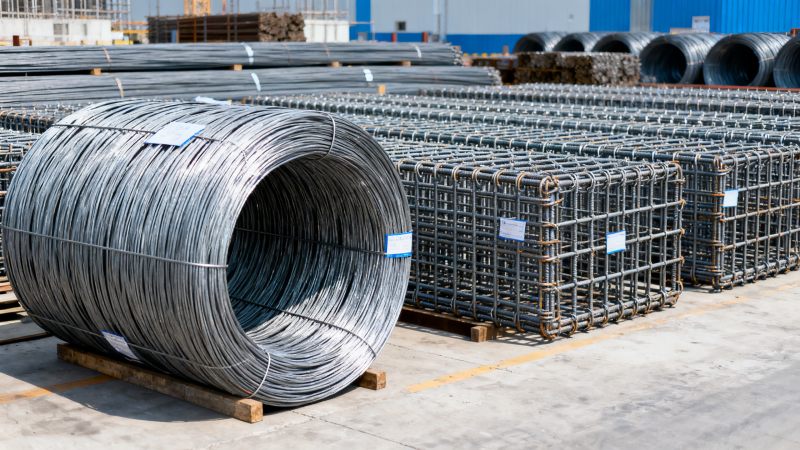
Root Causes Are Shifting from Simple Defects to System Failures
In the past, early failure of Steel Wire for concrete reinforcement was often blamed on a single factor such as poor material quality or corrosion. Today, failures are more often the outcome of combined weaknesses across specification, manufacturing, logistics, storage, installation, and curing conditions. This is an important change in how quality incidents should be investigated.
Material inconsistency remains a core risk. If the wire chemistry, tensile strength, ductility, or dimensional accuracy varies beyond acceptable limits, cracking and long-term durability problems become more likely. Surface contamination is another major cause. Oil, scale, rust, chlorides, or moisture may reduce bond performance with concrete and accelerate hidden degradation after casting. In some cases, over-bending during fabrication or repeated straightening on site introduces micro-damage before the structure is even loaded.
Environmental exposure is also becoming more decisive. Reinforcement wire that might perform adequately in a low-risk inland application can fail much earlier in marine, chemical, or freeze-thaw conditions. This means quality assessments can no longer rely on generic acceptance habits. They must reflect the actual exposure class, design life, and consequence of failure.
What Quality and Safety Teams Should Watch More Closely Now
The strongest practical shift is that inspection priorities are moving upstream. Instead of focusing mainly on visible site defects, leading teams are paying more attention to supplier capability, batch traceability, test records, transport protection, and storage discipline. For Steel Wire for concrete reinforcement, this broader control approach improves the chance of catching risk before installation.
Key watchpoints include whether mill certificates match the delivered heat numbers, whether tensile and bend tests reflect the specified standard, whether packaging prevented moisture intrusion during shipment, and whether the wire was stored off the ground with proper cover and separation. Another critical point is whether site teams understand acceptable handling limits. Damage caused by careless unloading or makeshift rework can erase the value of otherwise compliant material.
Safety managers should also note that early reinforcement failure is not only a durability issue. It can create unstable structural behavior, raise repair complexity, and expose workers to risk during remedial work such as partial demolition, recasting, or added reinforcement installation.
Why Procurement and Structural Coordination Now Matter More Than Before
One of the most important industry lessons is that premature failure often begins with decisions made long before the material reaches site. Procurement teams may prioritize price or lead time without fully verifying process stability, coating integrity, or tolerance control. Designers may specify performance levels, but if the purchasing and inspection teams do not translate those requirements into practical acceptance criteria, gaps appear quickly.
This is especially relevant in projects combining concrete reinforcement with secondary structural steel systems. For example, roof and wall support members often need the same discipline in standard compliance, corrosion protection, and dimensional consistency. In such mixed-material projects, buyers increasingly look for manufacturers that can support both performance reliability and application coordination. In some lightweight steel structure layouts, components such as Z-beam sections are selected for purlins, wall beams, brackets, and light manufacturing frames. When these members are produced with controlled tolerances, galvanized coating options, and standards-based quality assurance, they help reduce interface risk across the larger structural package.
For teams working with global suppliers, integrated capability matters. A manufacturer with modern facilities, stable production, and familiarity with ASTM, EN, JIS, and GB requirements can support better consistency not only in reinforcement-related steel products but also in adjacent structural applications. This is one reason why structural steel exporters serving international construction markets are increasingly expected to offer documentation discipline, OEM flexibility, and dependable lead times alongside the material itself.
How the Impact Differs Across Project Roles
The consequences of Steel Wire for concrete reinforcement failure do not fall evenly across the project chain. Different stakeholders experience different forms of pressure, and that affects how prevention should be organized.
The Next Direction: Durability-Based Judgment Instead of Basic Acceptance Only
A major direction emerging in the steel and construction sector is the move from minimum acceptance toward durability-based judgment. For Steel Wire for concrete reinforcement, that means the old pass-or-fail mindset at delivery is no longer enough. The more useful question is whether the wire, as supplied and handled, can still meet its intended performance over time in the actual exposure conditions of the project.
This trend affects how inspections are designed. More organizations are linking receiving inspection to exposure classification, concrete mix conditions, cover requirements, storage duration, and interface risks with other steel members. They are also using supplier history more actively. A batch from a producer with stable process control is not judged the same way as material from a source with limited traceability or weak export packaging practices.
In parallel, the market is rewarding steel manufacturers that can demonstrate process transparency and consistent compliance. Companies with experience in structural steel manufacturing, customized sections, and international export often have stronger systems for tolerance management, coating control, certification support, and packaging reliability. These capabilities are increasingly relevant to buyers who want to reduce sourcing risk across both reinforcement-related and structural applications.
Practical Judgment Signals for the Coming Months
For quality and safety professionals, the best response is not to assume every incident points to a market-wide material crisis. Instead, focus on practical signals that show whether risk is rising in your own projects. Watch for repeated variation between batches, unexplained surface condition issues, growing dependence on substitute suppliers, longer site storage periods, or mismatch between test records and real handling conditions.
Also monitor whether project teams are changing construction sequences in ways that expose reinforcement wire to weather for longer than planned. If waterproofing, casting, or enclosure work is delayed, Steel Wire for concrete reinforcement may face a different risk profile than originally assumed. This is where communication between procurement, QA, site supervision, and safety becomes essential.
Recommended Response Strategy for Companies That Want Fewer Failures
A strong response strategy starts with clearer specification control. Define the required standard, mechanical properties, dimensional tolerance, surface condition, and documentation package before ordering. Next, confirm that the supplier can consistently deliver under those conditions, not just quote them. Then tighten receiving inspection and site storage rules so that compliant material does not become compromised after delivery.
Where projects include both reinforced concrete and lightweight structural steel systems, it is wise to align quality expectations across all steel components. For instance, when using shaped profiles such as Z-shaped steel sections in purlins, wall beams, or brackets, check thickness range, length accuracy, coating protection, and certification status with the same seriousness given to reinforcement-related products. This more integrated approach helps prevent fragmented quality decisions.
Suppliers that offer standardized and customized structural steel solutions, stable production capacity, and export-oriented quality control can be valuable partners in this environment. Their ability to support consistent material quality, lead-time reliability, and internationally recognized standards can reduce the hidden causes behind early performance failure.
Final Takeaway for Quality and Safety Decision-Makers
The most important change is not simply that Steel Wire for concrete reinforcement can fail early, but that the reasons behind failure are becoming more connected to broader industry trends: faster delivery cycles, more complex sourcing, harsher environments, and stronger accountability. That makes early failure a management signal, not just a material defect.
If your organization wants to judge how these trends may affect current or future projects, focus on a few key questions: Are your specifications detailed enough for the real service environment? Are your suppliers truly consistent across batches and documentation? Are storage and handling conditions controlled as carefully as procurement? And are your teams evaluating reinforcement wire performance in connection with the full steel system used on the project?
By asking those questions early, quality control personnel and safety managers can move from reactive troubleshooting to proactive prevention, reducing compliance risk, protecting structural integrity, and improving project confidence from delivery to long-term service.
Please give us a message


Please enter what you want to find