In demanding building projects, choosing the right steel components can directly affect safety, cost, and long-term performance. For many structural and utility systems, seamless pipe for construction delivers stronger reliability than welded options.
The difference becomes clear when loads, pressure, corrosion, or inspection requirements are strict. Knowing where seamless pipe for construction fits best helps reduce failure risks, avoid delays, and improve whole-project value.
When project conditions make seamless pipe for construction the smarter choice
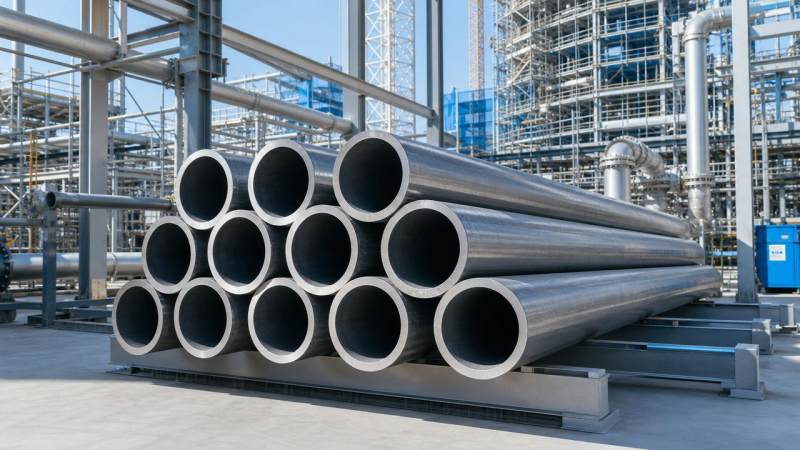
Not every building job needs the same pipe performance. Some systems carry only light loads. Others face high pressure, repeated vibration, outdoor exposure, or strict code inspection.
In those demanding conditions, seamless pipe for construction often performs better because it has no welded seam. That removes one common weakness in stress concentration and leakage-sensitive applications.
This matters in high-rise buildings, industrial plants, energy facilities, and infrastructure projects. In such cases, material consistency can influence maintenance frequency, service life, and installation confidence.
Where structural load and safety margins are critical
Construction environments with heavy structural demand usually require tighter control over mechanical performance. Columns, braces, support members, and embedded systems often work under constant or variable stress.
Seamless pipe for construction is valuable here because wall thickness is generally more uniform around the section. Better consistency supports predictable load behavior during fabrication and long-term service.
Typical examples
- High-rise structural frameworks with dynamic wind loads
- Industrial steel supports exposed to vibration
- Foundation or underground sleeves requiring long-term integrity
- Bridge-related utility steel components with strict safety factors
Where a project specification emphasizes reliability over lowest initial price, seamless pipe for construction usually deserves priority review. The higher material cost may be offset by lower repair and inspection risk.
When pressure systems inside construction projects demand more reliability
Many buildings include pressure-bearing systems, not just visible steel structures. Fire protection lines, HVAC systems, process piping, hydraulic circuits, and utility transport networks all require safe flow performance.
In medium- to high-pressure service, seamless pipe for construction is often selected because the continuous pipe body reduces concern around seam defects. That can improve trust during hydrostatic testing and final commissioning.
This becomes especially important when shutdowns are expensive. A leak, crack, or early replacement in a critical line can create labor loss, schedule disruption, and secondary damage.
Pressure-sensitive construction applications
- Fire sprinkler risers in large facilities
- Boiler and heat exchange support piping
- Compressed air lines in production buildings
- Process fluid transport in mixed-use industrial construction
When material selection extends beyond carbon steel systems, corrosion-resistant accessories may also be needed. For adjacent cladding, process surfaces, or chemical-contact sections, 316L Stainless Steel Plate can support durable project design.
This material offers corrosion resistance from nickel and molybdenum content. It also provides tensile strength of at least 520MPa, yield strength of at least 275MPa, and strong high-temperature performance.
In chemical, food, medical, transport, and marine-related construction, such stainless plate can complement seamless steel pipe selection where cleanliness, corrosion control, or heat resistance matter.
Why harsh environments increase the value of seamless pipe for construction
Outdoor, coastal, underground, and industrial environments are not equally forgiving. Moisture, chlorides, chemical exposure, and temperature fluctuation can accelerate weak-point failure in lower-grade systems.
Seamless pipe for construction becomes more attractive in these settings because structural continuity supports better fatigue resistance and long-term durability. This is useful where inspection access will be limited after installation.
Harsh-condition projects often include
- Coastal buildings with salt-rich air exposure
- Underground utility corridors with moisture cycles
- Industrial workshops with heat and corrosive fumes
- Transport terminals with vibration and repeated loading
For such projects, selection should not focus only on pipe type. Surface treatment, coating compatibility, standard compliance, and traceability also influence actual service performance.
How different construction scenarios change material selection priorities
The best choice depends on operating conditions, not habit. The table below shows where seamless pipe for construction tends to deliver stronger value than welded alternatives.
Practical ways to judge whether seamless pipe for construction is necessary
A practical decision process helps avoid overspending in simple cases and underspecifying in critical ones. Review these points before confirming final steel sourcing.
- Check pressure level and fluctuation frequency.
- Review whether the pipe will be concealed after installation.
- Assess exposure to corrosion, heat, or vibration.
- Confirm code, inspection, and certification requirements.
- Compare total lifecycle cost, not only purchase price.
For global projects, sourcing quality matters as much as design choice. Hongteng Fengda supplies structural steel products with stable production, strict quality control, and support for ASTM, EN, JIS, and GB standards.
That matters when projects need dependable lead times, consistent documentation, and customized structural steel solutions. A reliable supplier reduces sourcing risk before materials even reach the site.
Common mistakes when evaluating seamless pipe for construction
One common mistake is choosing only by unit price. Lower upfront cost can become expensive if maintenance access is difficult or if a failure interrupts building operations.
Another mistake is treating all welded pipe as equal and all seamless pipe for construction as automatically necessary. Real selection should reflect service condition, code demand, and fabrication method.
A third issue is ignoring the surrounding steel system. Pipe performance depends on fittings, supports, coatings, installation quality, and compatibility with nearby structural steel components.
Points often overlooked
- Wall thickness tolerance and actual inspection records
- Traceability for standards and heat numbers
- Transit protection for export shipments
- Fabrication compatibility with the project schedule
A better next step for steel selection in demanding projects
When pressure, load, durability, and safety all matter, seamless pipe for construction often offers stronger long-term value. It is especially useful in critical systems where failure consequences are high.
The smartest approach is scenario-based evaluation. Match the pipe type to actual service demands, inspection requirements, and total lifecycle expectations.
If the project also requires structural steel sections, cold formed profiles, or customized steel components, combining specification review with reliable export supply can improve cost control and project certainty.
Start by reviewing the most demanding areas of the design. From there, confirm whether seamless pipe for construction will reduce risk, support compliance, and deliver the performance the project truly needs.
Please give us a message


Please enter what you want to find