When stamping defects, cracking, or dimensional instability threaten product quality and safety, SPCD steel high strength becomes a practical solution for demanding forming applications. For quality control and safety managers, understanding how this material improves formability, consistency, and compliance is essential to reducing production risk, maintaining standards, and supporting more reliable manufacturing results.
In metal forming operations, even a deviation of ±0.5 mm can trigger assembly issues, higher scrap rates, or safety concerns in downstream use. This is why material selection is no longer only a purchasing decision. It is a process-control decision that affects die life, repeatability, inspection workload, and product conformity.
For teams responsible for quality assurance, workplace safety, and supplier consistency, SPCD steel high strength deserves close attention. It is especially relevant in projects where sheet components must withstand repeated forming, maintain tight tolerances, and still meet production targets across medium to large-volume runs.
Why SPCD high strength steel matters in forming control
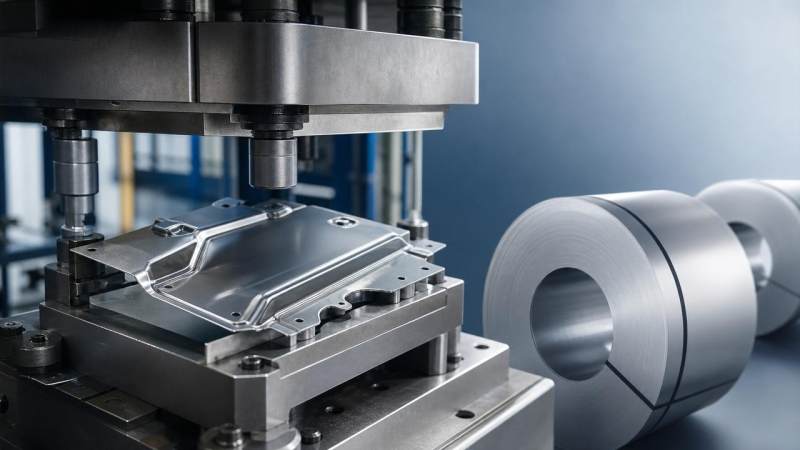
SPCD is commonly associated with cold-rolled steel for drawing applications, and in high-strength variants it offers an important balance between formability and mechanical performance. For quality control and safety managers, the value lies in reducing three common forming risks: edge cracking, springback, and inconsistent dimensional stability after stamping.
Compared with ordinary sheet materials that may perform acceptably in simple bending but fail in deeper drawing operations, SPCD steel high strength supports better deformation behavior under controlled press conditions. In many production lines, that translates into fewer corrective tool adjustments over 2 to 4-week production cycles.
Key performance factors for quality and safety teams
Material performance should be reviewed across at least 4 control dimensions: tensile behavior, elongation, surface quality, and thickness consistency. In stamping environments, these factors directly influence crack initiation, burr formation, and the ability to maintain stable part geometry from batch to batch.
- Stable thickness tolerance helps protect die clearance control and reduces unexpected forming stress.
- Good surface condition lowers friction variation and improves lubrication consistency during pressing.
- Balanced strength and ductility reduce edge fractures in tight-radius bends or drawn corners.
- Consistent coil or sheet properties support repeatable inspection results across multiple shifts.
The table below outlines the practical difference between standard forming steel concerns and the process advantages often associated with SPCD steel high strength in demanding applications.
For buyers and inspectors, the main conclusion is clear: the right steel grade can reduce downstream quality pressure before any corrective action plan is needed. That is often more efficient than trying to solve material-related defects only through die repair or stricter final inspection.
Where forming failures usually begin
Many failure investigations focus on the press, but the root cause often starts earlier. In practice, 5 checkpoints deserve attention: incoming material certification, thickness verification, surface inspection, lubrication control, and first-article dimensional approval. Missing even 1 of these can distort the full process picture.
1. Thickness and flatness variation
Even when nominal thickness is correct, local variation across a sheet can change forming force and final geometry. Safety managers should also note that unstable sheet feeding increases the chance of misalignment, which can expose operators to tool intervention risks if production stops repeatedly.
2. Improper matching between steel and tool design
If punch radius, die clearance, or draw bead settings are designed for a softer material, upgrading to a stronger steel without recalibration can create edge stress concentration. The result may be split lines, accelerated tool wear, or repeated nonconformance after the first 500 to 1,000 parts.
3. Weak batch traceability
In quality systems, traceability should connect heat number, inspection records, processing date, and final part approval. Without that chain, recurring defects can appear random. In reality, they may be tied to one supply lot, one lubrication change, or one parameter shift during a single shift.
How to evaluate SPCD steel high strength for procurement and compliance
A strong procurement decision combines material suitability with documentation reliability. Quality control personnel should not evaluate SPCD steel high strength by price per ton alone. At least 6 criteria should be reviewed together: grade conformity, dimensional tolerance, surface condition, mechanical consistency, delivery stability, and supplier response speed.
For international projects, buyers often require alignment with ASTM, EN, JIS, or GB-related quality expectations, even when the end-use component is custom formed. This is where an experienced structural steel manufacturer and exporter can help reduce sourcing risk through organized production records, pre-shipment checks, and stable export handling.
A practical supplier review framework
The following table can be used during supplier qualification or annual vendor review. It is designed for quality managers, EHS personnel, and procurement teams that need measurable decision points rather than general promises.
This framework is particularly useful when buyers compare multiple Chinese exporters or mixed sourcing channels. The lowest initial quote may not be the lowest total risk if replacement lead time, inconsistent tolerances, or incomplete test records cause stoppages later.
Why manufacturer background still matters
Hongteng Fengda serves global construction, industrial, and manufacturing projects with structural steel products, cold formed profiles, and customized steel components. For buyers in North America, Europe, the Middle East, and Southeast Asia, this matters because export experience often improves communication speed, specification control, and schedule predictability.
A supplier with modern facilities and strict quality control is better positioned to support repeat orders, mixed specification programs, and project-based sourcing. That is especially important when procurement teams must align production with inspection windows, shipping plans, and customer acceptance deadlines.
From material choice to safer operations: implementation steps that work
Selecting SPCD steel high strength is only the first step. To convert material capability into lower defect rates and safer operations, companies should build a 5-step implementation path. This approach is useful for new product launch, supplier transition, or process improvement after recurring stamping failures.
Step 1: Define the forming severity
Document whether the part involves simple bending, multi-stage drawing, flange stretching, or hole expansion. A part with 2 bends is not evaluated the same way as a panel requiring 3 to 5 forming stages. Severity classification helps determine whether SPCD steel high strength is necessary and what test plan should follow.
Step 2: Set measurable acceptance criteria
Define rejection thresholds before production starts. Typical criteria include crack-free edges, dimensional tolerance bands, surface defect limits, and springback control after unloading. For many projects, first-article approval should include at least 3 verified samples from the same material lot.
Step 3: Align incoming inspection with forming risk
Not every sheet requires the same incoming checks. High-risk formed parts may justify thickness mapping, surface review under controlled lighting, and certificate verification by batch. This can be more efficient than broad 100% inspection after stamping, especially when defect origins are material-related.
Step 4: Validate tooling and lubrication together
Material changes should trigger a process validation run, not just a paperwork update. Teams should monitor forming force, wear pattern, and part geometry over a sample window such as 100, 300, and 1,000 pieces. This identifies stability trends before full production release.
Step 5: Build a closed-loop response plan
If defects appear, response should include containment, lot isolation, parameter review, and supplier feedback within 24 to 48 hours. A closed-loop method prevents repeated exposure and supports faster corrective action than informal shop-floor adjustments.
Related steel solutions that support safer surfaces and site performance
While SPCD steel high strength is highly relevant for forming applications, quality and safety managers often oversee broader steel purchasing decisions. In many industrial sites, the same team also manages slip resistance, structural support areas, and flooring around equipment. In those cases, patterned plate selection becomes another practical safety topic.
For example, SS440 Patterned steel plate can be used in transportation, construction, decoration, machinery zones, shipbuilding, and floor areas around equipment where anti-skid performance matters. Available thickness is 2–8 mm, width ranges from 600–1800 mm, and length can be supplied from 2 m to 12 m or according to project requirements.
What makes patterned plate relevant to safety management
In operational environments, steel selection is not only about load-bearing capacity. Surface traction, bending resistance, and dimensional consistency also affect safety outcomes. Patterned steel plate with pattern height not less than 0.2 times the substrate thickness can improve grip in wet or high-traffic areas while still supporting fabrication needs.
Common materials include Q235B, A36, 235JR, S235, SS400, SS440, SM400A, and SM400B. Certifications and inspection references may involve ASTM, DIN, JIS, BS, GB/TC, ISO, SGS, and BV depending on project requirements. For buyers, this makes it easier to align site safety expectations with export documentation and receiving inspection routines.
Quick comparison for floor and platform applications
The table below shows how patterned plate decisions can be reviewed alongside practical safety and maintenance concerns in industrial or construction settings.
For safety-focused procurement, the key point is fit-for-use. A plate that combines anti-slip behavior, reasonable tolerance control such as thickness tolerance of ±0.02 mm and width tolerance of ±2 mm, and prompt delivery can reduce both installation risk and maintenance interruption.
Common mistakes when using high-strength steel in forming projects
Even well-qualified buyers can face avoidable failures if process assumptions are not updated. In practice, 4 mistakes appear repeatedly across sheet metal and fabricated steel programs.
Mistake 1: Assuming stronger steel always means harder forming
The real issue is not strength alone. It is the combination of strength, elongation, surface condition, and process setup. SPCD steel high strength can perform well in demanding forming if tooling, lubrication, and bend geometry are matched correctly.
Mistake 2: Approving suppliers without process-based questions
A certificate alone does not explain how the material behaves in a specific die set. Buyers should ask about application history, tolerance stability, export packaging, and response procedures for nonconforming batches. These questions often reveal more than a price list does.
Mistake 3: Relying too heavily on final inspection
If the process creates cracks or unstable dimensions early, final inspection only detects losses after cost is already added. Process control at the incoming, setup, and first-run stages is usually more effective than sorting defects after 5,000 units have been produced.
Mistake 4: Separating safety review from material review
Material inconsistency can increase manual adjustments, jam clearing, and tool intervention frequency. That creates direct operational exposure. Safety management should therefore be integrated into material approval, not treated as a separate step after production problems appear.
Choosing a reliable steel partner for long-term manufacturing stability
For global buyers, long-term value comes from consistent quality, stable supply, and responsive technical support. A capable Chinese structural steel manufacturer and exporter can help reduce sourcing risk through organized production control, standard-compliant supply, and dependable lead times across repeated orders.
Hongteng Fengda focuses on angle steel, channel steel, steel beams, cold formed steel profiles, and customized structural steel components. With support for standard specifications and OEM requirements, the company is positioned to serve buyers who need both reliable product quality and practical communication across international projects.
If your team is dealing with cracking, springback, dimensional instability, or site safety requirements tied to steel selection, a better material and supplier strategy can reduce defects, improve compliance, and support steadier production. Contact us to discuss your forming requirements, request material details, or get a customized steel solution for your next project.
Please give us a message


Please enter what you want to find