When rebar for beam spacing becomes too wide or poorly detailed, crack control can quickly turn into a structural and maintenance concern. For engineers, buyers, and project managers comparing rebar for beam, rebar for column, steel angle for construction, or even I beam vs H beam strength, understanding the relationship between reinforcement layout and service performance is essential for safer, more cost-effective steel and concrete construction.
Why does rebar for beam spacing start to affect crack control in real projects?
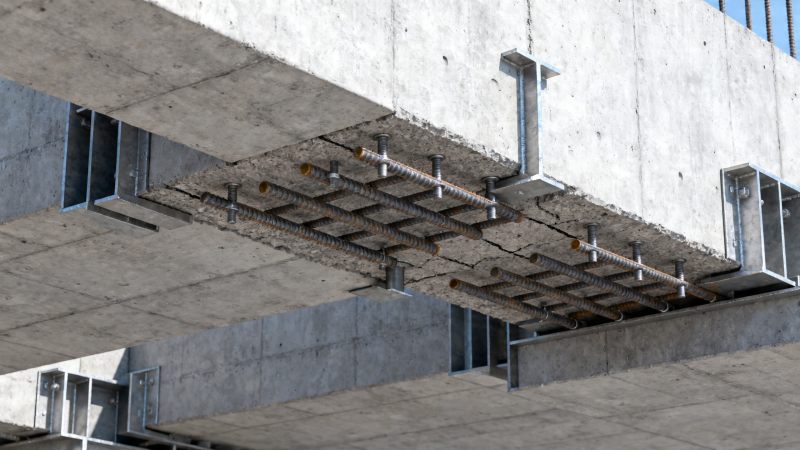
In reinforced concrete beams, crack control is not only about the total steel area. It is strongly influenced by how that steel is distributed across the tensile zone. When rebar for beam spacing becomes excessive, each bar has to control a wider concrete area, and crack widths tend to grow under service loads. This is especially relevant in floors, transfer beams, industrial platforms, and mixed steel-concrete structures where appearance, durability, and maintenance cost all matter over a 10–30 year service period.
For technical evaluators and quality managers, the issue usually appears before ultimate strength becomes critical. A beam may still satisfy basic load-bearing checks, yet develop visible flexural cracks because spacing, cover, bar diameter, concrete quality, and detailing were not coordinated. In many commercial and industrial projects, serviceability problems are identified during the first 3 stages: formwork removal, early loading, and regular operation. That is why crack control should be treated as a design-and-procurement matter, not only a site execution issue.
For buyers and project managers, understanding this relationship helps avoid a common mistake: selecting reinforcement or related steel products solely by tonnage price. A lower material cost can be offset by higher repair frequency, coating damage, leak risk, or disputes over workmanship. In beam zones connected to steel beams, channel steel, or angle steel supports, improper reinforcement spacing can also complicate load transfer and finishing quality.
In practical terms, crack control is usually affected by 4 linked factors: bar spacing, bar diameter, concrete cover, and exposure condition. If one factor becomes unfavorable, the others often need adjustment. For example, a project using larger-diameter bars at wider spacing may reduce labor time, but that configuration can increase crack spacing and crack width compared with more evenly distributed smaller bars.
What changes when spacing becomes too wide?
Wider spacing generally leads to fewer bars sharing the tensile force. The concrete between bars experiences larger strain concentration, and cracks tend to form at wider intervals with greater visible width. This is one reason many codes place serviceability limits on reinforcement detailing rather than checking strength alone. In humid, marine, chemical, or freeze-thaw environments, wider cracks can accelerate moisture ingress and long-term corrosion risk.
The decision is even more important in projects where rebar interfaces with structural steel framing. A beam connected to steel seats, embedded plates, or support angles must not only carry force but also preserve dimensional stability for finishes, machinery alignment, and vibration control. In these conditions, crack control supports both structural performance and operational reliability.
Key warning signs during design review and site inspection
- Bottom reinforcement is adequate in area, but bars are concentrated in only 1–2 layers with large clear spacing.
- Large-diameter bars are chosen mainly to reduce tying work, without checking service crack behavior.
- Concrete cover, bar spacing, and aggregate size are not coordinated, causing placement or compaction problems.
- Beam support regions and openings receive insufficient detailing despite local stress concentration.
How should engineers and buyers evaluate spacing, beam type, and steel support options together?
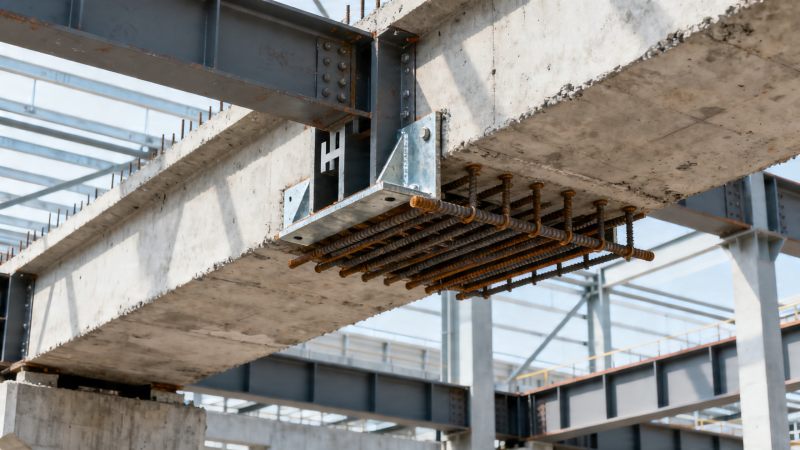
Many projects do not examine rebar for beam spacing in isolation. The real decision often involves a combination of beam form, support steel, fabrication method, and procurement timing. A contractor may compare reinforced concrete beams with steel beams, or evaluate steel angle for construction as an edge support, while also discussing I beam vs H beam strength for framed sections. Each option changes load path, stiffness, crack risk, and installation sequence.
For procurement personnel and business evaluators, the practical question is not only “Which section is stronger?” but “Which system gives the best balance between structural reliability, fabrication efficiency, compliance, and total project cost?” In mixed systems, the quality of steel products matters because misalignment, section tolerance, or unstable supply can force field adjustments that alter reinforcement arrangement and reduce crack-control effectiveness.
Hongteng Fengda supports this type of decision with standard and customized structural steel solutions, including angle steel, channel steel, steel beams, cold formed steel profiles, and OEM components. For global construction and industrial buyers, consistent manufacturing, strict quality control, and compliance with ASTM, EN, JIS, and GB help reduce sourcing risk when reinforcement detailing and steel interface conditions need to be tightly coordinated.
In project planning, a useful approach is to review 3 layers at the same time: serviceability, constructability, and supply stability. Serviceability focuses on cracks and deflection. Constructability covers bar placement, weld access, and concrete pouring. Supply stability addresses lead time, dimensional consistency, and required standards. If one layer is ignored, the project often experiences rework within 2–6 weeks of execution.
Comparison table: reinforcement spacing and structural steel decisions
The table below helps technical and purchasing teams compare common decision points related to rebar for beam spacing, support steel selection, and service performance in construction projects.
The main takeaway is that crack control improves when design, detailing, and steel supply decisions are integrated early. A structurally acceptable section can still create downstream quality problems if spacing, support geometry, and fabrication tolerances are not reviewed as one package.
A practical mid-project material consideration
In some projects, reinforcement detailing is linked with plate fabrication, stiffeners, equipment bases, or enclosure supports. When buyers also need plate materials for construction, machinery, pressure-related components, or industrial fabrication, a coordinated sourcing plan can reduce schedule friction. One example is Carbon Sheet Steel, available in grades such as Q245R, Q345R, Q370R, 16MnDR, 09MnNiDR, 15MnNiDR, 15CrMoR, 14Cr1MoR, 12Cr2Mo1R, 07MnNiMoDR, and 12MnNiVR, with thickness from 1mm to 100mm and common widths including 1010mm, 1219mm, 1250mm, 1500mm, 1800mm, and 2500mm.
These plate options are used across construction, shipbuilding, petroleum, chemical, boiler heat exchanger, machinery, hardware, and related industrial fields. For project teams managing 2–4 parallel material streams, combining structural sections with compatible plate procurement can improve documentation control, shorten communication loops, and simplify specification matching.
What should procurement teams check before ordering steel and reinforcement-related components?
For B2B buyers, the biggest risk is often not the listed unit price. It is mismatch between drawings, standards, dimensions, and delivery sequence. A project may specify reinforcement spacing carefully, yet experience site changes because support angles arrive late, beam sections vary from expected tolerances, or attached plates do not match fabrication details. That can trigger on-site drilling, packing, or relocation of bars and embedded items.
A reliable procurement review should cover at least 5 key checkpoints: applicable standard, size range, dimensional tolerance, surface condition, and delivery rhythm. For international projects, the standard match is especially important because ASTM, EN, JIS, and GB may be accepted differently by designers, consultants, and local authorities. Teams should confirm this before placing orders, not after material has been rolled or cut.
Hongteng Fengda works with global buyers across North America, Europe, the Middle East, and Southeast Asia, where project documentation often includes both standard sections and customized components. In this environment, stable production capacity and dependable lead times are not abstract selling points. They help avoid sequence conflicts between steel installation, reinforcement fixing, and concrete placement.
From a financial approval perspective, the stronger approach is to compare total installed outcome over a full procurement cycle of design confirmation, production, inspection, shipping, and site receipt. A slightly cheaper source that creates 1–2 rounds of clarification, replacement, or delay can increase total project cost more than a consistent supplier with clear technical communication.
Procurement checklist for steel and beam-related coordination
The following table can be used by procurement teams, project managers, and QC personnel to align technical needs with commercial decisions before approval.
This checklist is useful because it connects commercial review with field consequences. Good procurement supports good crack control by preserving the intended geometry, sequence, and quality of the beam-support system.
A 4-step internal review process
- Confirm design basis: beam type, reinforcement intent, steel interface details, and exposure condition.
- Verify product scope: angles, channels, steel beams, cold formed profiles, plates, and OEM parts.
- Review compliance and documents: grade, standard, certificates, and inspection method.
- Lock delivery sequence: batch size, packaging, shipping schedule, and site receiving plan.
Which common mistakes lead to crack problems even when the beam looks adequately reinforced?
One of the most frequent misconceptions is that more steel automatically means better crack control. In reality, distribution matters. A beam with sufficient steel area can still crack excessively if bars are too far apart, layered inefficiently, or interrupted near support zones and openings. Another mistake is assuming that rebar for column rules can be directly applied to rebar for beam decisions. Columns and beams experience different stress patterns, and their detailing priorities are not the same.
A second mistake is separating structural steel procurement from reinforced concrete detailing. For example, when steel beams, support angles, or channels are substituted late in the project, bar anchorage length, cover, or local confinement may be affected. What appears to be a small fabrication adjustment can change crack behavior at the concrete interface after only a few loading cycles or during thermal movement.
A third issue is underestimating construction quality. Even a well-detailed beam can develop poor crack performance if spacers move, cover is inconsistent, concrete is not compacted properly, or bars are displaced during installation of embedded steel components. This is why quality and safety managers should inspect not only material certificates but also actual bar placement and support conditions before pouring.
For project leaders, the solution is a coordinated review between design, procurement, fabrication, and site teams. In many cases, 30–60 minutes of pre-pour coordination can prevent weeks of repair work, finishing disputes, or performance complaints after commissioning.
FAQ for engineers, buyers, and project stakeholders
How do I know when rebar for beam spacing is becoming a crack-control problem?
The warning sign is usually not a single number taken out of context. It becomes a problem when bar spacing, bar size, cover, and service load together allow visible cracks beyond project expectations. Review the beam’s tensile zone distribution, support region detailing, and exposure condition. If the design uses fewer large bars mainly for labor convenience, a serviceability check is advisable.
Is closer spacing always better?
Not always. Closer spacing generally improves crack distribution, but excessive congestion can create poor concrete flow and compaction issues. The best result is a balanced layout that allows proper placing, vibration, and cover control. In practical procurement terms, the detailing should also match available bar sizes, support steel geometry, and site workmanship capability.
What should buyers ask steel suppliers when the project includes beam-rebar coordination?
Ask about applicable standards, available sizes, tolerance control, cutting or OEM capability, inspection documentation, and realistic lead time. If the project includes beam seats, angles, channels, or plate components, also confirm whether these can be supplied in coordinated batches. This reduces the risk of field modification that can interfere with reinforcement placement.
How long is a typical supply planning window for structural steel components?
The exact schedule depends on grade, quantity, customization level, and shipping route, but many international projects work best when technical confirmation starts 2–4 weeks before production release. Complex OEM or multi-item orders may require additional review time for drawings, inspection points, and packaging sequence.
Why choose a structural steel partner that understands both technical detail and global delivery?
When crack control, beam detailing, and steel interface conditions all matter, material supply should do more than fulfill a purchase order. It should support project accuracy. Hongteng Fengda provides structural steel manufacturing and export services from China for global construction, industrial, and manufacturing projects, with product coverage including angle steel, channel steel, steel beams, cold formed steel profiles, and customized structural steel components.
For engineering teams, this means more practical coordination between specification and fabrication. For procurement teams, it means access to standard products and OEM solutions under controlled manufacturing conditions. For distributors, contractors, and project owners, it means lower sourcing uncertainty when schedules are tight, standards vary by market, and project interfaces must be managed carefully from drawing review to shipment.
If you are comparing rebar for beam support conditions, steel angle for construction, beam section options, or related plate and profile requirements, a focused technical discussion can save both time and rework. You can consult on 6 practical topics: section selection, size confirmation, standard matching, customized fabrication, expected delivery cycle, and document requirements for inspection or approval.
Contact Hongteng Fengda to discuss your drawings, material list, and project schedule. You can request parameter confirmation, product selection advice, OEM feasibility review, sample support, certification alignment, phased delivery planning, and quotation communication for structural steel components that need to perform reliably in real construction conditions.
Please give us a message


Please enter what you want to find