For quality control and safety teams, a stainless flat plate is not just a material item—it can directly affect fit-up accuracy, load distribution, sealing performance, and long-term reliability. When project tolerances are tight or the plate will be used in welded, machined, or safety-critical assemblies, stricter flatness control becomes essential. Understanding when higher flatness requirements matter helps reduce rework, inspection risks, and downstream failure costs.
The core search intent behind “stainless flat plate” in this context is practical and decision-oriented: readers want to know when standard commercial flatness is no longer enough, what risks poor flatness creates, and how to judge whether tighter control is worth the added cost and lead time. For QC personnel and safety managers, the answer is usually not based on material type alone. It depends on how the plate will be processed, assembled, loaded, inspected, and used in service.
In simple terms, a stainless flat plate needs tighter flatness control when unevenness can cause measurable downstream problems. That includes precision fabrication, automated welding, gasketed joints, base plates, machine interfaces, enclosed systems, safety-related structures, and any application where distortion can multiply after cutting, welding, or machining. In lower-risk uses, standard flatness may be fully acceptable. The key is matching the flatness requirement to the real functional risk.
How to Judge Whether Standard Flatness Is No Longer Enough
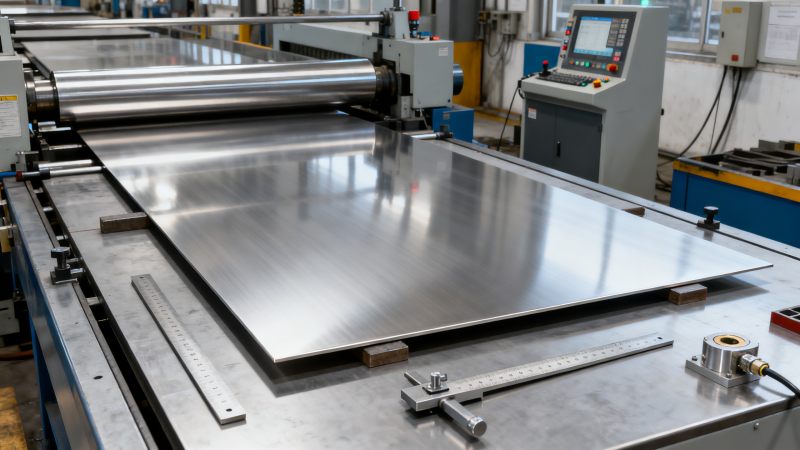
For many projects, buyers focus first on grade, thickness, width, and corrosion resistance. Flatness often gets checked later, sometimes only after fabrication problems appear. That is a costly sequence. A better approach is to evaluate flatness early by asking one question: if the plate is not sufficiently flat, what exactly will fail, slow down, or become unsafe?
If the answer is “nothing important,” standard supply may be sufficient. If the answer includes difficult fit-up, welding gaps, poor contact surfaces, unstable bolt preload, sealing failure, machining stock loss, assembly interference, or inspection rejection, then tighter flatness control should be specified before purchasing.
Quality and safety teams usually care less about abstract tolerance values and more about consequence. A plate that looks acceptable on the floor may still be unsuitable if it causes uneven support under equipment, creates stress concentrations in a loaded assembly, or forces excessive correction during fabrication. That is why flatness should be assessed as a functional requirement, not only as a dimensional checkbox.
Situations Where Tighter Flatness Control Matters Most
The first high-risk situation is precision assembly. If a stainless flat plate must mate with frames, housings, covers, or other fabricated parts, waviness and distortion can affect alignment. Even small gaps can shift hole positions, change load paths, or create visible quality defects. In modular or repetitive production, this problem becomes more severe because one out-of-flat component can slow an entire assembly line.
The second critical case is gasketed or sealed service. In tanks, covers, ducts, flanges, machine guards, enclosures, and hygienic systems, contact uniformity matters. A stainless flat plate that is not flat enough may create local low-pressure zones at the sealing surface. Teams may try to compensate by increasing bolt torque or using more sealant, but those fixes do not always solve the root issue and can introduce new reliability risks.
A third case is machining. If the plate will be milled, ground, drilled, or used as a reference surface, initial flatness directly affects machining efficiency and final dimensional control. Poor flatness can require extra clamping force, increase setup time, consume additional machining allowance, and raise the chance of residual distortion after release. In thin or medium-thickness plates, these effects can be significant.
Welded structures are another common trigger for tighter flatness requirements. Stainless materials can be sensitive to heat input and residual stress patterns. If the incoming plate already has edge wave, center buckle, or twist-like distortion, welding can magnify the problem. That often leads to more straightening work, unpredictable dimensional variation, and higher rejection risk during final inspection.
Safety-related load-bearing assemblies also deserve stricter review. If the plate acts as a mounting surface, load transfer interface, stiffened panel, or support under dynamic or cyclic loading, uneven contact can create point loading rather than uniform distribution. Over time, that may contribute to loosening, fatigue, local deformation, or maintenance issues that would have been avoidable with better incoming flatness control.
What QC and Safety Teams Usually Worry About in Real Projects
The main concern is not whether a supplier can quote a flatness number. It is whether that number matches the way the plate will actually be used. QC teams want to avoid hidden costs: re-leveling, flame correction, pressing, grinding, fit-up delays, scrap, and repeated inspections. Safety managers want confidence that the plate will not compromise structural contact, equipment stability, or sealed-system performance after installation.
Another concern is consistency across batches. One plate may pass assembly with minor adjustment, while the next creates major rework. For this reason, tolerance capability matters as much as nominal tolerance. A supplier should not only accept a tighter flatness requirement but also have the process stability to deliver it repeatedly across thickness ranges and plate sizes.
Inspection practicality matters too. If a project specifies very tight flatness but lacks a clear measuring method, disputes can arise at receiving inspection. Teams should define whether flatness will be checked on a support table, by straightedge and feeler gauge, by laser measurement, or according to an agreed standard and condition. A usable requirement is one that can be verified consistently by both buyer and supplier.
Common Warning Signs That You Should Upgrade the Flatness Requirement
Several project signals suggest that a standard stainless flat plate may not be enough. One is repeated fit-up correction during previous jobs. If operators regularly use clamps, wedges, extra tack welds, or grinding just to close gaps, the plate flatness requirement should be reviewed rather than treating each issue as normal shop adjustment.
Another warning sign is high weld quality sensitivity. If root gaps, distortion control, or visual finish are tightly controlled, incoming flatness has more influence than many teams expect. This is especially true for visible architectural stainless, food equipment, covers, panels, and assemblies where both function and surface appearance matter.
Sealing problems are also an important signal. If leaks, uneven gasket compression, or recurring bolt retightening have occurred in similar assemblies, flatness may be part of the root cause. In many cases, teams first suspect gasket material or installation technique, but the contact surface condition is equally important.
Frequent machining adjustment is another clue. If the shop often needs extra stock removal, multiple reclamping cycles, or corrective milling to create a usable datum surface, then tighter incoming flatness can reduce both time and process variability. The savings may justify the higher purchase specification.
Finally, if the plate serves a safety-critical role or interfaces with heavy equipment, stricter flatness should be considered by default during risk review. The cost of prevention is usually lower than the cost of field correction, downtime, or investigation after a failure or near miss.
How to Set a Flatness Requirement Without Over-Specifying
Not every stainless flat plate needs premium flatness. Over-specifying can increase cost, limit supplier options, and extend lead times without adding real value. The best practice is to define the requirement based on function, plate size, thickness, fabrication route, and service condition.
Start by identifying the contact or reference surface. Ask whether the full plate area matters or only a local zone. If only a machined pad or bolt region is functionally critical, it may be more efficient to control that area through secondary processing rather than applying a very tight tolerance to the entire plate.
Next, consider what happens after receipt. Cutting, welding, plasma processing, hole making, edge preparation, and stress relief can all change flatness. If the plate will undergo heavy fabrication, the incoming tolerance should be set with the downstream distortion risk in mind. In some cases, controlling process sequence and heat input is as important as tightening the original plate specification.
It is also useful to define acceptable correction methods. Some buyers allow roller leveling or press correction before fabrication; others do not because of surface, stress, or traceability concerns. Agreeing this in advance helps avoid quality disputes.
For industrial buyers working across multiple steel categories, it is often practical to align flatness thinking with the broader fabrication function of the part. For example, projects that use stainless plate for sealed or corrosion-sensitive assemblies may also use structural carbon steel for high-load frames, machine bases, or general heavy fabrication. In those mixed-material projects, sourcing teams sometimes compare processing needs across materials and components, including products such as Carbon Steel Sheet Plate for construction, engineering machinery, mining equipment, cranes, loaders, and other structural applications where standard compliance, plate size range, and fabrication suitability are key purchasing factors.
That comparison can improve specification discipline. A plate used for a cosmetic cover does not need the same control as one used for a sealing face or equipment interface. By linking tolerance to actual function, teams can avoid both under-specification and unnecessary cost.
Supplier Capability Is Part of Flatness Control
Even a well-written specification fails if the supplier cannot consistently achieve it. Flatness control depends on rolling condition, thickness, residual stress management, cutting method, leveling capability, storage, handling, and final inspection. Buyers should evaluate whether the supplier has modern equipment, stable process control, and experience with export standards and tolerance-sensitive orders.
This is especially important for global projects where material must meet ASTM, EN, JIS, or GB requirements and arrive ready for fabrication. Structural steel manufacturers with strong quality systems can support this need by providing stable production, inspection records, and communication on realistic tolerance capability before shipment. That reduces sourcing risk and helps QC teams avoid surprises at receiving inspection.
For companies managing both stainless and structural steel procurement, supplier reliability often matters as much as the nominal specification. A capable manufacturing partner can help review drawings, identify where tighter control truly adds value, and recommend practical tolerance levels based on thickness, plate dimensions, and end use.
A Simple Decision Framework for QC and Safety Review
If you need a quick internal rule, use this framework. Tighten flatness control when at least one of the following is true: the plate is a sealing surface, a precision mating surface, a machining datum, a welded assembly with distortion sensitivity, a load transfer interface, or part of a safety-critical system. Also tighten control when previous projects showed repeated fit-up or correction issues.
Keep standard flatness when the plate is used in non-critical fabricated parts, has generous assembly tolerance, does not require full-area contact, and can be corrected economically without affecting quality or safety. In those cases, a tighter specification may not produce meaningful project value.
When uncertain, involve fabrication, QC, and safety review together before ordering. Their combined perspective usually reveals whether flatness is a true functional risk or just a perceived quality preference. That alignment can prevent avoidable cost while still protecting downstream performance.
Conclusion
A stainless flat plate needs tighter flatness control when its shape directly affects fit-up, sealing, machining, welding results, load distribution, or operational safety. For quality control and safety teams, the decision should be driven by consequence, not habit. If poor flatness can trigger rework, inspection failure, leaks, unstable interfaces, or long-term reliability problems, stricter control is justified.
The most effective approach is to define flatness based on actual application risk, verify that the requirement is measurable, and confirm that the supplier can deliver it consistently. Done correctly, tighter flatness control is not just a quality upgrade—it is a practical way to reduce downstream cost, improve assembly performance, and protect safety-critical outcomes.
Please give us a message


Please enter what you want to find