For technical evaluators comparing tubing options, knowing when ss coil tube delivers better performance than straight tubing is critical for cost, installation efficiency, and system reliability. In projects involving long continuous runs, tighter bending requirements, or fewer leak points, ss coil tube can offer clear operational advantages. This article examines the conditions, engineering considerations, and application scenarios where it becomes the smarter choice.
When is ss coil tube the better engineering choice?
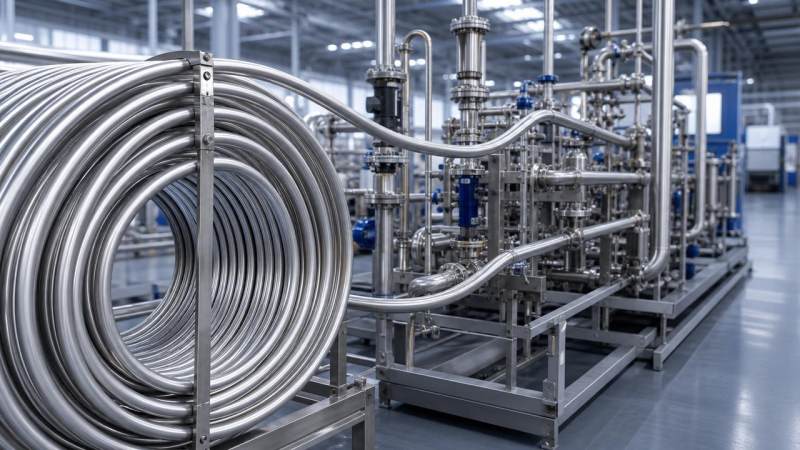
In steel-based industrial systems, tubing selection is rarely just a material question. It affects installation speed, weld count, maintenance risk, pressure integrity, and total project cost.
For technical evaluators, ss coil tube becomes more attractive when the design requires long uninterrupted lengths, flexible routing, or reduced field joining. Straight tubing still has value, but it is not always the most efficient option.
A coiled format allows stainless steel tubing to be delivered in continuous lengths. That often means fewer fittings, fewer orbital welds, and fewer potential leak paths.
- Use ss coil tube when the line route includes multiple bends, elevation changes, or constrained equipment layouts.
- Use it when leak reduction is a priority, especially in instrumentation, hydraulic, chemical, or gas service lines.
- It is also a strong option when installation labor is expensive or site welding capacity is limited.
Why evaluators often prefer coiled tubing in practice
The practical advantage is continuity. A single long coil can replace multiple straight lengths that would otherwise require connectors or welds at every joint.
In industrial procurement, this changes the cost profile. The unit price per meter may not tell the full story because labor, inspection, and downtime risk often matter more than raw material alone.
ss coil tube vs straight tubing: what changes in real projects?
The table below helps technical teams compare ss coil tube and straight tubing across the criteria most likely to affect project approval, installation planning, and lifecycle reliability.
The main point is not that one format always wins. It is that ss coil tube usually performs better when the system geometry is complex and the cost of each additional connection is high.
Where straight tubing still makes sense
- Long exposed architectural lines where perfectly straight visual alignment matters.
- Short, simple runs with easy access and minimal bends.
- Projects where the fabrication shop will fully prefabricate sections before delivery.
Which application scenarios favor ss coil tube?
Application context is often the deciding factor. In steel industry supply chains, technical buyers do not evaluate tubing in isolation. They assess the full route, installation environment, and operational consequences.
Typical use cases with stronger performance gains
- Instrumentation lines in process plants, where every extra fitting increases leak potential and inspection workload.
- Hydraulic and pneumatic systems that need compact routing around machinery, frames, or structural supports.
- Heat tracing and sampling systems that benefit from long, continuous tubing paths.
- Offshore, marine, or corrosive environments where maintenance access is difficult and joint reduction adds value.
- OEM equipment assemblies that require repeatable bending and consistent routing in limited installation envelopes.
In these applications, ss coil tube can improve not only assembly efficiency but also system cleanliness, especially when fewer cut ends and fewer joining operations are involved.
For buyers working across broader steel product categories, it is common to combine tubing evaluation with related sourcing needs. For example, projects that involve frames, supports, wire accessories, or industrial packaging materials may also require Galvanized Stainless Steel Wire for construction, wire mesh, barrier isolation, or daily industrial use. Its wire diameter range of 0.25 mm to 5.0 mm and zinc coating thickness of 8 to 25 g/m2 make it suitable where flexibility, corrosion resistance, and cold-forming performance are needed alongside structural steel procurement.
What technical factors should evaluators check before selecting ss coil tube?
Selection should not rely on layout convenience alone. Technical evaluation must include service conditions, mechanical demands, installation method, and compliance requirements.
The following table summarizes the key checks that help determine whether ss coil tube is the right choice for a given steel or industrial project.
For evaluators, the best outcome comes from linking these checks to actual installation constraints. A well-specified coil length and bend requirement can prevent many field issues before procurement begins.
Common engineering risks to avoid
- Assuming a coiled product can accept any bend without tooling review.
- Comparing only material price while ignoring labor, rework, and inspection costs.
- Overlooking packaging and transport handling for long coils on international shipments.
- Failing to align tubing specification with project standards used by end users or EPC contractors.
How does ss coil tube affect total installed cost?
Procurement teams often see the clearest value when they move from piece-price comparison to installed-cost comparison. That is where ss coil tube can outperform straight tubing even if the supply format seems more specialized.
The table below shows a practical cost evaluation framework that technical and sourcing teams can use together.
This is why technical evaluators should ask for a full installed-cost model, not only a quotation per length. In many steel and industrial applications, fewer connections can justify the choice quickly.
What should buyers ask suppliers before approval?
A capable supplier should do more than ship material. The supplier should support specification confirmation, tolerances, packaging, export coordination, and compatibility with the project standard system.
Practical supplier evaluation checklist
- Can the supplier confirm material options and manufacturing tolerances against ASTM, EN, JIS, or GB references when required?
- Can they align coil lengths, packaging format, and export protection with your unloading and storage conditions?
- Can they support OEM or custom project requirements if the tubing is part of a larger structural steel assembly?
- Can they coordinate with other steel product categories to reduce sourcing fragmentation and lead-time risk?
This is where Hongteng Fengda offers practical value. As a China-based structural steel manufacturer and exporter serving construction, industrial, and manufacturing projects, the company supports global buyers with stable production capacity, consistent quality control, and experience working to mainstream international standards.
That matters for technical evaluators because tubing decisions are often linked to brackets, channels, beams, cold formed profiles, and custom fabricated components. Coordinating these items through one capable steel supply partner can reduce interface errors and delivery delays.
FAQ: common questions about ss coil tube selection
Is ss coil tube always better for long runs?
Often yes, but not automatically. It performs best when the long run also includes bends, access constraints, or a strong need to reduce joints. If the route is short, open, and simple, straight tubing may remain more practical.
What is the main reliability advantage of ss coil tube?
The main advantage is joint reduction. Fewer mechanical or welded connections typically mean fewer possible leak points, less inspection time, and lower exposure to vibration-related failures.
What do technical evaluators most often overlook?
They often focus on tubing price and overlook handling, bending method, field labor, and compliance requirements. A low piece price can become expensive if the routing needs many extra fittings or rework hours.
Can ss coil tube support custom project requirements?
In many cases, yes. Project teams can often specify dimensions, coil lengths, packaging, and documentation requirements. This is especially useful for export projects with defined installation methods and standard references.
Why choose us for steel project support?
If you are evaluating whether ss coil tube will outperform straight tubing in your project, the right discussion should cover more than just product format. It should include application fit, standard requirements, fabrication coordination, delivery planning, and total installed cost.
Hongteng Fengda supports buyers who need reliable steel products and coordinated solutions for global construction, industrial, and manufacturing projects. Our experience in structural steel, cold formed profiles, standard specifications, and OEM supply helps technical teams reduce sourcing risk and keep procurement decisions practical.
- Ask us to review whether ss coil tube or straight tubing better fits your route design and service conditions.
- Request support for parameter confirmation, including dimensions, wall thickness, coil length, and application environment.
- Consult us on delivery timing, export packaging, and coordination with structural steel components in the same project.
- Contact us for custom solution discussion, sampling support where applicable, and quotation alignment with your technical specification.
For technical evaluators, faster approval usually comes from clearer data. Share your drawings, operating conditions, required standards, and target delivery window, and we can help you assess the most efficient steel supply approach.
Please give us a message


Please enter what you want to find