For technical evaluators comparing material options, astm a36 round bar often becomes the practical choice when weldability, machinability, and cost control matter more than premium strength.
It is widely used in structural fabrication, brackets, base components, shafts, anchors, and general steel parts that need reliable performance without complex processing risks.
In steel sourcing, the best grade is not always the strongest grade. The better choice depends on service conditions, fabrication steps, code requirements, and replacement availability.
This article explains when astm a36 round bar is better than other grades, how to judge application fit, and what details reduce procurement and fabrication uncertainty.
When project conditions favor astm a36 round bar
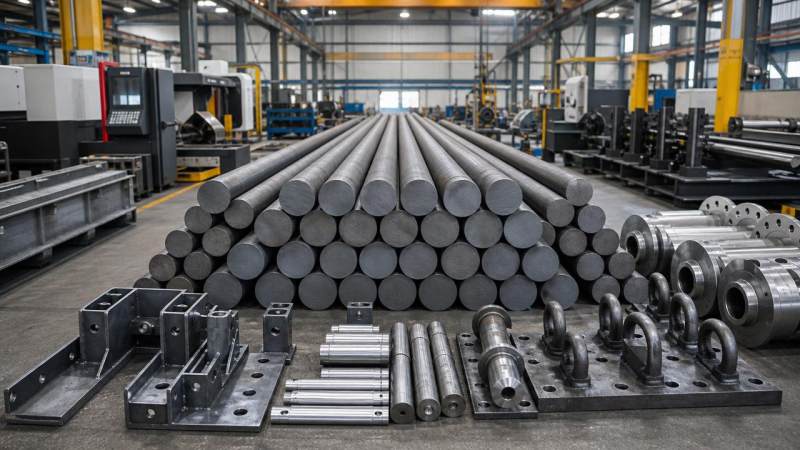
Many steel applications do not require high tensile strength, alloy chemistry, or heat treatment. They require stable supply, easy processing, and predictable mechanical behavior.
That is where astm a36 round bar performs well. It balances acceptable strength with low fabrication difficulty and broad standard recognition.
Compared with harder or stronger grades, it usually cuts faster, welds more easily, and lowers the risk of distortion, cracking, or special procedure demands.
In global projects, standard availability also matters. A common grade supports easier substitution planning and reduces downtime when stock shortages affect niche materials.
Scenario background: why material choice changes by application
A material suitable for a wear pin may be wrong for a welded frame. A grade ideal for pressure service may be unnecessary for general structural attachments.
Round bar selection should start with actual service demands, not with the highest listed strength on a datasheet.
The main variables usually include:
- Need for welding or repeated joining
- Need for machining, drilling, or threading
- Static load versus dynamic or impact load
- Indoor dry service versus corrosive exposure
- Tolerance, finish, and dimensional consistency
- Budget sensitivity and supply continuity
When those factors point toward simple fabrication and moderate strength, astm a36 round bar often outperforms more specialized grades in total project value.
Typical application scenarios where astm a36 round bar is the better choice
Welded structural attachments and support components
For welded brackets, base assemblies, cleats, tie components, and connection details, astm a36 round bar is often preferred because fabrication simplicity is critical.
If the design is not strength-limited, using a higher grade may increase welding control requirements without adding meaningful project benefit.
General machining for non-precision steel parts
Bush housings, spacers, threaded rods, pins, and simple turned parts frequently use astm a36 round bar when exacting alloy performance is unnecessary.
Its machinability supports efficient production for low to medium complexity parts, especially where cost matters more than hardness or fatigue resistance.
Construction projects needing broad availability
On construction schedules, material delays can cost more than small differences in mechanical performance. Common grades reduce sourcing friction and simplify replenishment.
That makes astm a36 round bar a strong option for anchors, temporary supports, embedded components, and miscellaneous fabricated items.
Projects prioritizing fabrication compatibility across steel items
Some projects combine bars, plates, channels, and beams in the same assembly. Matching fabrication behavior across materials can reduce shop complications.
For example, a welded steel package may pair round bar details with Structural I Beam members in industrial structure applications.
That beam solution is available in grades such as Q195-Q235, Q345, SS400, A36, and St52, with hot rolled molding and tolerances around ±1%.
Its processing options include bending, welding, punching, and cutting, which aligns well with fabrication environments already using astm a36 round bar.
How astm a36 round bar compares with other grades by demand
Practical selection advice for different scenarios
Use these checks before finalizing astm a36 round bar in a project specification or purchase order.
- Confirm whether the design is strength-controlled or fabrication-controlled.
- Review welding volume, joint type, and heat input sensitivity.
- Check if the part needs wear resistance, fatigue performance, or hardening.
- Evaluate corrosion strategy before selecting the base material.
- Compare total installed cost, not only raw material price.
- Verify standard compliance, heat traceability, and mill documentation.
If the application involves simple steelwork, standard machining, and protective finishing, astm a36 round bar usually delivers the most balanced outcome.
Common mistakes when judging astm a36 round bar against higher grades
Choosing by strength only
A stronger grade can look superior on paper. Yet extra strength may provide no practical benefit if section size, weldability, or cost become the real constraints.
Ignoring secondary processing cost
Harder or alloyed steels can increase tool wear, setup time, and welding procedure demands. That often changes the real cost equation.
Overlooking coating as a corrosion solution
Sometimes buyers reject astm a36 round bar because it is not corrosion resistant by itself. In many projects, galvanizing or painting already solves that issue.
Missing supply chain risk
Less common grades may have longer lead times or inconsistent availability. A widely stocked standard can support schedule reliability and easier replacement planning.
What to verify before ordering astm a36 round bar
- Diameter range and length tolerance
- Hot rolled, peeled, or further processed condition
- Mechanical property expectations for the application
- Need for cutting, drilling, threading, or welding preparation
- Surface condition and coating requirements
- Inspection records and compliance with ASTM documentation
Reliable suppliers should also support related structural steel products, customized processing, and international standards coordination for mixed-material projects.
Hongteng Fengda, a structural steel manufacturer and exporter from China, supports global construction and industrial projects with stable capacity, strict quality control, and customized steel solutions.
Final decision: when astm a36 round bar creates better project value
astm a36 round bar is better than other grades when moderate strength is sufficient, fabrication ease matters, and cost efficiency affects the final decision.
It is especially suitable for welded structural details, general machined parts, construction support items, and standard steel components requiring dependable supply.
If the application demands extreme strength, wear resistance, high fatigue life, or inherent corrosion resistance, another grade may be more appropriate.
For the next step, compare your load condition, fabrication route, coating plan, and schedule pressure. That process quickly shows whether astm a36 round bar is the most practical specification.
Please give us a message


Please enter what you want to find