Selecting the right plate steel affects structural safety, fabrication efficiency, and total project cost. For technical evaluators comparing material options, ASTM A36 carbon steel plate for construction is often a practical choice when balanced strength, weldability, and availability matter most. Understanding where A36 performs well helps engineers and buyers make faster, lower-risk decisions for buildings, support frames, and general structural applications.
Why does ASTM A36 carbon steel plate for construction remain a practical baseline?
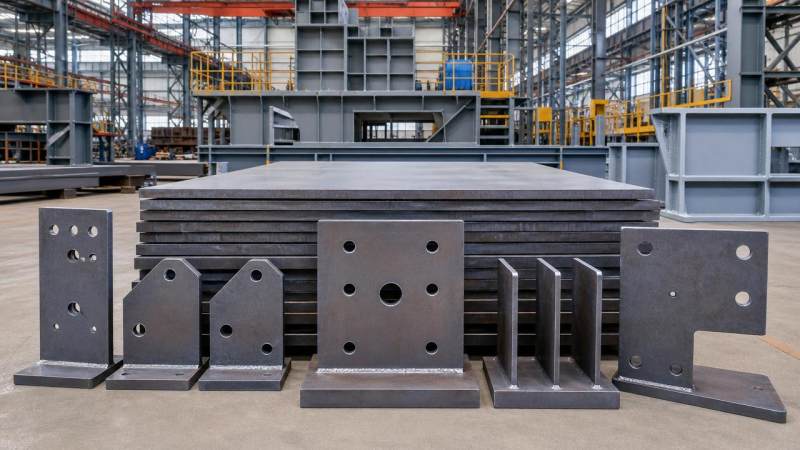
In many steel projects, the goal is not to choose the highest-strength material on paper. The real task is to select a steel grade that matches load requirements, fabrication methods, budget limits, and local availability.
That is why ASTM A36 carbon steel plate for construction continues to be specified for base plates, connection plates, embedded parts, gussets, brackets, stiffeners, and general structural components. It offers a useful balance between strength, machinability, welding performance, and procurement simplicity.
For technical evaluators, A36 is rarely about maximum performance. It is about predictable performance. In projects with moderate strength demands and conventional fabrication, predictable material behavior reduces approval cycles, production delays, and shop-floor adjustments.
- It is widely recognized in international supply chains and easy to compare against equivalent structural grades.
- It supports common cutting, drilling, bending, and welding processes used in steel fabrication shops.
- It is suitable for many non-specialized structural parts where ultra-high yield strength is unnecessary.
- It is often easier to source in stable volumes, which matters when project schedules are tight.
Which construction scenarios are best suited to A36 plate?
ASTM A36 carbon steel plate for construction performs best in conventional structural use rather than highly specialized environments. The following table helps technical teams match the grade to practical project conditions.
The table shows a key point: A36 is most effective when the design needs dependable structural steel rather than advanced mechanical performance. In routine building steelwork, that distinction can save both evaluation time and fabrication cost.
Where A36 may not be the first choice
Technical evaluators should still be cautious. If the project involves very low-temperature service, aggressive corrosion exposure, weight reduction targets, or higher strength-to-weight optimization, another grade may be more suitable.
Likewise, if the plate will be used in pressure equipment, offshore structures, or applications governed by special impact or chemistry requirements, specification review must go beyond a general construction grade.
How does A36 compare with other structural steel options?
Technical teams often compare ASTM A36 carbon steel plate for construction against other common grades during pre-qualification. The decision is usually driven by strength level, code familiarity, fabrication convenience, and total supply risk rather than nominal material price alone.
This comparison highlights a common procurement reality. A36 is often chosen not because alternatives are inferior, but because it creates fewer approval questions when the job is standard construction and the buyer wants low complexity.
Strength is only one part of the decision
A stronger grade can reduce material thickness in some designs, but it may also affect cost, weld procedure qualification, substitution approvals, or lead time. For technical evaluators, the right material is the one that satisfies design intent with the least execution risk.
This is especially important in export projects. International buyers need a manufacturer that can align plate grade, fabrication requirements, documentation, and downstream components under the same quality control system.
What technical points should evaluators verify before approval?
When specifying ASTM A36 carbon steel plate for construction, approval should not stop at the grade name. Material suitability depends on dimensional tolerance, surface condition, fabrication route, and whether the plate is used as a standalone part or within a larger steel assembly.
- Confirm the required plate thickness range and whether the supplier can maintain consistency across batch volumes.
- Review chemical and mechanical property documentation against project or market expectations.
- Check whether cutting, punching, drilling, or welding will be completed before shipment.
- Assess surface treatment requirements if the plate will be exposed to weather, moisture, or industrial atmospheres.
- Verify whether the supplier can integrate the plate with beams, channels, angles, or cold formed profiles in one package.
This last point matters more than many buyers expect. Construction projects rarely purchase plate in isolation. They often need a complete steel solution, including secondary framing members and fabricated connection parts.
For example, in steel structure buildings, plate components may work together with purlins, wall members, and light framing sections. In such cases, a coordinated sourcing approach can reduce mismatch risk between structural parts and simplify fabrication planning.
A related option used in many support systems is Metal C Beam. This C-shaped profile can be supplied in galvanized, powder-coated, or black varnish finishes, with thickness from 1mm to 12.mm and processing services such as bending, welding, punching, decoiling, and cutting. For purlins, wall beams, lightweight trusses, and light industrial framing, pairing plate and formed sections from one source can improve dimensional consistency and delivery coordination.
How can buyers reduce cost without increasing construction risk?
Cost control in steel purchasing is not only about finding a lower price per ton. It involves reducing rework, avoiding over-specification, improving nesting efficiency, and securing dependable delivery. ASTM A36 carbon steel plate for construction often supports these goals when the design does not demand premium-grade properties.
The table below focuses on practical cost drivers that technical evaluators should review before final sourcing approval.
The best savings usually come from material-fit decisions, not aggressive price compression. A technically suitable A36 solution can lower total installed cost if it reduces fabrication complexity and keeps the supply schedule stable.
What standards, documentation, and supply capabilities matter most?
For technical evaluators, confidence comes from traceability and execution capability. A plate supplier should not only quote ASTM A36 carbon steel plate for construction, but also support document review, dimensional control, and downstream processing requirements.
Key compliance and sourcing checkpoints
- Material standard alignment: confirm that the supplied plate meets the requested ASTM designation and any additional project notes.
- Cross-standard familiarity: for international projects, suppliers should understand ASTM, EN, JIS, and GB references to reduce conversion errors.
- Processing support: ask whether cutting, welding preparation, punching, and custom sizing can be completed before export.
- Delivery reliability: review whether the manufacturer has stable production capacity for repeat orders and mixed-product shipments.
- Inspection communication: define acceptance criteria early, especially for tolerances, edge condition, and coating expectations.
Hongteng Fengda’s advantage in this process is not limited to one product category. As a structural steel manufacturer and exporter from China, the company supports global construction, industrial, and manufacturing projects with angle steel, channel steel, steel beams, cold formed profiles, and customized structural components.
For technical buyers, this broader capability can be valuable. It means the same supplier can coordinate standard specifications and OEM-oriented fabrication while working within commonly referenced international standards such as ASTM, EN, JIS, and GB. That reduces sourcing fragmentation and helps control schedule risk across multi-item steel packages.
Common questions technical evaluators ask before choosing A36
Is ASTM A36 carbon steel plate for construction suitable for all structural jobs?
No. It is suitable for many general construction applications, but not all. If the project requires higher yield strength, special toughness, severe corrosion resistance, or specific low-temperature performance, the evaluator should consider alternative grades and project-specific standards.
What is the biggest mistake buyers make when selecting A36 plate?
A common mistake is assuming that grade selection alone completes the evaluation. In practice, thickness tolerance, cutting requirements, weld preparation, coating needs, and batch consistency often affect project performance more than the base grade decision.
Can A36 be combined with formed structural members in one project package?
Yes. Many projects combine plate with beams, channels, angles, and cold formed sections. For example, secondary framing members such as purlins or wall beams may be sourced alongside plate connections and base components to streamline fabrication and logistics.
How should lead time be evaluated for international supply?
Do not review lead time as a single number only. Check production capacity, processing scope, document preparation, packaging, and whether multiple steel items can be consolidated into one shipment. Stable planning usually matters more than the shortest initial promise.
Why choose a manufacturer with integrated structural steel capability?
When a project uses ASTM A36 carbon steel plate for construction, the best result often comes from supply coordination rather than isolated material purchasing. A manufacturer with integrated structural steel capability can support plate, sections, fabricated parts, and custom processing under a more controlled workflow.
Hongteng Fengda serves buyers across North America, Europe, the Middle East, and Southeast Asia with stable production capacity, consistent quality control, and dependable lead-time management. For technical evaluators, that means fewer gaps between material approval and project execution.
- Need parameter confirmation for plate thickness, dimensions, or fabrication tolerances? We can align supply details with your drawing and application.
- Comparing A36 against other structural grades? We can support material selection based on use conditions, standard references, and sourcing practicality.
- Planning a package with plate, beams, channels, or formed sections? We can discuss coordinated production and shipment options.
- Reviewing delivery schedule, certification expectations, or custom processing scope? We can provide project-oriented quotation communication and sample support where needed.
If your team is assessing whether A36 is the right fit, the fastest next step is to share the application, size range, required standards, and processing needs. That allows a more accurate discussion on product selection, delivery cycle, documentation, and cost-effective sourcing strategy.
Please give us a message


Please enter what you want to find