What tensile strength and yield point can be expected from 20mm plate in structural welding applications?
When selecting 20mm plate for structural welding applications, understanding its tensile strength and yield point is critical to ensuring weld integrity, load-bearing capacity, and long-term safety. As a trusted structural steel manufacturer and exporter from China, Hongteng Fengda supplies high-quality 20mm plate compliant with ASTM, EN, GB, and JIS standards—engineered for consistent performance in beams, columns, and heavy-duty frameworks. Whether you're a site engineer, welding supervisor, or fabrication technician, this guide delivers practical, application-focused insights into the mechanical properties you can reliably expect from 20mm plate in real-world structural welding scenarios.
Let’s start with what matters most on the shop floor: not theoretical limits, but how those numbers behave when heat, restraint, and geometry enter the picture.
It’s not just about the number on the mill test report
A common misconception is that the yield point listed on a material certificate—say, 345 MPa for Q345 steel—is what your weld joint will deliver under service load. In practice, it’s rarely that simple. The actual yield behavior of a welded assembly depends on three overlapping factors: base metal specification, heat-affected zone (HAZ) softening, and residual stress distribution.
For example, a standard 20mm Q345 plate (GB/T 1591) typically has a minimum yield strength of 345 MPa and tensile strength between 470–630 MPa. But after multi-pass welding—especially with high heat input—the HAZ in the 20mm thickness may experience partial annealing, reducing local yield by up to 10–15% near the fusion line. That doesn’t mean the part fails—but it does mean design margins need to account for localized reduction, not just nominal values.
And thickness matters beyond just strength. At 20mm, thermal mass slows cooling, increasing the risk of hydrogen-induced cracking if preheat or interpass temperature isn’t controlled—particularly in steels with higher carbon equivalent (CEV > 0.42). So while tensile strength tells you “how much it holds,” the yield point—and how consistently it’s maintained across the weld zone—tells you “how predictably it yields before failure.” That distinction shapes everything from inspection frequency to post-weld heat treatment decisions.
How standards shape expectations—practically
ASTM A6/A6M, EN 10025-2, and GB/T 700 all define minimum yield and tensile requirements for structural plates—but they differ in how they treat thickness-related reductions. For instance:
- ASTM A36 requires minimum yield of 250 MPa for plates ≤ 200 mm thick—no thickness-based derating.
- EN S235JR specifies 235 MPa yield for plates up to 16 mm, but drops to 225 MPa for 16–40 mm thicknesses—including 20mm.
- GB/T 1591-2018 for Q345 keeps 345 MPa yield constant up to 100 mm, making it more consistent for thicker sections like 20mm.
This isn’t academic nuance. If your project references EN standards but your supplier ships GB-compliant 20mm plate without flagging the yield difference, field verification becomes essential—not just for compliance, but for matching design assumptions. At Hongteng Fengda, every batch of 20mm plate is traceable to certified mill test reports aligned with the specified standard, and we routinely cross-check CEV, impact toughness (especially at low temperatures), and surface condition—because a clean, scale-free plate welds more consistently than one with mill scale or minor laminations, even if both meet minimum tensile specs.
Welding context changes everything
You wouldn’t specify a 20mm plate solely for its tensile strength—you’re using it where stiffness, buckling resistance, or connection rigidity matter. Think column bases, crane runway girders, or blast-resistant wall anchors. In those cases, yield point stability across the section—not peak tensile—is what prevents premature plastic hinge formation.
That’s why many fabricators working with 20mm plate opt for controlled-rolling grades (e.g., Q345D or S355J2+N) over basic hot-rolled equivalents. The improved through-thickness ductility reduces the risk of lamellar tearing during fillet welds in T-joints—a known pain point in heavy structural assemblies. It’s also why our quality control includes ultrasonic testing (UT) for plates ≥16mm used in critical load paths: not because every plate has flaws, but because detecting planar discontinuities early avoids rework delays mid-fabrication.
And let’s not overlook fit-up. A 20mm plate with ±0.8mm thickness tolerance may seem tight—until you’re welding a double-V groove joint with mismatched edges. That small variation affects heat distribution, penetration depth, and residual stress symmetry. We’ve seen cases where identical weld procedures produced acceptable radiographs on one batch but required rework on another—solely due to subtle differences in edge squareness and surface profile, not chemistry or strength.
Where 20mm meets other structural elements
In real projects, 20mm plate rarely stands alone. It connects to lighter sections—like C Sections Steel, commonly used for purlins, wall beams, and light industrial framing. When a 20mm base plate anchors a C-section column, the yield transition between the two must be managed: the C-section (often Q235 or S235JR, ~235 MPa yield) shouldn’t become the weak link under cyclic loading. That’s why connection detailing—bolt spacing, washer use, and whether the C-section is galvanized-coated or powder-coated—matters as much as the plate’s tensile strength.
We’ve supported clients integrating 20mm anchor plates with cold-formed C-sections across Southeast Asian industrial parks, where humidity and thermal cycling accelerate corrosion at dissimilar-metal interfaces. In those cases, specifying galvanized C Sections Steel alongside properly coated 20mm plate wasn’t about aesthetics—it was about maintaining yield consistency over time, not just at installation.
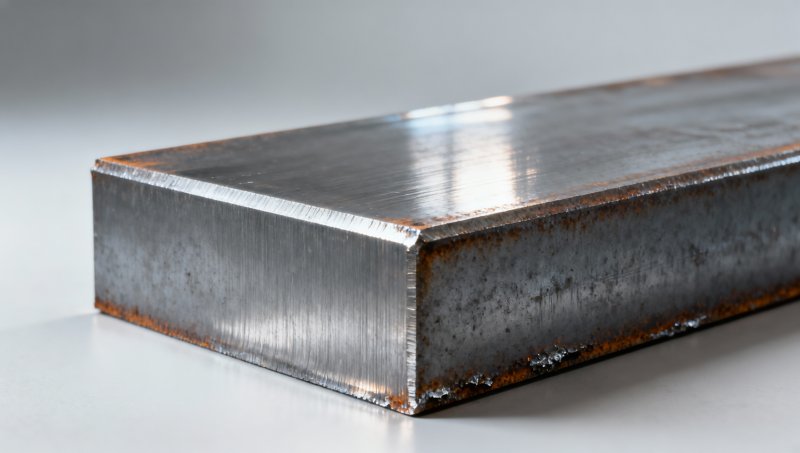
So—what can you actually expect?
For typical structural-grade 20mm plate supplied to international standards:
- Yield point: 225–345 MPa minimum, depending on grade (S235JR vs. Q345 vs. ASTM A572 Gr.50).
- Tensile strength: 360–630 MPa, with elongation typically 17–23% in 200mm gauge length.
- Weldability: Good with proper preheat (typically 50–100°C for Q345, lower for Q235), especially when CEV stays below 0.40.
- Real-world note: Yield strength measured transverse to rolling direction may be 5–10% lower than longitudinal—critical for connections loaded perpendicular to plate grain.
None of this replaces procedure qualification (WPQR) or project-specific testing. But it does help you read mill reports critically, question assumptions in detail drawings, and spot inconsistencies before welding begins.
At Hongteng Fengda, we treat every 20mm plate order—not as a commodity, but as a component in someone’s structural system. That means verifying not just chemistry and tensile numbers, but also surface finish, edge condition, and documentation alignment with your project’s governing code. Because in structural welding, the strongest plate is only as reliable as the weakest link in its specification chain.
If your next project involves 20mm plate in demanding welded assemblies—especially where fatigue, low-temperature service, or strict dimensional control applies—we recommend reviewing mill certifications against your design standard *before* cutting begins. And if you’re pairing it with supporting elements like cold-formed profiles, consider how yield gradients and coating compatibility affect long-term performance—not just first-article approval.
Please give us a message


Please enter what you want to find