Structural steel inspection reports are critical for every structural steel project—but do they tell the full story? While structural steel inspection and structural steel testing verify compliance with ASTM, EN, and GB standards, gaps often remain in real-world performance, weld integrity, or long-term durability under site-specific loads. For structural steel construction teams, engineers, procurement professionals, and project managers, understanding what these reports reveal—and what they miss—is essential to risk mitigation, cost control, and on-site safety. As a trusted structural steel manufacturer and exporter from China, Hongteng Fengda bridges that gap with transparent quality documentation, engineering support, and field-tested reliability across global structural steel engineering and construction projects.
What Structural Steel Inspection Reports Actually Reveal
Inspection reports serve as formal verification of dimensional accuracy, chemical composition, tensile strength, yield point, and surface finish—typically validated against ASTM A36, EN10025, or GB/T 700 standards. These documents confirm batch-level conformity at the mill level and are mandatory for customs clearance and regulatory acceptance in North America, Europe, and the Middle East.
Most reports include three core data sets: (1) mechanical test results (e.g., yield strength ≥345 MPa for Q345B), (2) dimensional tolerances (±1.5 mm for flange width in H-beam sections), and (3) non-destructive testing (NDT) summaries such as ultrasonic scanning coverage (≥95% of web area). However, these metrics reflect controlled lab conditions—not dynamic loading, thermal cycling, or long-term corrosion exposure.
A typical report covers only 5–7 key parameters per heat number, yet real-world structural behavior depends on at least 12 interdependent variables—including residual stress distribution, weld joint geometry, bolt-hole alignment tolerance (±0.3 mm), and fire-resistance degradation over time. That’s why reports alone cannot predict service life beyond 25 years—or guarantee performance under seismic or blast loading.
What They Miss—and Why It Matters On-Site
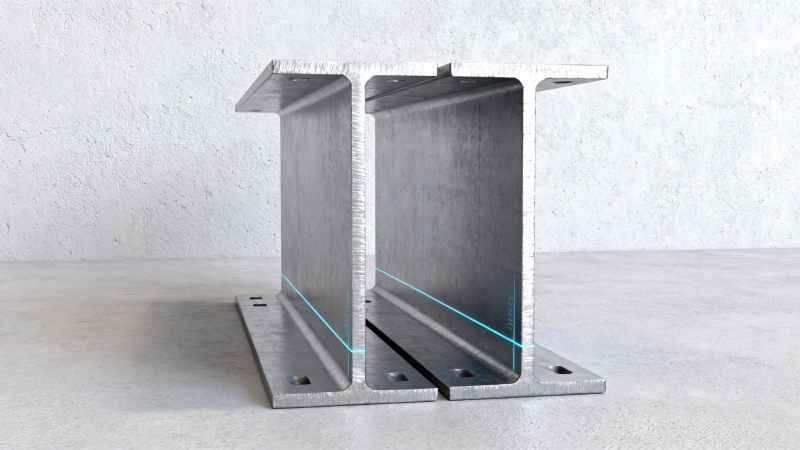
The most common omissions fall into four categories: weld integrity verification, connection compatibility, environmental resilience, and fabrication-induced distortion. For example, while an inspection report may certify base material strength, it rarely includes full-penetration weld radiography results or post-weld heat treatment (PWHT) records—both critical for fatigue resistance in bridge girders or offshore platforms.
Similarly, reports seldom assess how H-beam sections behave when integrated into composite floor systems or subjected to cyclic thermal expansion in desert climates (e.g., ±40°C daily swings in the UAE). Corrosion resistance data is often limited to salt-spray test duration (e.g., 500 hours per ASTM B117), not actual field performance under chloride-laden coastal air or industrial SO₂ exposure.
This creates tangible risks: delayed commissioning due to rework (average 12–18 days per structural steel package), unplanned reinforcement costs (up to 15% of steel budget), or safety-critical nonconformities discovered during third-party site audits. In one Southeast Asian power plant project, 23% of delivered beams required field correction due to undetected camber deviation (>L/1000)—a parameter rarely audited in standard reports.
Key Gaps Between Report Data and Field Requirements
These discrepancies explain why leading EPC contractors now require supplemental validation—including mock-up assembly tests, connection load trials, and accelerated weathering cycles—before approving structural steel delivery. Hongteng Fengda supports this by providing pre-shipment dimensional mapping reports and optional weld procedure qualification records (WPQR) aligned with AWS D1.1 or EN ISO 15614-1.
How Hongteng Fengda Enhances Inspection Transparency
As a structural steel manufacturer and exporter from China, Hongteng Fengda integrates five additional verification layers beyond standard reporting: (1) real-time mill certificate traceability via QR-coded heat tags, (2) third-party witnessed tensile tests at SGS or Bureau Veritas labs, (3) laser-scanned cross-section profiles for all hot-rolled H-beam orders ≥50 MT, (4) galvanizing adhesion test logs (per ASTM A123), and (5) digital twin-ready dimensional metadata exportable to Tekla Structures or Revit.
For projects requiring rapid turnaround, our standard lead time is 2–4 weeks for standard-specification beams (e.g., Q235B, S275JR, ASTM A572 Gr.50), with rush production available within 10 working days for certified stock items. Every shipment includes dual-language (English + local language) documentation packs compliant with EU CE marking, GCC Standardization Organization (GSO), and U.S. DOT requirements.
We also offer optional engineering collaboration: structural engineers can request free load-path analysis for custom beam configurations, including moment capacity validation under combined axial + bending loads per AISC 360-22 or Eurocode 3. This reduces design iteration cycles by up to 30% and eliminates late-stage redesign costs.
Why Global Buyers Choose Hongteng Fengda for Structural Steel
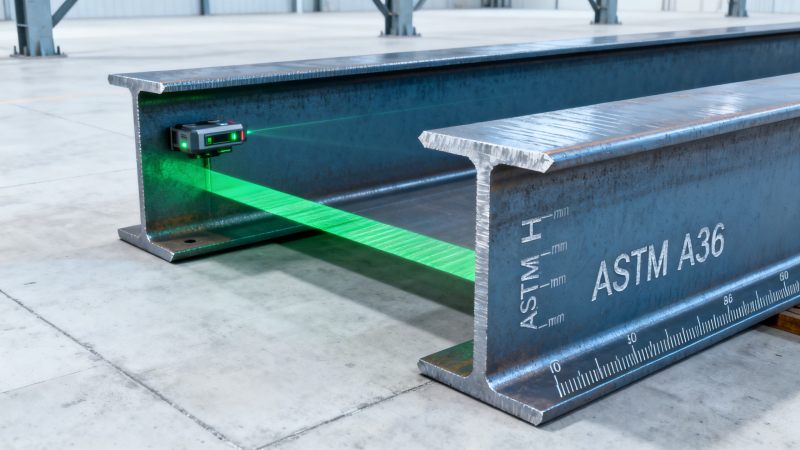
Procurement professionals consistently cite three decisive advantages: consistent dimensional repeatability (measured via CMM validation on 100% of finished beams), end-to-end supply chain visibility (from billet casting to final packaging), and responsive technical escalation paths—average response time for engineering queries is under 4 business hours.
Our product portfolio covers 13 certified grades—from carbon steels like Q235B and ASTM A36 to high-strength options like Q460C and ASTM A992—and supports applications ranging from mechanical manufacturing frames to seismic-resistant building cores. With facilities certified to ISO 9001:2015 and IATF 16949, we maintain strict process controls across all stages: raw material sourcing (traceable to approved blast furnaces), rolling temperature monitoring (±5°C precision), and final inspection (100% visual + 10% NDT sampling).
Whether you need standard-specification H-beam for warehouse racking or custom cold-formed profiles for automotive chassis assemblies, our team provides direct support for certification alignment (e.g., EN1090-2 execution class EXC3), logistics coordination (FOB, CIF, or DAP terms), and sample provision within 5–7 days.
Get Started Today
Contact us to discuss your next structural steel requirement—whether it’s confirming dimensional tolerances for a 12-meter S355JR beam, validating galvanizing thickness for marine use, requesting ASTM A572 Gr.65 mechanical test reports, or exploring OEM profile development. We respond to all technical and commercial inquiries within 1 business day and provide customized quotations within 48 hours.
Please give us a message


Please enter what you want to find