Understanding which steel standards apply to structural components in North America is critical for procurement, engineering compliance, and project safety—especially when sourcing Corrosion Resistant Steel, galv steel tube, carbon sheet steel, or hot rolled steel sheet. Whether you're calculating i beam weight, specifying Stainless Steel Welded Mesh, or evaluating material certifications, adherence to ASTM and other recognized steel standards ensures performance, durability, and regulatory acceptance. As a trusted Structural Steel Manufacturer & Exporter from China, Hongteng Fengda delivers compliant angle steel, channel steel, steel beams, and custom profiles—meeting exacting requirements for North American construction and industrial projects.
Which ASTM Standards Govern Structural Steel in North America?
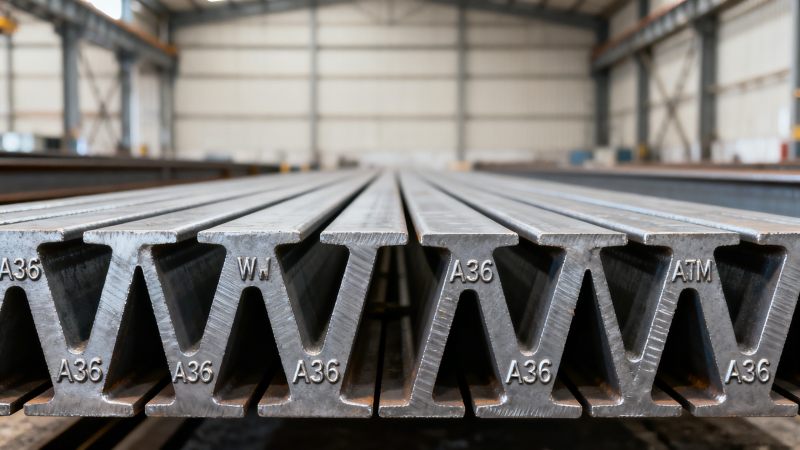
In North America, structural steel components must comply primarily with ASTM International standards—notably ASTM A6/A6M (general requirements), ASTM A36/A36M (carbon structural steel), ASTM A572/A572M (high-strength low-alloy steel), and ASTM A992/A992M (structural shapes for building frames). These define mechanical properties, tolerances, testing methods, and marking requirements across tensile strength (e.g., A36: min. 36 ksi yield), elongation (≥20% in 8 in.), and chemical composition limits (C ≤ 0.26%, Mn ≤ 1.05%).
ASTM A6/A6M serves as the foundational specification—it governs dimensional tolerances for rolled sections like I-beams, channels, and angles. For example, flange thickness variation for W-shapes is limited to ±0.03 in. for depths up to 21 in., ensuring fit-up precision during erection. This directly impacts field welding efficiency and bolt-hole alignment—critical for project timelines and labor cost control.
Beyond ASTM, CSA G40.21 (Canada) and AISC 360 (American Institute of Steel Construction) provide design and fabrication guidelines. While not material standards per se, AISC 360 references ASTM grades for allowable stresses and connection design rules—making grade selection inseparable from structural integrity validation.
This table reflects real-world application thresholds: A992 is specified in over 85% of U.S. commercial mid-rise projects due to its optimized strength-to-weight ratio and weldability—reducing on-site labor by up to 12% compared to A36 alternatives. When sourcing from international suppliers, verifying mill test reports (MTRs) against these ASTM requirements is non-negotiable for code sign-off.
How Do International Suppliers Ensure ASTM Compliance?
For global buyers—especially those sourcing from China—ASTM conformance isn’t automatic. It requires certified production processes, third-party inspection (e.g., SGS, Bureau Veritas), and traceable MTRs issued per heat number. At Hongteng Fengda, every structural steel batch undergoes tensile testing, Charpy V-notch impact verification at −20°F (−29°C), and ultrasonic testing for internal defects—all documented per ASTM E8/E8M and E23.
We maintain dual-certification capability: products meet both ASTM and GB/T 700 (Chinese national standard), enabling seamless substitution without re-engineering. For instance, our ASTM A36-equivalent Q235B steel achieves identical yield strength (235 MPa) and elongation (26%), but with tighter thickness tolerance control (±0.02 in. vs. ASTM’s ±0.03 in.)—enhancing prefabrication accuracy.
Critical for North American procurement: all export shipments include EN 10204 3.1 Mill Certificates, confirming chemical analysis, mechanical results, and heat treatment history. This satisfies AISC 207 and CSA W47.1 documentation mandates for structural welding applications.
Why Corrosion-Resistant Coatings Matter in ASTM-Aligned Projects
While ASTM defines base metal properties, corrosion resistance often depends on post-fabrication treatments. For exposed structural cladding or roofing, Color Coated Galvanized Steel Sheet PPGI offers ASTM-compatible protection: zinc coating mass ≥ 180 g/m² (per ASTM A653/A653M), plus polymer topcoats meeting ASTM D714 (blistering), D1654 (corrosion creep), and D2197 (adhesion) standards.
What Are the Key Procurement Checks for ASTM-Compliant Steel?
Procurement teams must verify four layers before order placement: (1) mill certification against ASTM revision year (e.g., A36-22, not outdated A36-01); (2) dimensional compliance via independent gauge reports; (3) weld procedure qualification records (WPQR) for fabricated components; and (4) packaging and marking per ASTM A6/A6M Section 15—including heat number, grade, and mill ID visibly stamped on each piece.
Delays commonly occur when MTRs lack required test temperatures (e.g., Charpy at −20°F for cold-climate bridges) or omit tensile direction (longitudinal vs. transverse). Hongteng Fengda pre-validates all documentation against AISC Code of Standard Practice and provides bilingual (English/Chinese) MTRs within 48 hours of shipment release—cutting approval cycles by 3–5 business days.
- Confirm ASTM revision year matches project spec (e.g., A572-22 for new builds)
- Require EN 10204 3.1 or 3.2 certificates—not just supplier declarations
- Validate coating adhesion test data (ASTM D3359) for galvanized + painted products
- Check mill marking legibility and permanence (minimum 1/8-in. character height)
Why Partner with Hongteng Fengda for ASTM-Compliant Structural Steel?
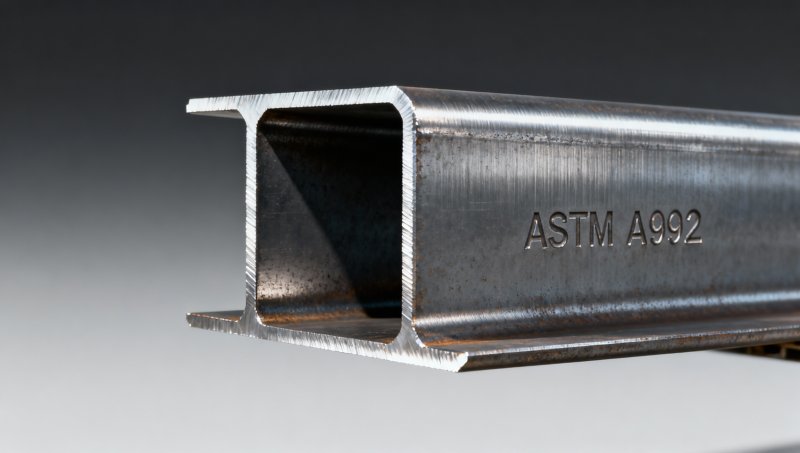
Hongteng Fengda bridges global supply efficiency with North American compliance rigor. We produce ASTM A36, A572, A992, and A653-compliant structural steel—including angle steel, channel steel, steel beams, cold formed profiles, and custom OEM components—with full traceability from raw material receipt to final inspection.
Our advantage lies in integrated quality control: ISO 9001-certified processes, in-house metallurgical lab testing (tensile, hardness, coating thickness), and dedicated ASTM compliance officers who review every order against project-specific specifications—including seismic requirements (AISC 341), fire-rated assemblies (ASTM E119), and blast-resistant designs.
For buyers managing tight deadlines, we guarantee lead times of 25–35 days for standard structural sections and 45–60 days for custom profiles—with 100% on-time delivery over the past 36 months. Request ASTM-compliant mill test reports, dimensional inspection summaries, or sample validation support for your next North American project.
Please give us a message


Please enter what you want to find