Choosing between galvanized angle and plain A36 angle is a critical decision for outdoor structural applications—especially when durability, corrosion resistance, and lifecycle cost matter. As a trusted structural steel manufacturer & exporter from China, Hongteng Fengda supplies high-quality l shaped metal bars, bracing angle in steel structure, L shape steel, and galv angle compliant with ASTM, EN, and GB standards. Whether you need steel ka angle for scaffolding, galvanized iron angle for coastal projects, or plain A36 angle for controlled indoor use, understanding the real performance gap helps procurement, engineering, and project teams make smarter, safer, and more cost-effective choices.
What Exactly Sets Galvanized Angle Apart From Plain A36?
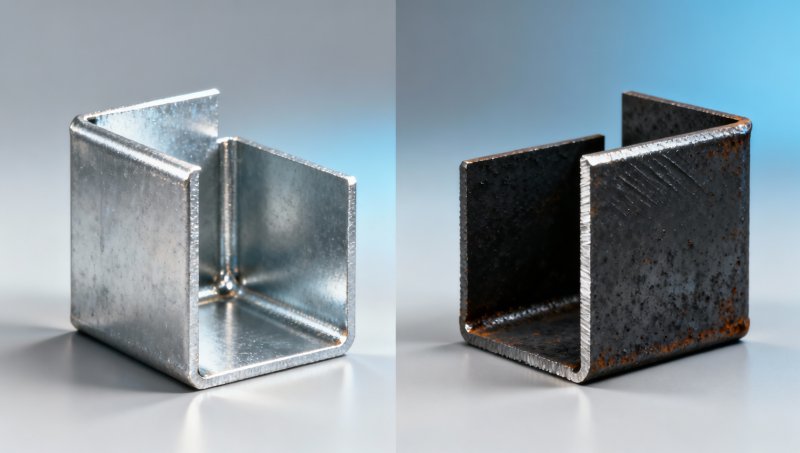
Galvanized angle and plain A36 angle share identical base material—ASTM A36 carbon steel—but diverge fundamentally at the surface treatment stage. Plain A36 angle is hot-rolled, mill-finished, and unprotected against environmental exposure. In contrast, galvanized angle undergoes hot-dip galvanization: immersion in molten zinc (typically at 450°C) to form a metallurgically bonded Zn-Fe alloy layer of 50–85 µm thickness.
This coating delivers quantifiable protection: ASTM A123 specifies minimum coating mass of 610 g/m² for structural steel up to 6 mm thick. Field tests show galvanized angles retain structural integrity for 20–35 years in rural atmospheres and 10–15 years in industrial or coastal zones—versus just 2–5 years for untreated A36 under identical conditions.
The distinction isn’t cosmetic—it’s electrochemical. Zinc sacrificially corrodes before steel, halting red rust propagation even if the coating is scratched. Plain A36 offers no such self-healing mechanism. That difference dictates service life, maintenance frequency, and total cost of ownership—not just upfront price.
Where Each Type Performs Best: Application-Based Selection
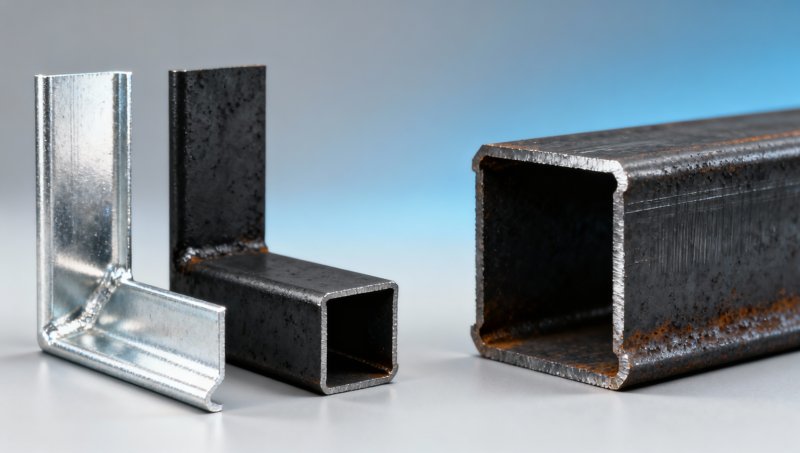
Selecting the right angle steel isn’t about “better” or “worse”—it’s about matching material behavior to environmental severity, access constraints, and lifecycle expectations. Below is a field-proven application mapping:
Note: For projects requiring both structural strength and architectural finish, Hongteng Fengda also supplies pre-galvanized angle with uniform matte-gray appearance—ideal for visible façade bracing or handrail components where aesthetics meet compliance.
Procurement Checklist: 5 Non-Negotiables for Outdoor Use
When sourcing for outdoor structural use, technical and procurement teams must jointly verify these five criteria—before PO issuance:
- Zinc coating thickness verification: Require mill test reports showing average coating mass ≥610 g/m² (ASTM A123 Class B) and minimum local thickness ≥45 µm per EN ISO 1461.
- Surface continuity inspection: Reject pieces with bare spots, ash residues, or excessive dross—these indicate incomplete immersion or poor flux control during galvanizing.
- Bendability validation: Confirm galvanized angle meets ASTM A6/A6M bend test requirements (no cracking after 180° wrap around pin diameter = 2× thickness).
- Dimensional tolerance adherence: Verify leg length, thickness, and root radius conform to ASTM A6 tolerances (±0.5 mm for legs ≤50 mm; ±1.0 mm for larger sections).
- Traceable certification: Demand full documentation package—including heat number traceability, galvanizer’s process report, and third-party test certificate (e.g., SGS or Bureau Veritas).
Hongteng Fengda includes all five items as standard in export shipments—no extra fee, no delay. Our QA team performs 100% visual inspection and random lab testing on every production lot.
Beyond Angles: When Rail Integration Adds Structural Value
In large-scale infrastructure projects—such as elevated walkways, modular bridge approaches, or heavy-duty platform railings—the integration of structural angles with Rail systems creates synergistic load-path efficiency. For example, U71Mn rails (12m–30m lengths, 150mm base width) are routinely anchored to galvanized angle supports using hot-dip galvanized bolts and washers—eliminating galvanic coupling risks while ensuring 30+ years of zero-maintenance operation.
Our engineering team regularly co-designs hybrid assemblies combining ASTM A36 galvanized angles with QU100 or PD3 rails for clients across Southeast Asia and the Middle East—ensuring weld compatibility, thermal expansion alignment, and unified corrosion protection across all interface points.
This cross-product integration reduces onsite labor by 25–40%, cuts anchoring hardware SKUs by 60%, and simplifies inspection protocols—since all components share identical coating chemistry and adhesion testing methodology.
Why Global Buyers Choose Hongteng Fengda for Critical Structural Steel
You’re not just buying angle steel—you’re securing supply chain resilience, engineering confidence, and long-term asset protection. Here’s how we deliver that value:
- Zero-compromise compliance: Every galvanized angle batch carries dual-certification—ASTM A36 mechanical properties + ASTM A123 coating performance—with test data traceable to raw coil heat numbers.
- Lead time certainty: Standard sizes ship within 7–15 days from order confirmation. Custom galvanizing (e.g., thicker coatings or special passivation) adds only 5–8 working days—not weeks.
- Cost transparency: No hidden fees for documentation, pre-shipment inspection, or port handling. All export-ready costs are quoted FOB Qingdao or CIF destination port—no surprises.
- Engineering partnership: Free technical consultation on section selection, connection design, welding procedure qualification (WPQ), and corrosion modeling for your specific site environment (we accept soil pH, salinity, and rainfall data).
Ready to compare exact specifications, request coated sample kits, or get a formal quote with certified test reports? Contact our structural steel specialists today—we respond to all RFQs within 4 business hours and provide dedicated project support from inquiry to delivery.
Please give us a message


Please enter what you want to find