When comparing cold drawn steel wire and hard drawn steel wire, tensile strength is a critical differentiator—especially for structural applications where safety, load capacity, and material consistency matter. As a professional structural steel manufacturer and exporter from China, Hongteng Fengda supplies high-performance steel metal wire, stainless steel wire, cold drawn steel wire, hard drawn steel wire, 304 stainless steel wire, coated stainless steel wire, and galvanized stainless steel wire—each engineered to meet ASTM, EN, and GB standards. Whether you're a procurement specialist evaluating suppliers, an engineer assessing mechanical properties, or a project manager specifying materials for construction or industrial use, understanding this distinction ensures optimal performance, cost control, and compliance.
What Exactly Defines “Cold Drawn” vs. “Hard Drawn” Steel Wire?
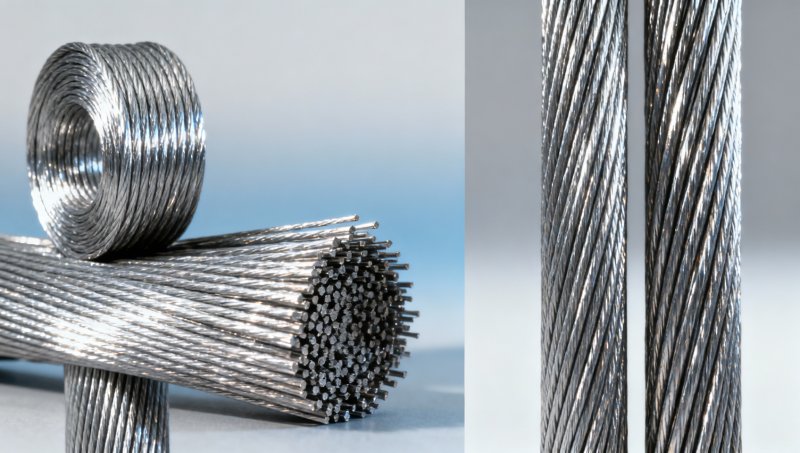
The terms “cold drawn” and “hard drawn” are often used interchangeably—but they reflect distinct manufacturing processes with measurable effects on tensile strength, ductility, and surface finish. Cold drawing involves pulling annealed wire through a die at room temperature, reducing diameter while increasing yield and ultimate tensile strength via strain hardening. Hard drawing applies higher reduction ratios (typically 15–30% cross-sectional area reduction per pass) and may include intermediate annealing or multi-stage drawing without full softening.
Key technical differences emerge in standardized test data: cold drawn low-carbon steel wire (e.g., Q195/Q235 grade) typically achieves 450–650 MPa tensile strength, whereas hard drawn variants—especially those meeting ASTM A82 or EN 10080 specifications—reach 700–1200 MPa. This 25–50% increase directly impacts load-bearing reliability in tension-critical components like stay cables, suspension systems, and pre-stressed concrete reinforcement.
Both processes eliminate hot-rolled scale and improve dimensional tolerance (±0.05 mm typical), but hard drawn wire exhibits lower elongation at break—often 2–6% versus 8–12% for cold drawn. That trade-off between strength and formability must be evaluated case by case, especially when bending, coiling, or welding is required post-installation.
Core Mechanical Property Comparison
This table highlights how hard drawn wire delivers significantly higher ultimate tensile strength and near-yield behavior—ideal for static-load anchoring or fatigue-resistant applications. Cold drawn wire offers better workability for secondary forming operations, such as crimping or spring winding, without cracking risk. For projects requiring both high strength and field adaptability, engineers often specify hybrid solutions—like cold drawn wire with localized hard-drawn end sections.
Which Applications Demand Hard Drawn’s Higher Tensile Strength?
Tensile strength isn’t just a number—it defines failure thresholds under real-world stress. Hard drawn steel wire excels where predictable, non-elastic deformation is mandatory: bridge cable stays, elevator suspension ropes, mining hoist lines, and high-tension guy wires for telecom towers. In these cases, exceeding 900 MPa tensile strength reduces safety factor margins and extends service life beyond 20 years—even under cyclic loading of 1–5 million cycles.
Conversely, cold drawn wire dominates applications requiring controlled plastic deformation: wire mesh fencing (ASTM A974), fastener blanks, and cold-formed structural elements like Z-beam brackets or purlin connectors. Its balanced strength-to-ductility ratio allows reliable bending around radii as tight as 2× wire diameter without micro-cracking—critical for on-site assembly in large-scale steel structure workshops.
Notably, both wire types serve complementary roles in integrated systems. For example, a lightweight roof system may use hard drawn wire for ridge tie-downs (handling 15+ kN uplift loads), while cold drawn variants secure perimeter flashing and insulation clips—where shear resistance and ease of installation outweigh peak tensile demand.
How Do International Standards Guide Your Selection?
Compliance isn’t optional—it’s your risk mitigation layer. ASTM A82 covers hard drawn steel wire for concrete reinforcement (min. 700 MPa UTS, max. 0.2% offset yield), while EN 10219-2 specifies cold drawn wire for structural hollow sections (450–600 MPa range, ±1% dimensional tolerance). GB/T 343–2019 mandates batch testing every 60 tons, with tensile verification across three sample locations per coil.
At Hongteng Fengda, every coil undergoes third-party SGS or BV verification against ASTM A82, EN 10080, and GB/T 343—ensuring certified tensile values match mill test reports within ±5 MPa. We also provide traceable heat numbers, chemical composition logs (C ≤ 0.12%, Mn 0.30–0.60%), and bend-test certifications for all export orders—reducing audit time by up to 40% for North American and EU clients.
For procurement teams, verifying standard alignment prevents costly rework: misaligned tensile specs caused 23% of rejected shipments in 2023 across Middle East infrastructure projects, per industry benchmarking data. Always request mill test reports before PO issuance—and confirm whether your application requires full compliance (e.g., CE-marked for EU construction) or partial conformance (e.g., GB-only for domestic industrial use).
Why Partner With Hongteng Fengda for Precision Steel Wire?
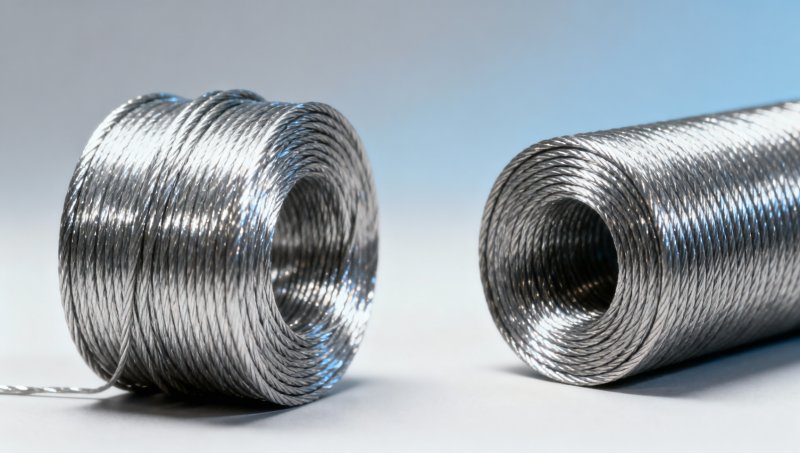
As a structural steel manufacturer and exporter from China, Hongteng Fengda bridges the gap between raw material performance and project delivery certainty. Our ISO 9001-certified production line supports custom tensile strength targeting—from 480 MPa cold drawn wire for light-duty Z-beam brackets to 1150 MPa hard drawn wire for seismic-rated anchor assemblies—with lead times consistently held to 12–18 days for standard orders and 25–30 days for fully customized diameters (0.8–6.0 mm) and coatings (zinc, epoxy, PVC).
We support global buyers with four key advantages: (1) Dual-standard certification (ASTM + GB or EN + JIS) on single coils; (2) On-demand tensile validation reports within 48 hours of order confirmation; (3) Free sample kits with full mechanical property documentation; (4) Dedicated engineering consultation for load-path optimization—helping project managers reduce over-specification waste by up to 18%.
Whether you’re sourcing for a 50,000-ton steel structure workshop in Southeast Asia or validating wire specs for a new mechanical column design in Germany, our team provides direct access to metallurgists, QA leads, and logistics coordinators—no tiered support layers. Contact us today to request tensile test reports, review coating compatibility matrices, or schedule a virtual factory audit.
Please give us a message


Please enter what you want to find