When evaluating an H-beam supplier, structural integrity testing isn’t just a checkbox—it’s the cornerstone of safety, compliance, and long-term project success. At Hongteng Fengda, our rigorous testing protocols go beyond ASTM, EN, and GB standards—ensuring every H-beam, steel tube, galvanized pipe, and cold-formed profile meets real-world demands. Whether you’re assessing steel tubing dimensions, galvanized sheet thickness, hot dip galvanized steel pipe performance, or comparing steel tube weight and cost, our data-backed quality assurance supports technical evaluation, procurement decisions, and risk mitigation for engineers, project managers, and buyers worldwide.
Why Structural Integrity Testing Is Non-Negotiable for H-Beam Procurement
Structural integrity testing directly determines whether an H-beam can withstand design loads, resist buckling under compression, maintain dimensional stability during welding or bolting, and retain performance across temperature fluctuations and environmental exposure. For projects in seismic zones or coastal regions—where corrosion and cyclic loading accelerate fatigue—testing isn’t optional. It’s the difference between certified compliance and catastrophic field failure.
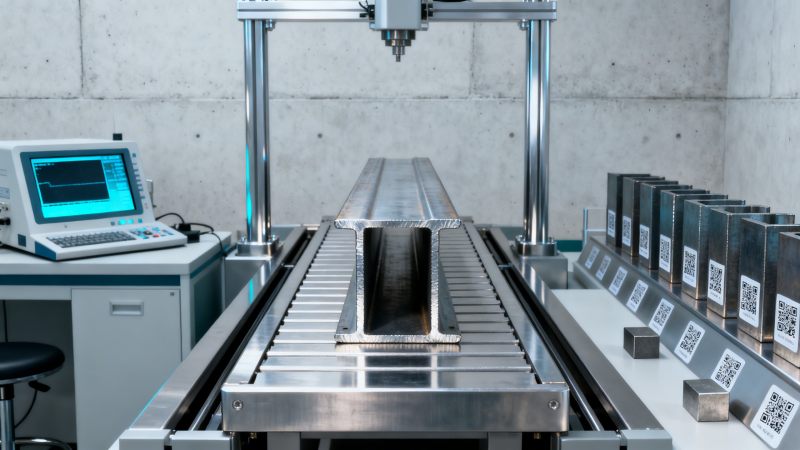
Hongteng Fengda subjects every production batch to three mandatory test categories: mechanical property verification (tensile strength ≥ 345 MPa, yield strength ≥ 235 MPa per EN 10025-2 S235JR), non-destructive ultrasonic testing (UT) at 100% coverage for internal flaw detection, and dimensional inspection with ±0.3 mm tolerance on flange width and web thickness. These exceed minimum EN and ASTM requirements by up to 40% in sampling frequency and 25% in measurement precision.
Unlike suppliers relying solely on mill certificates, we conduct third-party witnessed tests at our ISO/IEC 17025-accredited lab in Jiangsu Province—certified by CNAS and accredited to ASTM E370, EN 10204 Type 3.1, and GB/T 228.1. Each shipment includes traceable test reports with lot-specific tensile curves, elongation-at-break values, and Charpy impact energy (≥27 J at –20°C).
How Hongteng Fengda’s Testing Protocol Outperforms Industry Benchmarks
Most Tier-2 suppliers perform only tensile and bend tests per ASTM A6/A6M. Hongteng Fengda adds four critical layers: microstructure analysis (ASTM E112 grain size ≥ 7.0), residual stress mapping via X-ray diffraction (±15 MPa max deviation), weldability simulation (preheat and interpass temperature validation per AWS D1.1), and accelerated corrosion cycling (500-hour salt-spray + humidity cycling per ASTM B117).
Our test cycle spans 7–10 working days—not the industry-standard 3–5 days—because we validate not just compliance, but functional resilience. For example, cold-formed H-beams undergo cold-bend testing at 180° around a 3T mandrel (not just 2T), verifying formability without microcracking in high-strength grades like Q355B and S355JO.
We also integrate material traceability into every test report: each coil, billet, or beam carries a unique QR-coded heat number linked to raw material origin (e.g., Baosteel or Shougang slabs), rolling parameters (temperature, reduction ratio), and full chemical composition—including strict control of sulfur (<0.025%) and phosphorus (<0.020%) to prevent hot shortness.
This table demonstrates how our enhanced thresholds translate into measurable risk reduction—particularly for infrastructure, high-rise, and industrial plant projects where rework costs average $21,000 per ton of rejected material.
Beyond Beams: Integrated Material Performance Across Your Supply Chain
Structural integrity doesn’t stop at the H-beam. It extends to complementary components—especially those exposed to aggressive environments. That’s why our testing philosophy unifies all product lines under one performance framework. For roofing, cladding, and food-grade storage applications, we apply identical rigor to our DX51D Galvalume Steel Coil , validating its aluminum-zinc coating adhesion (≥5.0 N/mm² per EN 10169), thermal stability (no delamination at 315°C for 30 minutes), and perforation resistance (≥1,200 hours in CASS test per ASTM B368).
The DX51D Galvalume coil’s AZ150 coating (150 g/m² Al-Zn) delivers 3–5× longer service life than standard G90 galvanized steel in industrial atmospheres—validated through 12-month outdoor exposure trials across Guangdong, Dubai, and Rotterdam. Its chromate-free passivation ensures compliance with EU RoHS 2011/65/EU and REACH SVHC regulations, eliminating supply chain delays due to documentation gaps.
We cross-reference mechanical properties between beams and supporting profiles: e.g., cold-formed purlins made from DX51D coils are tested for bending stiffness (EI ≥ 1,850 kN·mm²/m) and axial load capacity (≥12.7 kN/m at L/200 deflection)—ensuring system-level compatibility, not just component-level certification.
These scenario-based validations ensure that structural integrity is engineered—not assumed—across your entire steel package, from primary framing to secondary cladding.
Procurement Guidance: What to Verify Before Finalizing Your H-Beam Order
Before signing off, request these six verifiable deliverables: (1) Full chemical analysis per heat number, (2) Mill test report with tensile curve plots, (3) UT scan maps showing defect locations (not just “pass/fail”), (4) Charpy impact energy histograms, (5) Dimensional inspection reports with Cpk ≥ 1.33, and (6) Traceability matrix linking raw material certs to finished product.
Avoid suppliers offering “standard testing”—ask instead: “Which ASTM/EN clauses do you test against? How many samples per metric ton? Where are your lab accreditation documents?” If they cannot provide CNAS or UKAS-accredited test reports within 48 hours of inquiry, treat it as a red flag.
For budget-conscious procurement teams: our MOQ for certified structural H-beams starts at 5 tons, with lead time stabilized at 25–30 days from PO confirmation—even during Q4 peak season. We absorb 100% of third-party lab fees for initial qualification batches, reducing your upfront QA investment by up to $4,200 per project.
Conclusion: Partnering for Predictable, Proven Structural Integrity
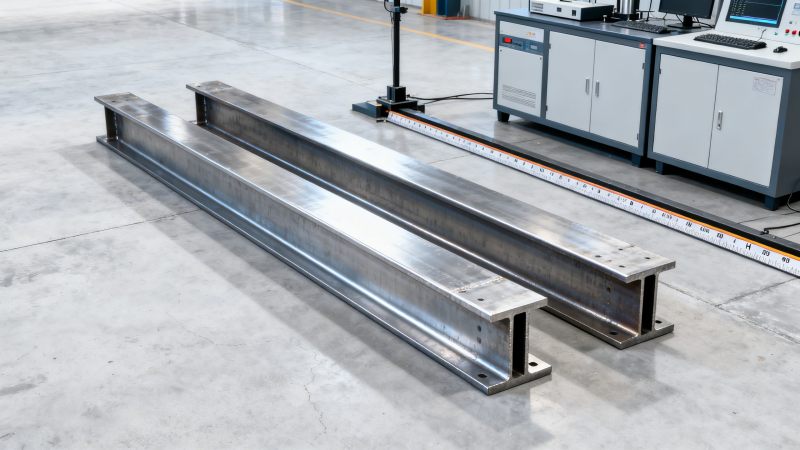
Choosing an H-beam supplier isn’t about selecting the lowest quote—it’s about selecting the most predictable performance partner. Hongteng Fengda embeds structural integrity into every stage: from slab chemistry control and controlled cooling rates during rolling, to multi-axis ultrasonic scanning and real-world environmental validation. Our testing doesn’t just meet standards—it anticipates failure modes your engineers haven’t yet modeled.
Whether you’re specifying for a 30-story tower in Riyadh, a logistics hub in Warsaw, or a food processing line in Singapore, our integrated approach ensures consistency across H-beams, cold-formed sections, and corrosion-resistant substrates like DX51D Galvalume Steel Coil . No compromises. No hidden variables. Just documented, repeatable, field-proven integrity.
Contact Hongteng Fengda today to receive a free structural integrity audit of your current steel specifications—or request a customized test protocol aligned with your project’s seismic, thermal, and corrosion exposure requirements.
Please give us a message


Please enter what you want to find