When procurement and project teams compare material options, the higher price of cold rolled steel plate often raises an important question: is the premium truly justified? For commercial evaluators, the answer lies in measurable advantages such as tighter tolerances, improved surface finish, better consistency, and stronger downstream processing value. Understanding these factors helps buyers balance cost, quality, and long-term project performance with greater confidence.
What is cold rolled steel plate, and why does it cost more?
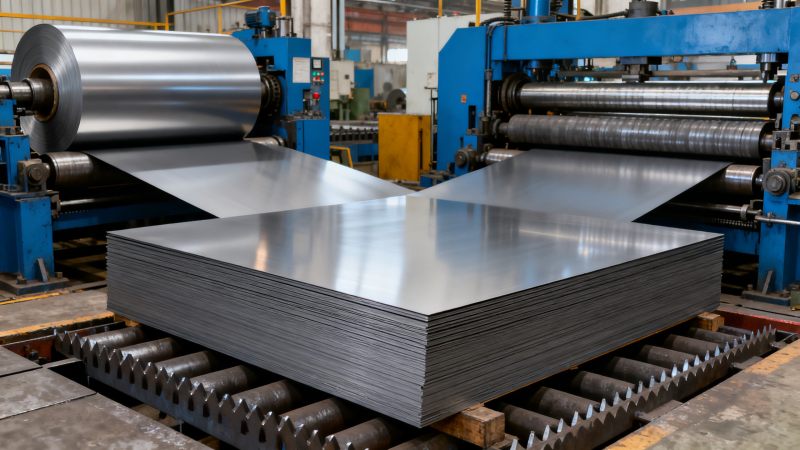
Cold rolled steel plate is processed after hot rolling through additional reduction at room temperature.
That extra processing improves flatness, dimensional accuracy, and surface quality.
It also increases manufacturing complexity, inspection requirements, and production cost.
This is why cold rolled steel plate usually sells at a premium over hot rolled material.
The premium is not simply about appearance.
It reflects better process control and stronger suitability for precision fabrication.
In steel service and manufacturing environments, those gains often reduce hidden downstream costs.
Which properties usually improve?
- Tighter thickness tolerance
- Smoother surface finish
- Better shape consistency
- Improved formability for many applications
- More predictable coating and painting results
Does cold rolled steel plate perform better in fabrication?
In many cases, yes.
Fabrication value is one of the strongest reasons to choose cold rolled steel plate.
A more uniform sheet helps cutting, bending, stamping, welding, and assembly run with fewer adjustments.
Better consistency can reduce scrap, improve fit-up, and shorten production interruptions.
This matters where parts must align closely or surfaces stay visible after installation.
Cold rolled steel plate is commonly selected for cabinets, panels, brackets, furniture components, appliance shells, and formed sections.
For products needing coating, printing, or decorative finishing, the smoother surface provides another practical advantage.
When does the premium return value fastest?
- High-volume repeat production
- Precision bending or stamping lines
- Visible end-use surfaces
- Projects with strict dimensional tolerances
- Applications requiring stable coating adhesion
A useful example is prepainted steel used in roofing, cladding, and appliance housings.
For such needs, PPGI Steel Sheet offers a practical coated solution.
It is available in galvanized iron or aluminum-zinc steel, with thickness from 0.2mm to 1.2mm.
Widths range from 600mm to 1250mm, with PE, SMP, HDP, and PVDF paint options.
Its corrosion resistance, customizable appearance, and smooth surface support roofing, wall panels, door frames, and decorative applications.
This shows how better base steel quality can create stronger finishing and service-life value.
How does cold rolled steel plate compare with hot rolled steel?
The right comparison is not better versus worse.
It is suitability versus cost.
Hot rolled steel often works well for structural use, general fabrication, and less critical surfaces.
Cold rolled steel plate becomes more attractive when tolerances, finish, and consistency influence total project results.
The premium makes sense only when those differences matter to the application.
What risks appear when buyers choose only by price?
The biggest mistake is evaluating steel by invoice price alone.
Lower-priced material may increase rework, waste, coating defects, assembly delays, or inconsistent final quality.
Those costs are often harder to see during sourcing.
They appear later in production, installation, warranty exposure, or customer complaints.
Common hidden costs
- Extra leveling or correction before fabrication
- Greater coating preparation time
- Higher reject rates in formed components
- Inconsistent part fit during assembly
- Reduced visual quality in finished products
Cold rolled steel plate helps control these risks when the application depends on precision and appearance.
It is not always necessary, but it is often economical in the full production chain.
How should cold rolled steel plate be evaluated before ordering?
A good decision combines technical suitability, supply reliability, and processing economics.
Instead of asking only whether cold rolled steel plate is expensive, ask what performance the project actually needs.
Evaluation checklist
- Confirm thickness tolerance requirements.
- Review surface expectations for painting or coating.
- Check forming complexity and bend consistency needs.
- Estimate scrap and rework cost sensitivity.
- Verify standard compliance, such as ASTM, EN, JIS, or GB.
- Assess lead time stability and batch consistency.
Reliable supply matters as much as technical performance.
Hongteng Fengda provides structural steel products and customized solutions for global construction and manufacturing projects.
Its product range includes angle steel, channel steel, steel beams, cold formed profiles, and customized structural components.
With modern facilities and strict quality control, products comply with ASTM, EN, JIS, and GB standards.
Stable production capacity and dependable lead times help reduce sourcing risk across international markets.
When is cold rolled steel plate not worth the premium?
Not every project needs it.
If the steel will be hidden, heavily machined later, or used in tolerance-insensitive structures, hot rolled material may be more practical.
The same applies when surface finish has little effect on function or value.
In those cases, paying more for cold rolled steel plate may not improve project outcomes enough.
This simple framework helps separate genuine value from unnecessary specification upgrades.
Final answer: what makes cold rolled steel plate worth the premium?
Cold rolled steel plate is worth the premium when precision, surface quality, and process consistency affect total project cost.
Its higher price can be offset by lower scrap, cleaner finishing, smoother fabrication, and better final product performance.
The key is matching material quality to actual application demands.
For steel sourcing decisions, compare not only purchase price, but also production efficiency, coating results, tolerance stability, and service expectations.
That approach leads to smarter material selection and stronger long-term value.
If the project requires dependable quality across structural steel or customized steel components, reviewing specifications with an experienced export supplier is the next practical step.
Please give us a message


Please enter what you want to find