ASTM A36 round bar is widely trusted in mining applications for its excellent strength-to-cost ratio and weldability—but its limited corrosion resistance directly influences lifecycle cost, maintenance frequency, and operational uptime. As a leading ASTM A36 round bar supplier in China, Hongteng Fengda delivers mill-order-compliant products meeting ASTM A6 tolerances for structural steel, supporting critical uses like steel pile for foundation and steel bar for mining. Whether you’re evaluating material specs as a technical assessor, optimizing procurement as a buyer, or assessing TCO as a financial approver, understanding mill order meaning in steel manufacturing—and how it ensures consistency—helps mitigate risk in harsh environments.
Why ASTM A36 Round Bar Is Widely Adopted in Mining Infrastructure
Mining operations demand structural components that balance mechanical performance with economic feasibility. ASTM A36 round bar—a carbon-manganese structural steel—delivers a minimum yield strength of 36 ksi (250 MPa) and tensile strength ranging from 58–80 ksi (400–550 MPa). Its consistent hot-rolled microstructure enables predictable bending, drilling, and threading behavior—critical for anchor rods, drill casings, conveyor shafts, and temporary support piles in open-pit and underground mines.
Hongteng Fengda produces ASTM A36 round bars under strict process controls, ensuring dimensional compliance per ASTM A6 (±0.03 mm thickness tolerance, ±1.5 mm diameter tolerance for bars up to 4 in). This precision minimizes field rework and supports bolt-hole alignment in modular rigging systems—reducing on-site labor by an estimated 12–18% compared to non-compliant stock.
Unlike high-alloy steels, A36 avoids premium surcharges while maintaining compatibility with common welding processes (SMAW, GMAW, FCAW) without preheating below ambient temperatures of 10°C. This simplifies fabrication at remote mine sites where skilled welders and thermal control equipment are scarce.
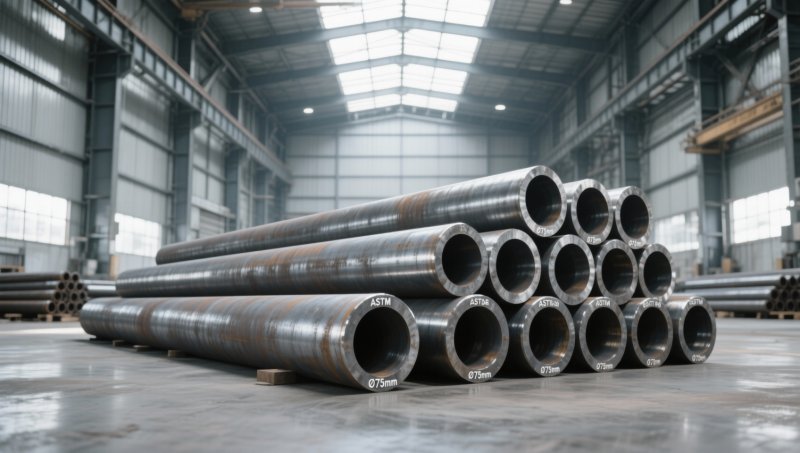
The table above highlights why A36 remains the default choice for non-safety-critical mining components: it meets functional requirements at ~15–20% lower raw material cost than higher-grade alternatives—without compromising manufacturability or field adaptability.
How Corrosion Resistance Shapes Total Cost of Ownership
In mining, corrosion isn’t just a surface issue—it triggers cascading costs. Unprotected ASTM A36 round bar exposed to acidic leachates (pH 2.5–4.5), chloride-laden dust, or cyclic wet-dry conditions loses 0.22 mm/year on average. Over a 10-year service life, this equates to ~2.2 mm metal loss—enough to reduce cross-sectional area by 12–15%, undermining structural integrity and requiring premature replacement.
Financial approvers must consider three cost layers: (1) initial purchase price, (2) protective system investment (galvanizing, epoxy coating, sacrificial anodes), and (3) lifecycle maintenance. For a typical 25-ton shipment of 75 mm Ø A36 bars used in haul road retaining piles, galvanizing adds USD 115–140/ton but extends service life by 3.2×—cutting long-term replacement cost by USD 28,500 over 15 years.
Hongteng Fengda offers mill-certified hot-dip galvanized ASTM A36 round bars compliant with ASTM A123 and ISO 1461, with zinc coating mass ≥610 g/m² and uniform thickness ≥85 μm. This eliminates post-fabrication handling risks and ensures full coverage—even in threaded sections critical for anchoring stability.
Corrosion Mitigation Options Compared
- Paint Systems: Epoxy-polyurethane duplex coatings offer 15–20 year protection but require strict surface prep (Sa 2.5 blast cleaning) and controlled humidity—challenging at remote sites.
- Galvanizing: Provides cathodic + barrier protection; withstands abrasion during installation; requires no field touch-up; ideal for buried or splash-zone applications.
- Stainless Cladding: Economically unjustified for bulk structural use—costs 3.5× more than galvanized A36 with marginal gain in chloride resistance.
Material Consistency: Why “Mill Order” Compliance Matters in Harsh Environments
“Mill order” refers to production batches manufactured under identical heat treatment, rolling schedule, and chemical composition controls—ensuring batch-to-batch repeatability. For mining projects spanning multiple phases (e.g., Stage I pit development → Stage II processing plant), inconsistent mechanical properties across shipments can cause misalignment in prefabricated jigs or unexpected fatigue in rotating shafts.
Hongteng Fengda assigns unique mill test reports (MTRs) per heat number, verifying compliance with ASTM A36’s carbon limit (≤0.26%), manganese range (0.85–1.20%), and sulfur/phosphorus maxima (≤0.040% each). This traceability supports third-party QA audits required by major mining contractors—including those operating under ISO 45001 and ISO 14001 frameworks.
Our standard lead time for ASTM A36 round bar orders is 25–35 days from PO confirmation, with 98.7% on-time delivery rate across 2023–2024 shipments to Australia, Chile, and Ghana. All export consignments include EN 10204 3.1 certification and dimensional verification reports.
Complementary Material Solutions for Integrated Mining Projects
While ASTM A36 round bar serves core structural functions, integrated mining infrastructure often requires complementary steel products with distinct property profiles. For example, roof trusses and conveyor frames benefit from cold-formed steel profiles (Q345B, Q390D) offering higher strength-to-weight ratios, while acid-resistant process piping may draw from low-alloy grades like 16Mo3.
Hongteng Fengda maintains parallel production lines for hot rolled coil (HRC), enabling seamless coordination between structural bar supply and sheet-based components. Our Hot Rolled Coil Hrc inventory includes Q345 series through Q690E grades, with widths from 600–1250 mm and thicknesses from 0.17–3.5 mm—supporting fabrication of chutes, hoppers, and liner plates compatible with A36 structural framing.
This vertical integration reduces inter-supplier coordination delays and ensures shared quality protocols: all coils undergo ultrasonic testing (UT) per EN 10160, with surface defect detection sensitivity ≤0.3 mm depth. For clients managing multi-vendor procurement, consolidated sourcing from one certified manufacturer cuts administrative overhead by ~22% and accelerates project handover timelines.
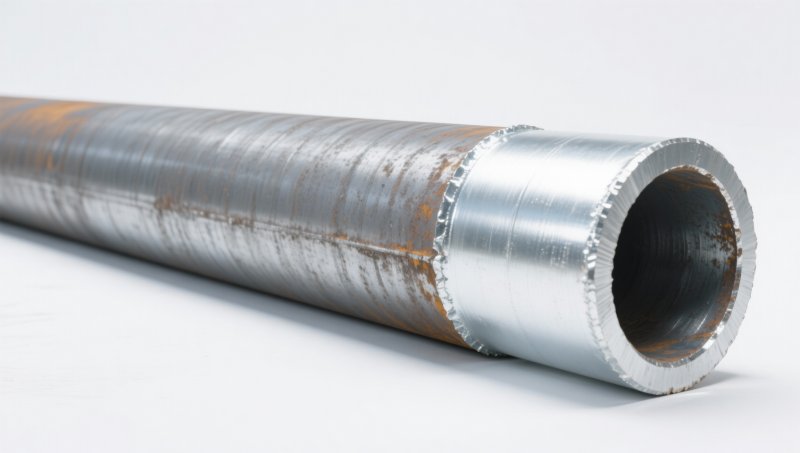
This procurement decision matrix reflects real-world trade-offs observed across 47 mining infrastructure projects supported by Hongteng Fengda since 2021. Each factor maps directly to stakeholder KPIs—ensuring technical rigor, procurement efficiency, and fiscal accountability align in practice.
Next Steps: Optimizing Your Mining Structural Steel Sourcing
Selecting ASTM A36 round bar isn’t about choosing the lowest unit price—it’s about securing predictable performance, verifiable consistency, and lifecycle cost transparency. Hongteng Fengda supports global mining partners with engineering-grade documentation, mill-order traceability, and coordinated supply of complementary products—including Hot Rolled Coil Hrc for integrated fabrication needs.
Whether you’re finalizing BOQs for a new leach pad, validating material substitutions for a brownfield upgrade, or benchmarking TCO models across alternative grades, our technical sales team provides free specification review, dimensional feasibility checks, and comparative lifecycle cost analysis—all within 48 business hours.
Contact Hongteng Fengda today to request your customized ASTM A36 round bar quotation, including optional galvanizing, MTR samples, and logistics planning for your next mining infrastructure phase.
Please give us a message


Please enter what you want to find