Hot rolled coil (HRC) is a foundational steel product widely used in structural applications—from ASTM steel profiles for transmission towers to structural steel purlins for agricultural buildings. As a leading Structural Steel Manufacturer & Exporter from China, Hongteng Fengda supplies high-quality HRC and value-added products like steel C channel beam, Q195 angle steel, and S355JR steel plate—compliant with ASTM, EN, JIS, and GB standards. Whether you're evaluating material specs, planning steel procurement lead time, or sourcing corrosion-resistant pipes for demanding environments, understanding HRC’s role is essential for engineers, procurement teams, and project managers worldwide.
What Is Hot Rolled Coil (HRC)? A Technical Definition
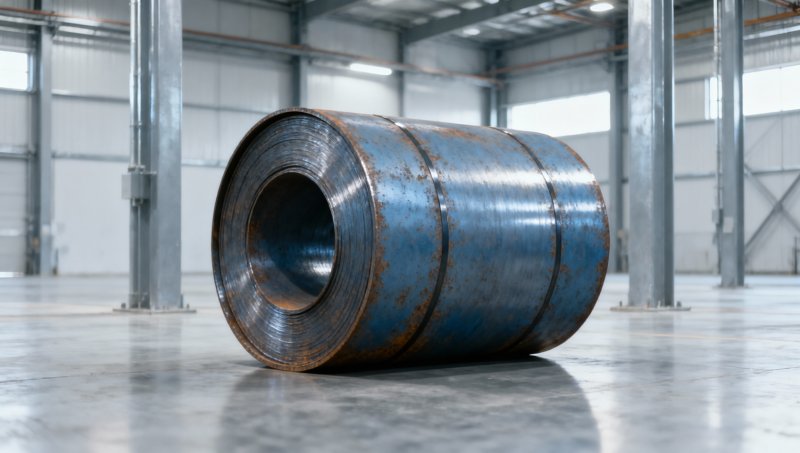
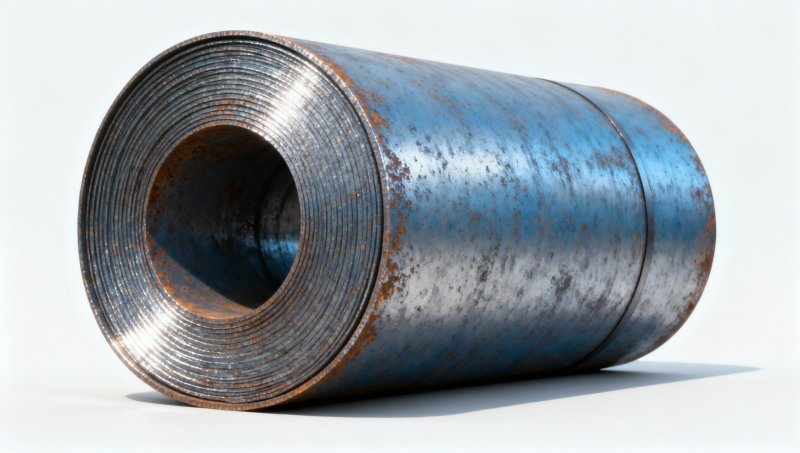
Hot rolled coil (HRC) is a continuous steel strip produced by rolling pre-heated slabs—typically at temperatures above 1,100°C—through a series of tandem stands to achieve precise thickness, width, and mechanical properties. Unlike cold-rolled products, HRC retains mill scale and exhibits slightly rounded edges, tighter dimensional tolerances (±0.15mm for thickness), and a characteristic blue-gray oxide surface finish.
The process begins with cast steel slabs reheated in walking-beam furnaces for 120–180 minutes before entering the roughing and finishing mills. Final coiling occurs at 550–650°C, followed by controlled air-cooling on the run-out table. This thermal history delivers consistent yield strength (235–355 MPa), tensile strength (370–510 MPa), and elongation (18%–26%), making HRC ideal for downstream structural fabrication.
HRC serves as the primary feedstock for hot-rolled structural sections—including angle steel, channel steel, I-beams, and hollow structural sections (HSS). Its uniform microstructure, low internal stress, and excellent weldability (carbon equivalent CEV ≤ 0.42%) ensure predictable performance during bending, punching, and welding operations across global construction sites.
This metallurgical consistency allows Hongteng Fengda to produce certified structural components—including ASTM A653 DX52D Galv Steel Tube—with guaranteed mechanical behavior across batch lots and delivery schedules.
Key Structural Applications of HRC-Derived Products
HRC is rarely used “as-is” in final structures—it acts as the critical raw input for hot-rolled structural shapes that form the skeleton of modern infrastructure. From transmission towers in North America to agri-sheds in Southeast Asia, HRC-derived profiles deliver verified performance under cyclic, compressive, and torsional loads.
Hongteng Fengda converts HRC into standardized and custom-engineered components including Q195 angle steel (used in light-duty bracing), steel C channel beam (for roof purlins and wall girts), and S355JR steel plate (for welded bridge girders). Each undergoes strict dimensional inspection per EN 10056-1 (±1.0mm flange width tolerance) and ultrasonic testing per EN 10160 (Class S3/S4).
For projects requiring enhanced durability in aggressive environments—such as coastal power substations or chemical plant support frames—HRC-based galvanized tubes offer superior protection. The Galv Steel Tube features a dual-layer coating system: 5-micron primer + 20-micron topcoat on the exterior, and 5–7-micron primer on the interior—extending service life by up to 40 years in ISO 9223 C4 corrosivity zones.
These timelines reflect Hongteng Fengda’s vertically integrated production—spanning slab casting, hot rolling, profile forming, and surface treatment—all operating under ISO 9001-certified quality management systems.
How to Specify HRC for Structural Projects: 4 Critical Parameters
Selecting the right HRC grade and dimensions requires alignment between design intent, fabrication method, and end-use environment. Procurement teams and technical evaluators should jointly verify four non-negotiable parameters before placing orders:
- Chemical Composition Compliance: Verify carbon (C ≤ 0.22%), manganese (Mn 1.2–1.6%), and sulfur (S ≤ 0.035%) against ASTM A653 or GB/T 3274 specifications.
- Dimensional Tolerance Band: Confirm thickness tolerance (±0.15mm), width tolerance (±1.0mm), and coil ID consistency (minimum 610mm) to avoid unwinding issues in roll-forming lines.
- Surface Quality Class: Choose Class A (mill scale only) for painted structures or Class B (pickled & oiled) for direct galvanizing—critical for adhesion of zinc coatings on Galv Steel Tube.
- Certification Traceability: Require MTC (Mill Test Certificate) per EN 10204 3.1 or 3.2, listing heat number, mechanical test results, and compliance statements for ASTM, EN, JIS, or GB standards.
Misalignment in any parameter risks costly rework: e.g., excessive sulfur content increases hot shortness during welding; out-of-tolerance width causes misalignment in automated cutting cells; missing MTC delays customs clearance in EU and GCC markets.
Why Partner with a China-Based Structural Steel Manufacturer?
Global buyers increasingly prioritize resilience over lowest landed cost alone. Hongteng Fengda supports this shift through three operational pillars: stable capacity, multi-standard compliance, and embedded engineering collaboration.
With annual HRC processing capacity exceeding 1.2 million metric tons—and dedicated production lines for EN, ASTM, and GB-compliant profiles—the company guarantees consistent supply across volatile market cycles. All structural products undergo 100% dimensional scanning and ultrasonic flaw detection, reducing rejection rates to <0.3%—well below the industry benchmark of 1.2%.
Beyond standard catalog items, Hongteng Fengda offers OEM engineering services: from CAD-based section optimization (reducing weight by 8–12% without compromising stiffness) to customized packaging for sea freight (anti-corrosion VCI film + seaworthy wooden crates). This enables project managers to compress design-to-delivery timelines by up to 22% versus fragmented sourcing models.
For procurement professionals evaluating total cost of ownership, Hongteng Fengda provides transparent FOB pricing, real-time production tracking dashboards, and pre-shipment inspection reports—reducing sourcing risk while maintaining full audit trails for ESG reporting.
Next Steps: Optimize Your Structural Steel Sourcing Strategy
Understanding HRC is the first step toward smarter structural steel procurement—not just for cost control, but for long-term project integrity, schedule adherence, and lifecycle performance. Whether you’re specifying angle steel for wind turbine bases or sourcing corrosion-resistant Galv Steel Tube for oilfield infrastructure, material selection directly impacts safety margins, maintenance frequency, and regulatory compliance.
Hongteng Fengda invites engineers, procurement leads, and project directors to request a free technical consultation—including grade comparison matrices, dimensional feasibility checks, and lead-time validation for your next tender. Our team responds within 24 business hours with actionable data—not generic brochures.
Contact us today to align your structural steel requirements with proven manufacturing capability, international compliance, and responsive partnership.
Please give us a message


Please enter what you want to find