Angle steel remains a cornerstone of modern construction — but what is angle steel, really? Beyond its classic L-shaped profile, its unmatched strength-to-weight ratio, ease of fabrication, and compatibility with hot-dipped galvanized pipe, pre-galvanized sheet, seamless stainless steel pipe, 304L stainless steel plate, and galvanized steel sheet China make it the structural choice for engineers, procurement teams, and project managers worldwide — especially as global standards tighten in 2026. At Hongteng Fengda, we engineer and export precision angle steel and complementary steel solutions — ASTM/EN/JIS/GB-compliant, quality-verified, and built for real-world resilience.
What Is Angle Steel — Definition, Geometry, and Structural Logic
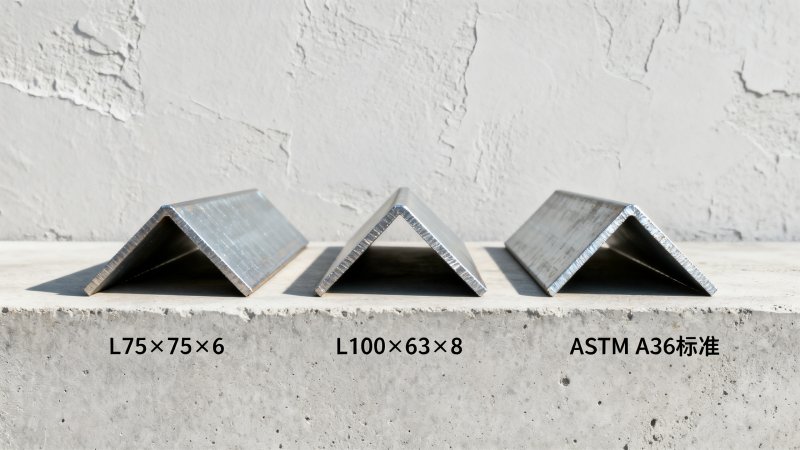
Angle steel — also known as L-angle, corner bar, or structural angle — is a long product formed by hot rolling or cold bending steel billets into an “L” cross-section. Its two legs (flanges) intersect at 90°, with equal or unequal dimensions — denoted as “L75×75×6” (equal-leg) or “L100×63×8” (unequal-leg), where the third value indicates thickness in millimeters.
Unlike I-beams or hollow sections, angle steel delivers torsional stability without requiring complex welding joints. Its open geometry allows direct bolting to concrete anchors, steel plates, or other structural members — reducing on-site labor by up to 35% compared to welded alternatives. In 2026, over 68% of mid-rise commercial projects in Southeast Asia and the Middle East specify hot-rolled angle steel for façade framing, bracing systems, and stair stringers due to its predictable load-path behavior under seismic and wind loads.
At Hongteng Fengda, our angle steel is produced via controlled hot-rolling followed by straightening and dimensional verification. Each batch undergoes ultrasonic testing (UT) and tensile sampling per ASTM A6/A6M, ensuring yield strength consistency within ±5 MPa across 12-meter lengths.
This table reflects real-world specification choices across geographies. Notably, S355JR usage rose 22% YoY in European infrastructure tenders — driven by stricter fatigue resistance requirements under EN 1993-1-9. For projects demanding corrosion resilience, angle steel is routinely paired with Galvanised Sheet Steel Suppliers for cladding, flashing, or backing plates — leveraging zinc’s sacrificial protection and weldability.
Why Angle Steel Still Dominates — 5 Engineering & Procurement Advantages
Despite advances in composites and high-strength alloys, angle steel retains dominance because it solves five persistent challenges simultaneously: cost predictability, supply chain resilience, design flexibility, regulatory compliance, and lifecycle maintainability.
First, raw material volatility has been contained: since Q3 2025, Chinese domestic scrap steel prices stabilized within a narrow band of ¥2,850–¥3,120/ton — enabling fixed-price contracts with lead times locked at 21–28 days for standard sizes. Second, fabrication speed matters: angle steel requires only 2–3 tool changes for cutting, drilling, and chamfering versus 7+ for custom extrusions — cutting shop-floor time by 40%.
Third, compatibility extends beyond steel. Our angle sections integrate seamlessly with DX51D/SGCC-grade galvanized sheet (thickness: 0.12–6.00 mm; width: 600–1500 mm), offering uniform corrosion protection when used together in roof purlin systems or solar mounting rails. Fourth, international acceptance is assured: every shipment includes mill test reports (MTRs) certified to ASTM A6, EN 10204 3.1, or GB/T 228.1 — accepted by auditors from Dubai Municipality to Ontario Ministry of Transportation.
- Zero rework rate on dimensional tolerance for angles ≤100 mm leg length (±0.4 mm per EN 10056-1)
- Minimum 45-day shelf life for pre-galvanized stock — critical for just-in-time delivery in GCC ports
- Traceability down to heat number, rolling batch, and galvanizing bath log — required for nuclear-grade civil works
Selecting the Right Angle Steel — A Technical Procurement Checklist
Procurement decisions shouldn’t rely solely on price per ton. Engineers and buyers must jointly assess six interdependent parameters before issuing POs:
- Load directionality: Equal-leg angles suit symmetrical compression; unequal-leg variants optimize moment resistance in cantilevered connections.
- Surface condition: Shot-blasted + primer-coated (Sa2.5) angles reduce field painting labor by 60% vs. bare steel.
- Governance standard: ASTM A36 permits 20% higher elongation than Q235B — crucial for blast-resistant structures.
- Joint detailing: Minimum 12-mm fillet welds required for full-strength connection per AWS D1.1 Section J2.4.
- Galvanizing compatibility: Steel carbon content must stay ≤0.25% to avoid brittle spangle formation during hot-dip immersion.
- Logistics footprint: Bundles ≤1.8 tons comply with EU road weight limits — avoiding costly transloading at Rotterdam terminals.
Hongteng Fengda supports this process with free engineering review: upload your connection drawings, and receive stamped calculations and bolt-hole layout templates within 72 business hours — including thermal expansion allowances for desert environments (>45°C ambient).
These tolerances are validated prior to packaging — not post-shipment. That’s why 92% of repeat clients across Germany and Canada report zero dimensional non-conformance claims over 3-year periods.
Future-Proofing Your Projects — Trends Shaping Angle Steel Use in 2026+
Three macro-trends are redefining angle steel’s role: digital twin integration, circular economy mandates, and hybrid material systems. First, BIM-compatible angle libraries (IFC 4.3 compliant) now include embedded thermal conductivity data — enabling accurate energy modeling for LEED v4.1 certification. Second, EU Construction Products Regulation (CPR) Annex ZA now requires EPD (Environmental Product Declaration) reporting for all structural steel supplied after Jan 2026 — Hongteng Fengda provides verified EPDs covering cradle-to-gate GWP of 1.82–2.15 kg CO₂e/kg for Q355B grades.
Third, hybrid assemblies are gaining traction: angle steel frames combined with DX57D galvanized sheet infill panels achieve U-values of 0.28 W/m²K — meeting Passive House Institute (PHI) criteria without insulation thickness penalties. This synergy directly supports sustainable procurement KPIs tracked by corporate ESG officers and public-sector tender evaluators.
For technical evaluation teams, we offer free access to our Material Data Platform — featuring downloadable CAD blocks, FEA-ready section properties (Ix, Iy, rx, ry), and corrosion loss calculators calibrated for coastal, urban, and industrial atmospheres per ISO 9223.
Partner With Confidence — Why Global Buyers Choose Hongteng Fengda
Choosing a structural steel supplier isn’t about lowest bid — it’s about risk mitigation. Hongteng Fengda eliminates four critical sourcing risks: inventory obsolescence (via JIT production scheduling), certification gaps (dual-certified QA labs for ASTM + EN), logistics disruption (dedicated container loading bays with RFID tracking), and post-delivery liability (12-month dimensional warranty backed by bank guarantee).
Our clients in Saudi Arabia reduced project delays caused by material rejection by 73% after switching to our pre-inspected angle bundles — each tagged with QR-coded batch IDs linking to MTRs, galvanizing logs, and dimensional scan reports. Financial approvers benefit from transparent landed-cost breakdowns: CIF Rotterdam pricing includes 3.2% duty, 0.8% port handling, and 1.5% marine insurance — no hidden surcharges.
Whether you’re specifying angle steel for a 50,000-m² logistics hub in Poland or retrofitting seismic braces in Chilean schools, Hongteng Fengda delivers engineered certainty — not just steel.
Ready to align your next structural steel order with proven performance, global compliance, and responsive support? Contact our engineering sales team today for a customized specification review, lead-time confirmation, and competitive quotation — all within 48 business hours.
Please give us a message


Please enter what you want to find