The Mechanical Synergy of Concrete and Steel
Concrete is one of the most widely used construction materials globally, prized for its immense compressive strength. However, when subjected to bending, stretching, or torsional forces, plain concrete fails quickly. This is where reinforcing bar, universally known as rebar, becomes indispensable. Understanding what rebar is and the mechanical principles behind its integration with concrete is fundamental for engineers, contractors, and procurement professionals involved in structural projects.
To understand why rebar is essential, one must first look at the inherent physical properties of concrete. Concrete is exceptionally strong in compression but notoriously weak in tension. When a concrete beam supports a load, the top portion experiences compressive forces, while the bottom portion experiences tensile forces. Without reinforcement, the tensile stress would cause the concrete to crack and eventually fracture.
Rebar, typically made from carbon steel, possesses high tensile strength. By embedding steel bars within the tension zones of a concrete member, the composite material can withstand both compressive and tensile stresses. The steel absorbs the pulling forces, preventing the concrete from failing. As the load increases, the neutral axis of the beam shifts, and the steel continues to bear the tensile load even after the concrete in the tension zone has cracked.
This synergy is not accidental; it relies on three critical physical and chemical factors:
- Thermal Expansion Compatibility: Carbon steel and concrete have nearly identical coefficients of thermal expansion. As temperatures fluctuate, both materials expand and contract at similar rates, preventing internal stresses that would otherwise break the bond.
- Chemical Bonding: The highly alkaline environment of curing concrete creates a passive oxide layer on the steel surface, protecting it from corrosion.
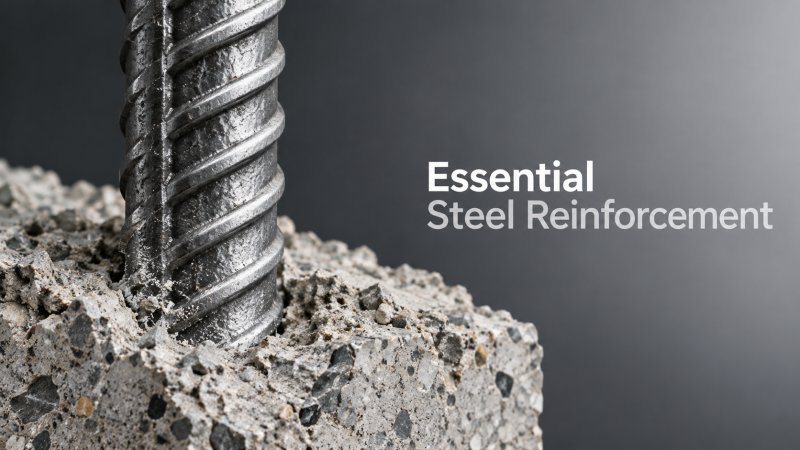
- Mechanical Interlock: The surface of rebar is not smooth. It features deformations, ribs, or lugs that create a mechanical interlock with the surrounding concrete, ensuring the two materials act as a single structural unit under load and preventing the steel from slipping.
Why Rebar Cannot Be Replaced in Standard Structures
Given the availability of other high-strength materials, a common question is whether rebar can be substituted with alternatives like fiber-reinforced polymers (FRP), prestressed strands, or plain steel mesh. While these materials have specific niche applications, traditional deformed carbon steel rebar remains the baseline for most reinforced concrete structures for several practical reasons.
FRP rebar, for instance, is non-corrosive and lightweight, making it suitable for highly corrosive environments like marine structures. However, it lacks the ductility of steel and cannot be bent on-site, limiting its adaptability during construction. Prestressed concrete is excellent for long-span bridges but requires specialized tensioning equipment and is overkill for standard building columns or residential slabs.
Deformed steel rebar offers the optimal balance of ductility, strength, ease of fabrication, and cost-effectiveness. Its ability to yield and deform before fracturing provides a crucial warning mechanism in structural engineering. When a reinforced concrete beam is overloaded, the steel yields, causing visible deflections and wide cracks before ultimate failure. This ductile behavior saves lives by providing time for evacuation, unlike the sudden, brittle failure of unreinforced concrete.
Critical Considerations for Selection and Application
For B2B buyers and project managers, specifying the right rebar involves more than just choosing a diameter. The selection process must account for the structural design, environmental exposure, and compliance with international standards.
Yield Strength and Grades
Rebar is categorized by its minimum yield strength. Selecting the correct grade ensures the steel can handle the calculated tensile loads without yielding prematurely. Different regions and project types dictate specific standards.
- ASTM A615 Grade 60 (US): Minimum yield of 60,000 psi (420 MPa). Commonly used in general commercial and residential buildings.
- ASTM A706 Grade 60 (US): Minimum yield of 60,000 psi (420 MPa). Specifically designed for seismic zones and structures requiring high ductility and weldability.
- BS 4449 Grade B500B (UK/EU): Minimum yield of 500 MPa. The standard for European infrastructure and building projects.
- GB HRB400 (China): Minimum yield of 400 MPa. Widely applied across various civil engineering and construction projects.
Environmental Protection and Corrosion
The greatest threat to reinforced concrete is the corrosion of the embedded steel. When chlorides from de-icing salts or marine environments penetrate the concrete and destroy the passive alkaline layer, the steel rusts. Rust occupies up to six times the volume of the original steel, creating internal expansive pressure that spalls and cracks the concrete from the inside out.
To mitigate this, engineers specify protective measures based on the exposure class:
- Epoxy-Coated Rebar: Fused epoxy powder provides a physical barrier against chlorides, widely used in bridge decks and parking structures.
- Galvanized Rebar: Zinc coating offers both a barrier and cathodic protection, suitable for moderate exposure conditions.
- Stainless Steel or Solid Alloy Rebar: Used in extreme environments where long-term lifecycle costs justify the initial premium.
Placement and Cover
The physical placement of rebar within the formwork is as critical as the material itself. The concrete cover—the distance between the outer surface of the rebar and the concrete surface—must be strictly maintained using spacers or chairs. Insufficient cover exposes the steel to moisture and chemicals, accelerating corrosion. Excessive cover, conversely, increases the width of surface cracks under load, compromising durability and aesthetics.
Integration with Broader Structural Steel Systems
While rebar forms the internal skeleton of concrete structures, large-scale infrastructure projects often require a broader ecosystem of structural steel components. For example, in railway construction, the concrete sleepers and bridge decks heavily rely on reinforced concrete, but the track system itself demands specialized heavy-duty steel.
In such integrated projects, sourcing partners often need to coordinate multiple steel products. Beyond standard rebars, a project might require specialized Rail profiles for the tracks, alongside structural beams for bridge supports and handrails for safety. Ensuring that all steel components, from the internal reinforcement to the external structural profiles, meet consistent quality standards like ASTM, EN, or JIS is vital for the seamless execution of complex infrastructure builds. Manufacturers that can supply both standard specifications and customized structural components help contractors reduce sourcing risks and maintain consistent project timelines.
Quality Control and Sourcing Risks
When procuring rebar for critical projects, verifying material quality is non-negotiable. Substandard steel with incorrect chemical compositions or poor rolling practices can lead to catastrophic structural failures.
Key quality indicators include:
- Chemical Composition: The carbon equivalent must be controlled to ensure the steel remains weldable without losing its strength. Excessive carbon makes the steel brittle, while insufficient carbon reduces yield strength. Elements like sulfur and phosphorus must also be kept to minimum levels to prevent hot and cold shortness.
- Dimensional Tolerances: The height, spacing, and geometry of the surface deformations must meet strict tolerances to guarantee the mechanical bond with concrete. Undersized ribs will lead to slippage under heavy loads.
- Bend and Rebend Tests: Physical testing ensures the rebar can be bent to the required angles on-site without cracking, which is crucial for complex rebar cages and seismic detailing.
- Mill Test Certificates (MTCs): Reputable suppliers must provide EN 10204 3.1 or equivalent MTCs, detailing the heat number, chemical analysis, and tensile test results for each batch.
Sourcing from established manufacturers with modern rolling mills and strict quality control systems minimizes the risk of receiving defective batches. It also ensures that the steel complies with the specific seismic requirements of the project region.
The effectiveness of a concrete structure relies entirely on the invisible partnership between the concrete matrix and the steel reinforcement. Rebar transforms a brittle material into a resilient, load-bearing composite capable of shaping modern infrastructure. For engineering and procurement professionals, recognizing the mechanical principles, environmental vulnerabilities, and quality parameters of rebar is the first step in ensuring structural longevity. Whether specifying standard carbon steel bars for a commercial foundation or coordinating complex steel profiles for a transit system, a rigorous approach to material selection and quality verification remains the foundation of safe, durable construction.
Please give us a message


Please enter what you want to find