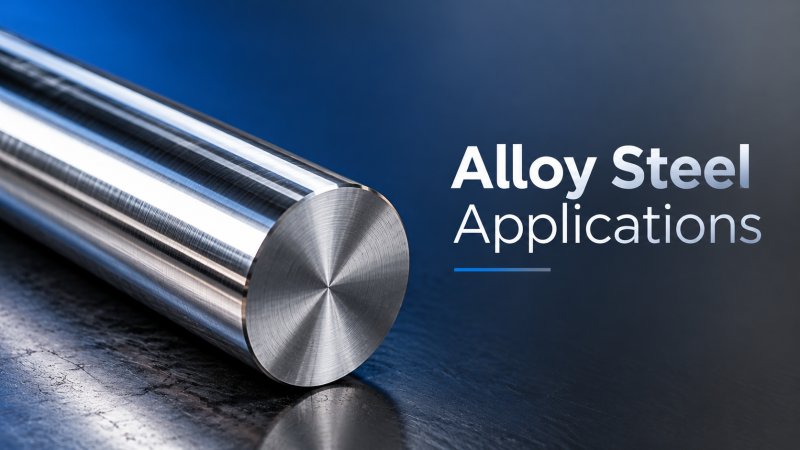
Alloy steel rods are not merely structural fillers; they are engineered components designed to withstand specific mechanical and environmental stresses that plain carbon steel cannot handle. The addition of elements like chromium, nickel, molybdenum, and vanadium fundamentally alters the metallurgical structure, providing targeted improvements in hardness, toughness, wear resistance, and high-temperature strength. For researchers and engineers evaluating material selection, understanding the main applications of the steel rod in manufacturing requires looking beyond general strength metrics and examining how these specific properties solve distinct operational challenges.
Automotive and Transportation Manufacturing
In the automotive and heavy transportation sectors, the demand for weight reduction without compromising structural integrity drives the extensive use of alloy steel rods. They are predominantly forged and machined into critical drivetrain, suspension, and steering components. Transmission shafts, steering linkages, and axle housings rely on specific alloy grades, such as 4140 or 4340, to endure continuous torsional stress and cyclic loading.
The fatigue resistance of these rods ensures that components do not fail under the repetitive vibrations and shock loads experienced during vehicle operation. Furthermore, the application logic here depends heavily on heat treatment. Manufacturers utilize the hardenability of alloy steels to achieve a hard, wear-resistant surface through case hardening or induction淬火, while maintaining a tough, ductile core. This dual-property profile prevents catastrophic brittle fractures in safety-critical parts, a limitation often encountered when using standard carbon steel rods in high-stress dynamic applications.
Heavy Machinery and Construction Equipment
Heavy machinery operates in highly abrasive and high-impact environments, requiring materials that can absorb severe shocks without deforming. Alloy steel rods serve as the baseline material for hydraulic cylinder rods, excavator bucket pins, track links, and crane boom sections.
In these applications, surface hardness and core toughness are equally critical. Hydraulic piston rods, often machined from chrome-plated alloy steel, must resist scoring and corrosion while maintaining precise dimensional stability under extreme hydraulic pressure. For heavy-duty gears and bearings, alloy rods are forged to withstand high contact stresses. The inherent hardenability of alloy steels ensures that thick cross-sections achieve uniform mechanical properties throughout the entire diameter. This is a crucial advantage, as plain carbon steel rods of the same thickness would only harden on the outer surface, leaving a soft, weak core that would fail under heavy loads.
Energy, Oil, and Gas Infrastructure
The energy sector demands materials that can survive extreme temperatures, high pressures, and highly corrosive mediums. Alloy steel rods are extensively utilized in drilling operations, wellhead equipment, and refinery infrastructure. Drill collars and stabilizers utilize high-strength, low-alloy (HSLA) steel rods to withstand the severe torsional and vibrational forces of underground drilling.
In refineries and petrochemical plants, rods containing chromium and molybdenum are machined into high-temperature valves, flanges, and critical fasteners. These specific alloy combinations are selected to resist hydrogen embrittlement and sulfide stress cracking, which are common and dangerous failure modes in sour gas (H2S) environments. The reliability of these components is non-negotiable, as material failure in these systems can lead to severe operational downtime, environmental contamination, or safety hazards.
Metallurgical Logic: How Alloying Elements Dictate Application
Understanding why a specific alloy steel rod is chosen for a manufacturing application requires examining the metallurgical role of the added elements. The selection is never arbitrary; it is a direct response to the physical demands of the operating environment.
- Chromium: Significantly increases hardenability and corrosion resistance. It is essential for bearing components and parts exposed to mild corrosive environments or high-wear surfaces.
- Nickel: Enhances toughness, particularly at low temperatures. This makes nickel-alloyed rods crucial for aerospace components, cryogenic applications, and arctic-grade machinery where brittle fracture is a primary risk.
- Molybdenum: Improves high-temperature strength and prevents temper brittleness. It is indispensable for power generation turbines and petrochemical applications where the steel rod must maintain its structural integrity under prolonged thermal stress.
- Vanadium: Refines the grain structure during heat treatment, improving both strength and toughness. It is frequently utilized in high-stress aerospace fasteners and critical automotive suspension components.
By mapping these elemental contributions to operational requirements, engineering and procurement teams can specify the exact grade required, avoiding over-engineering and unnecessary material costs.
Manufacturing Environments and Facility Considerations
While alloy steel rods form the core of heavy mechanical components, the manufacturing facilities and storage environments where these components are produced and housed also require robust material solutions. Heavy machinery plants and industrial warehouses often utilize specialized building materials to protect sensitive equipment from environmental degradation.
For instance, the structural framing, roofing, and wall cladding of such facilities frequently incorporate Color Coated Galvanized Steel Sheet PPGI to ensure long-term corrosion resistance and durability against industrial atmospheres. Maintaining a controlled, corrosion-free environment is just as critical as selecting the right alloy for the internal components, as it prevents surface degradation of raw materials and finished parts before they are deployed in the field.
Common Misconceptions in Material Selection
A frequent misconception in material research and procurement is the assumption that higher strength always equates to better performance. In manufacturing, selecting an ultra-high-strength alloy steel rod can introduce significant production challenges.
Higher strength grades often exhibit reduced machinability. This requires slower cutting speeds, specialized tooling, and increased production time, which can drastically alter the total cost of the component. Additionally, high-strength alloys can be more susceptible to hydrogen-induced cracking during welding and may require complex pre- and post-weld heat treatments to relieve residual stresses. Therefore, the optimal choice balances the required mechanical properties with the manufacturability, weldability, and total lifecycle cost of the final part, rather than simply chasing the highest tensile strength rating.
Evaluating Supply Quality and Consistency
For global buyers and industry researchers, the successful application of alloy steel rods is heavily dependent on material consistency. Variations in chemical composition or inconsistent heat treatment practices at the mill can lead to unpredictable mechanical properties in the final machined part.
When sourcing these materials, verifying the manufacturer’s quality control processes, material traceability, and compliance with international standards (such as ASTM, EN, or JIS) is critical. The presence of non-metallic inclusions, for example, can drastically reduce the fatigue life of a bearing or shaft, regardless of the base alloy's theoretical strength. Advanced manufacturing applications often require steel rods that have undergone secondary refining processes, such as vacuum degassing, to minimize impurities and ensure a clean, uniform microstructure capable of withstanding extreme operational demands.
The application of alloy steel rods in manufacturing is defined by the intersection of mechanical stress, environmental conditions, and production feasibility. Whether enduring cyclic fatigue in automotive drivetrains, resisting abrasive wear in heavy excavators, or surviving corrosive pressures in oil refineries, these rods provide the foundational reliability required by modern industry. Evaluating their use requires a clear understanding of how specific alloying elements address distinct operational challenges, ensuring that material selection aligns precisely with both performance demands and manufacturing realities.
Please give us a message


Please enter what you want to find