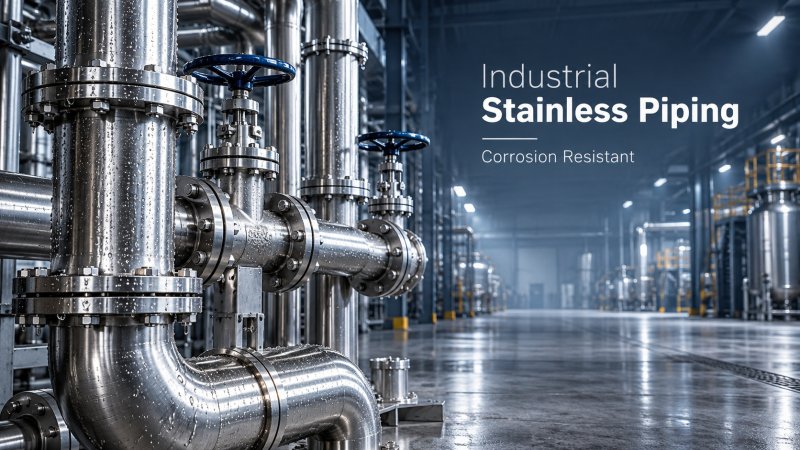
When evaluating materials for industrial facilities, the use of pipe stainless in plants offers unparalleled advantages that directly impact operational efficiency and longevity. As a critical component in structural and fluid transport systems, this material provides exceptional corrosion resistance, high strength, and low maintenance requirements. For information researchers and project managers looking to optimize their infrastructure, understanding these benefits is essential to making informed sourcing decisions from reliable manufacturers. The decision to specify stainless steel piping extends far beyond basic rust prevention; it is a strategic calculation involving chemical compatibility, thermal dynamics, lifecycle economics, and regulatory compliance.
Corrosion Resistance and Chemical Inertness
The foundational advantage of stainless steel in plant environments lies in its metallurgical structure. The addition of a minimum of 10.5% chromium creates a passive, self-healing chromium oxide layer on the surface. Unlike carbon steel, which requires external coatings or cathodic protection to resist oxidation, stainless steel relies on its intrinsic alloy composition to maintain integrity when exposed to oxygen and moisture.
In chemical processing, petrochemical, and marine applications, plants are frequently exposed to aggressive media, including chlorides, acids, and alkalis. The choice between standard austenitic grades, such as 304 and 316, dictates the system's survival. While 304 offers excellent resistance to most organic chemicals and many inorganic chemicals, the introduction of molybdenum in 316 significantly enhances resistance to pitting and crevice corrosion in chloride-rich environments. For information researchers analyzing material failure data, the majority of piping leaks in coastal or chemical plants are traced back to specifying the wrong stainless grade rather than a fundamental flaw in the material itself.
For environments presenting a high risk of stress corrosion cracking, particularly in the presence of chlorides and elevated temperatures, duplex and super duplex stainless steels offer a superior alternative. These grades combine the high mechanical strength of ferritic steels with the excellent corrosion resistance of austenitic grades, allowing for even thinner wall designs while providing exceptional resistance to localized attack. Understanding the specific chemical exposure profile of the plant is the first step in leveraging the corrosion resistance of pipe stainless effectively.
Thermal Stability and Mechanical Performance
Industrial plants often operate under extreme thermal conditions, ranging from cryogenic storage facilities to high-temperature steam lines and reactor vessels. Stainless steel maintains its mechanical integrity across a remarkably wide temperature spectrum. At elevated temperatures, austenitic stainless steels exhibit high oxidation resistance and retain a significant portion of their yield and tensile strength. This thermal stability reduces the risk of thermal fatigue, creep, and deformation, which are common failure modes in carbon steel systems subjected to cyclic heating and cooling.
Conversely, at cryogenic temperatures, stainless steel does not undergo the ductile-to-brittle transition that plagues ferritic steels. This makes it the default choice for liquefied natural gas (LNG) facilities and industrial gas plants. From an engineering perspective, the high strength-to-weight ratio of stainless steel allows for thinner wall thicknesses in certain pressure applications, reducing the overall weight of the piping network. This simplifies structural support requirements and facilitates easier installation during plant expansions.
However, the higher coefficient of thermal expansion in austenitic stainless steels compared to carbon steel must be carefully accounted for in system design. Proper placement of expansion joints, loops, and fixed supports is critical to absorb thermal growth and prevent excessive stress on the piping network and connected equipment. Ignoring this physical characteristic can lead to buckling or flange leaks, negating the material's inherent thermal advantages.
Lifecycle Economics and Maintenance Reduction
A common barrier to specifying stainless steel piping is the higher initial capital expenditure compared to carbon steel or plastic alternatives. Evaluating the material solely on upfront procurement costs ignores the total cost of ownership (TCO), which is the primary metric for long-term plant profitability. The economic benefits of pipe stainless materialize over the operational lifespan of the facility.
Carbon steel systems require continuous maintenance, including sandblasting, repainting, and the application of protective wraps. In contrast, stainless steel requires virtually no surface maintenance. The elimination of these recurring maintenance activities reduces labor costs, minimizes the need for hazardous material handling, and decreases the frequency of operational shutdowns. Furthermore, the smooth surface finish of stainless steel reduces friction losses in fluid transport, leading to continuous energy savings in pumping systems.
Beyond direct maintenance costs, the hidden expense of carbon steel failure lies in production disruption. An unexpected pipe leak in a continuous process plant can halt operations for days, resulting in massive revenue losses that dwarf the initial savings of cheaper materials. Stainless steel’s reliability acts as an insurance policy against these catastrophic operational interruptions. When calculating the return on investment, the reduction in unplanned downtime frequently offsets the initial material premium within the first few years of operation.
Hygiene, Cleanability, and Product Purity
In industries where product integrity is paramount, such as food and beverage, pharmaceuticals, biotechnology, and semiconductor manufacturing, the material of construction directly impacts product quality. Stainless steel provides a non-porous, non-reactive surface that prevents the leaching of metallic ions or organic compounds into the transported media.
The high polishability of stainless steel allows for the creation of ultra-smooth surface finishes that prevent the adhesion of bacteria, biofilms, and particulate matter. This is critical for systems that require frequent Clean-in-Place (CIP) or Sterilize-in-Place (SIP) procedures. The material's ability to withstand high-temperature sterilization and aggressive cleaning chemicals without degrading ensures that the piping system does not become a source of contamination. For researchers evaluating compliance with strict sanitary standards, stainless steel is a fundamental requirement for maintaining certification and ensuring consumer safety.
Integration with Broader Plant Infrastructure
While piping systems form the circulatory network of a plant, the overall facility relies on a robust infrastructure for material handling, structural support, and heavy lifting. The principles of material selection—prioritizing durability, corrosion resistance, and mechanical strength—apply across all critical plant components. A holistic approach to plant material specification ensures that every element is chosen based on rigorous environmental and operational demands.
For instance, in the heavy lifting and material transport sectors within a plant, such as overhead cranes, elevators, and mining hoists, the reliability of lifting media is just as critical as the integrity of the pipes. Components like Galvanized Steel Wire Rope are engineered to provide high tensile strength and resist environmental degradation in demanding industrial settings. The zinc coating on these ropes offers varying levels of protection depending on the corrosion severity of the environment, ensuring that lifting operations remain safe and uninterrupted. Just as selecting the correct grade of stainless piping prevents fluid system failures, specifying the appropriate tensile strength and coating for lifting cables prevents catastrophic structural and handling accidents.
Sustainability and End-of-Life Considerations
Modern industrial planning increasingly incorporates environmental, social, and governance (ESG) criteria into material selection. Stainless steel contributes to the sustainability goals of a plant in several measurable ways. The longevity and durability of the material mean fewer replacements and less waste generated over the facility's lifespan. Additionally, stainless steel is 100% recyclable. A significant portion of the stainless steel produced today is manufactured using recycled scrap metal, and at the end of its useful life, the material retains a high scrap value, ensuring it is recovered and reused rather than sent to a landfill.
This closed-loop lifecycle reduces the overall carbon footprint associated with material production and disposal. Additionally, the high reflectivity of stainless steel can contribute to lower cooling loads in plant environments when used in exposed architectural or structural elements, indirectly supporting energy efficiency goals. For information researchers tracking industrial decarbonization trends, the circular economy benefits of stainless steel make it a highly favorable choice for greenfield projects and sustainable facility upgrades.
Decision Framework for Material Specification
Understanding the key benefits of pipe stainless in plants requires moving beyond generic material advantages and applying them to specific operational contexts. The decision to utilize stainless steel should be driven by a clear analysis of several critical variables. First, what is the exact chemical composition, pH level, and chloride content of the fluid being transported? Second, what are the maximum and minimum operating temperatures, and are there frequent thermal cycles? Third, does the application fall under strict sanitary, pharmaceutical, or high-purity regulatory frameworks?
Furthermore, project stakeholders must evaluate the economic horizon. Is the project evaluated on short-term capital expenditure or long-term total cost of ownership and operational reliability? Finally, environmental conditions must be assessed. Is the piping located outdoors in a marine atmosphere, or indoors in a controlled environment? External corrosion can be just as damaging as internal media corrosion if the external grade is not properly specified.
When these factors align with the inherent properties of stainless steel—corrosion resistance, thermal stability, hygiene, and lifecycle economics—the material transitions from a premium option to an operational necessity. Mastering this decision framework ensures that material specifications are grounded in technical reality and economic logic, ultimately leading to safer, more efficient, and more profitable plant operations.
Please give us a message


Please enter what you want to find