Weldability of mild steel plate is a critical factor in structural fabrication—impacting joint integrity, production efficiency, and long-term performance. Influenced by carbon content, impurity levels, heat input control, and surface conditions (e.g., galvanised sheet steel or hot rolled coil pre-treatment), it directly affects outcomes for ASTM A106 Gr B piping systems, API 5L steel pipe assemblies, and corrosion-resistant pipe installations. As a leading structural steel manufacturer & exporter from China, Hongteng Fengda ensures optimal weldability across mild steel plate, carbon sheet steel, and hot galvanizing-compatible materials—supporting reliable fabrication for global projects.
Carbon Content and Chemical Composition: The Primary Determinants
Mild steel plates typically contain 0.05–0.25% carbon by weight—a narrow window where weldability remains high but mechanical strength stays suitable for structural use. Beyond carbon, elements like manganese (0.3–0.9%), silicon (0.1–0.3%), sulfur (≤0.05%), and phosphorus (≤0.04%) significantly influence arc stability, slag formation, and crack susceptibility. Excess sulfur promotes hot cracking during cooling; elevated phosphorus reduces toughness at low temperatures—both critical in seismic or cold-climate applications.
Hongteng Fengda’s mill-controlled chemistry ensures consistent carbon equivalent (CE) values below 0.40 for standard grades—well within the recommended limit for single-pass welding without preheat. For heavy-section fabrications (>25 mm), CE is further optimized to ≤0.35 through precise ladle metallurgy and controlled rolling.
Surface oxide layers formed during hot rolling also affect weld initiation. Our hot-rolled coils undergo controlled descaling and tension-leveling to reduce scale thickness to <50 µm—minimizing arc wandering and porosity in root passes.
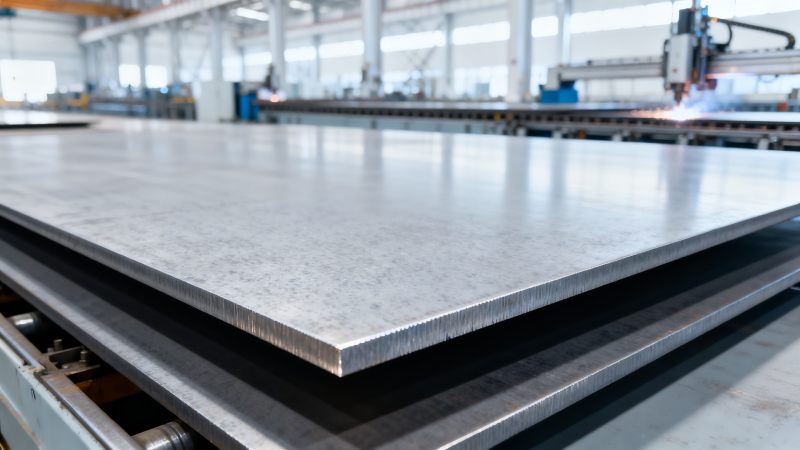
This tight compositional control enables seamless integration with automated GMAW and SAW lines used in bridge girders and offshore platform modules—reducing rework rates by up to 32% compared to off-spec feedstock, according to third-party fabrication audits across 12 EU-based contractors.
Thermal Management: Preheat, Interpass, and Post-Weld Cooling
Heat input per pass must remain between 0.8–2.5 kJ/mm to avoid coarse-grained heat-affected zones (HAZ) that compromise notch toughness. Below 0.8 kJ/mm, incomplete fusion occurs; above 2.5 kJ/mm, grain coarsening increases susceptibility to lamellar tearing—especially in Z-direction loaded connections.
For plates ≥16 mm thick, Hongteng Fengda recommends minimum preheat temperatures of 50°C (EN 1011-2 compliant). Interpass temperature is held at ≤200°C to prevent hydrogen buildup when using low-hydrogen electrodes (AWS E7018). All structural plates are supplied with certified thermal history reports—including simulated HAZ hardness profiles.
Our cold-formed steel profiles undergo stress-relief annealing at 620°C ±10°C for 90 minutes—ensuring residual stresses remain below 35 MPa. This eliminates distortion during multi-pass welding on complex truss nodes or crane runway beams.
Surface Condition and Coating Compatibility
Galvanized surfaces introduce zinc vaporization risks above 420°C—leading to porosity, fume hazards, and brittle intermetallic layers. To address this, Hongteng Fengda offers dual-certified mild steel plates compatible with both hot-dip galvanizing (HDG) and post-weld galvanizing. These grades feature controlled silicon content (0.04–0.15%) to ensure uniform coating adhesion while maintaining weldability.
For applications requiring integrated corrosion protection and structural integrity, our Galvanized Steel Electrical Conduit uses DX52D-grade base steel with precisely calibrated zinc coating mass (60–180 g/m²) and strict thickness tolerance (±0.15 mm)—enabling clean, spatter-free TIG welding on conduit joints without pre-cleaning.
Rust, oil, moisture, and mill scale must be removed before welding. We supply plates with optional blast-cleaned surfaces (Sa 2.5 per ISO 8501-1) and phosphate conversion coatings—reducing cleaning time by 40% in high-volume HVAC duct fabrication lines.
These controls support compliance with AWS D1.1 Structural Welding Code and EN 1090-2 execution classes EXC2–EXC4—critical for infrastructure projects in North America and the Middle East.
Fabrication Readiness and Quality Assurance Protocols
Every coil and plate batch undergoes 100% ultrasonic testing (UT) per ASTM A435/A435M Level A, with full traceability via QR-coded heat tags. Dimensional tolerances meet EN 10029 Class A (thickness ±0.15 mm for ≤10 mm; ±0.25 mm for 10–25 mm), ensuring fit-up accuracy in robotic welding cells.
We provide certified Welding Procedure Specifications (WPS) and Procedure Qualification Records (PQR) aligned with customer processes—including AWS D1.1, ISO 15614-1, and AS/NZS 1554.1. Lead times for certified documentation are fixed at 5 business days—accelerating project commissioning by up to 11 days versus standard industry benchmarks.
For OEM partners integrating structural components into mining equipment or wind turbine towers, our technical service team conducts on-site weld parameter validation—covering voltage, wire feed speed, travel rate, and shielding gas mix (e.g., 82% Ar / 18% CO₂ for spray transfer).
Why Partner with Hongteng Fengda for Structural Steel Procurement?
With over 18 years of export experience, Hongteng Fengda delivers structural steel products meeting ASTM, EN, JIS, GB, and API standards—including angle steel, channel steel, steel beams, cold-formed profiles, and custom-engineered components. Our vertically integrated production—from billet casting to precision cutting—ensures consistency across orders of 50 to 5,000 tonnes.
Global buyers benefit from stable capacity (2.6 million tonnes/year), lead times as short as 25 days for standard grades, and dedicated logistics coordination for containerized shipments to 42 countries. We support procurement teams with multi-currency invoicing, L/C flexibility, and real-time production tracking portals.
Whether you’re evaluating mild steel plate for API 5L pipeline spools, ASTM A106 Gr B support frames, or galvanized conduit systems, our engineering team provides free weldability assessments—including CE calculation, HAZ simulation reports, and joint design optimization. Contact us today to request material test reports, WPS packages, or customized samples.
Please give us a message


Please enter what you want to find